40 mobile medical units approved to boost healthcare in Arunachal’s border villages
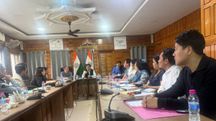
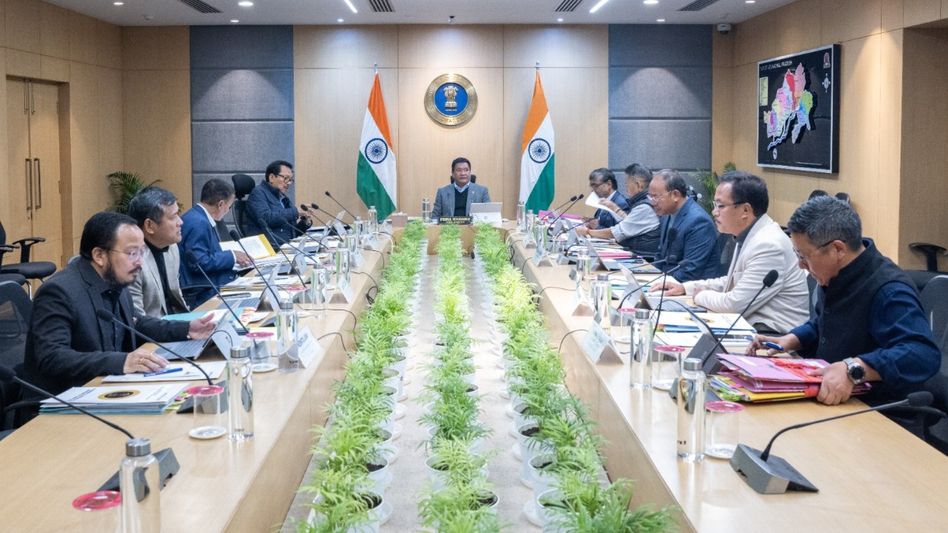
The Arunachal Pradesh State Cabinet, in its first meeting of 2026 held on Thursday, January 8 under the chairmanship of Chief Minister Pema Khandu, approved a wide-ranging set of policy decisions aimed at strengthening healthcare delivery, improving public safety, expanding education and employment opportunities, enhancing urban governance, and reinforcing environmental and wildlife conservation across the State.

- Jan 08, 2026,
- Updated Jan 08, 2026, 5:32 PM IST

The Arunachal Pradesh State Cabinet, in its first meeting of 2026 held on Thursday, January 8 under the chairmanship of Chief Minister Pema Khandu, approved a wide-ranging set of policy decisions aimed at strengthening healthcare delivery, improving public safety, expanding education and employment opportunities, enhancing urban governance, and reinforcing environmental and wildlife conservation across the State.
In a significant boost to public healthcare, the Cabinet approved the engagement of HLL Lifecare Ltd, a Government of India enterprise under the Ministry of Health and Family Welfare, to establish diagnostic infrastructure across the State. The initiative, funded under the 15th Finance Commission Health Grants, will cover 256 Sub-Centres, 82 Primary Health Centres (PHCs), 25 Community Health Centres (CHCs), and 64 Block Public Health Units.
As part of this initiative, HLL Lifecare Ltd will also implement a Laboratory Management Information System (LMIS) across all health facilities, including medical colleges, general and district hospitals, CHCs, PHCs, and sub-centres. The digital platform is expected to improve laboratory efficiency through streamlined supply chain management, inventory tracking, logistics, and data-driven operations, thereby enhancing the quality and reliability of diagnostic services.
The Cabinet also noted the success of tele-radiology CT scan services provided by HLL Lifecare Ltd at Aalo, Bomdila, Khonsa, Namsai, Tawang, Tezu, Yingkiong, and Ziro, which have benefited nearly 12,000 patients so far. To further strengthen diagnostic radiology services, approval was granted for HLL Lifecare Ltd to facilitate Atomic Energy Regulatory Board (AERB) certification for all general and district hospitals and CHCs in the State.
The Government stated that the expansion of diagnostic infrastructure aims to make affordable and quality diagnostic services accessible closer to communities, reduce out-of-pocket expenditure, and promote evidence-based clinical decision-making for improved patient care.
To strengthen healthcare outreach in remote and border areas, the Cabinet approved the procurement of 40 Mobile Medical Units (MMUs) under the Vibrant Villages Programme, funded by the Ministry of Home Affairs, with operational costs supported by the National Health Mission.
The MMUs will serve 455 Vibrant Villages across 11 border districts, including Anjaw, Dibang Valley, East Kameng, Kra Daadi, Kurung Kumey, Lower Dibang Valley, Shi Yomi, Tawang, Upper Siang, Upper Subansiri, and West Kameng. Each unit will provide comprehensive primary healthcare services such as OPD consultations, maternal and child healthcare, elderly care, basic diagnostics including AI-enabled portable handheld X-ray, essential medicines, screening for communicable and non-communicable diseases, teleconsultation, and referral services.
The initiative is expected to significantly improve health indicators, bridge the rural-urban healthcare divide, and enhance the quality of life of residents in frontier areas.
In response to the rising incidence of fire accidents and disaster-related emergencies, the Cabinet approved the proposal to enact the Arunachal Pradesh Fire and Emergency Services Bill, 2025, replacing the existing 1991 Act. The new legislation is aimed at modernising the legal and operational framework of the department and will be placed before the Arunachal Pradesh Legislative Assembly for passage.
To address career stagnation and recognise long service, the Cabinet also approved Special Grade promotions for Fire and Emergency Services personnel upon completion of 15, 20, and 30 years of service, benefiting 142 personnel.
Additionally, the Cabinet sanctioned the creation of 91 posts for seven sub-jails located at Longding, Khonsa, Changlang, Pasighat, Yingkiong, Aalo, and Koloriang to strengthen prison administration and management.
In a major move to strengthen the education sector, the Cabinet approved the creation of 58 posts across various categories. This includes 14 administrative, non-teaching, and teaching posts, along with 32 Assistant Professor posts for the Government Model Degree Colleges at Piyong (Namsai district) and Kanubari (Longding district) to commence academic activities.
Further, 12 additional Assistant Professor posts were approved for the introduction of Sociology, Commerce, and Mass Communication courses in select government colleges, aimed at expanding higher education access and generating employment opportunities for youth.
To strengthen urban local governance in line with the 74th Constitutional Amendment, the Cabinet approved the creation of a Directorate of Urban Local Bodies under the Department of Urban Affairs. The new directorate is expected to enhance coordination between urban local bodies, state departments, and central agencies, ensuring a more integrated and efficient approach to urban development.
Addressing cadre stagnation in the forest department, the Cabinet approved a one-time relaxation of residency requirements under the Arunachal Pradesh Forest Service Rules, 2019. This decision will enable immediate promotions against existing vacancies without any additional financial burden, directly benefiting 48 APFS officers and indirectly benefiting 60 frontline forest personnel.
The Cabinet also approved the Recruitment Rules for the Special Tiger Protection Force (STPF) for Pakke, Namdapha, and Kamlang Tiger Reserves, with a clear cut-off date fixed as 6 March 2024, the date of creation of STPF posts. This decision will facilitate recruitment to 324 posts of Special Tiger Guards, significantly strengthening anti-poaching measures under Project Tiger while creating substantial employment opportunities for local youth.
Reaffirming its commitment to good governance, the Cabinet stated that the decisions reflect the State Government’s focus on public service delivery, employment generation, environmental protection, and inclusive development, particularly in remote and border areas of Arunachal Pradesh.