Arunachal begins boundary pillar work with Assam; Pema Khandu says state secured net territorial gain
Pema Khandu on March 10 informed the Assembly that the process of surveying and demarcating the interstate boundary between Arunachal Pradesh and Assam has begun in a phased manner, with the erection of boundary pillars already underway as part of efforts to resolve the decades-old dispute between the two states.

- Mar 11, 2026,
- Updated Mar 11, 2026, 8:13 AM IST

Pema Khandu on March 10 informed the Assembly that the process of surveying and demarcating the interstate boundary between Arunachal Pradesh and Assam has begun in a phased manner, with the erection of boundary pillars already underway as part of efforts to resolve the decades-old dispute between the two states.
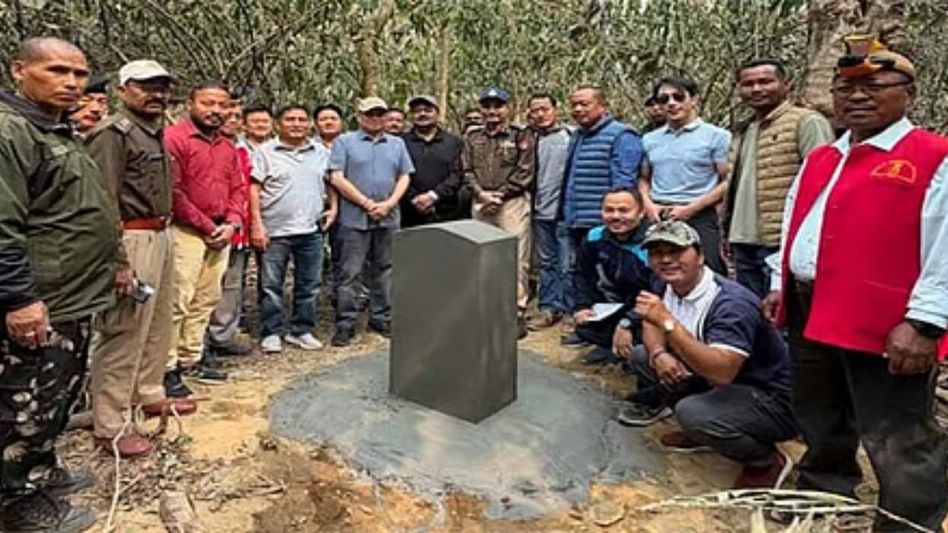
Replying to a written question from BJP MLA Wanglin Lowangdong, the chief minister said Pakke-Kessang district has been selected as the first district for installing boundary pillars. He said the demarcation work began on February 9 this year and the first pillar was successfully erected on February 27.
Khandu stated that following the Namsai Declaration and the subsequent boundary settlement process, Arunachal Pradesh has registered an overall net territorial gain along the interstate boundary with Assam. According to him, the finalised settlement covering eight districts reflects a clear gain in territory for the state.
The chief minister also said that issues related to the Tirap sector have already been resolved under the Assam–Arunachal Pradesh MoU 2023 signed between the two state governments on April 20, 2023. He clarified that the Arunachal Pradesh government has not surrendered any land or forest area to Assam, emphasising that the settlement process was carried out through structured dialogue, joint verification by regional committees of both states and mutual agreement under the Namsai Declaration and the subsequent MoU.
Khandu said the exercise aims to resolve long-pending interstate boundary disputes through consensus, field verification and adherence to constitutional and legal procedures. The outcome, he added, represents a negotiated and mutually agreed settlement that safeguards the territorial interests of Arunachal Pradesh.
He further informed the Assembly that issues relating to the remaining districts — Kamle, Papum Pare, Lower Siang, Lower Dibang Valley and Longding — will be taken up through regional committees constituted by the two states. These committees are conducting joint field verification and ground inspections to assess competing claims based on historical documents, administrative control, traditional usage and prevailing ground realities.
Reiterating the state government’s position, Khandu said Arunachal Pradesh remains committed to protecting its territorial and traditional claims through constitutional processes, consultations and lawful mechanisms.
The Namsai Declaration, signed on July 15, 2022 by the chief ministers of Assam and Arunachal Pradesh, marked a major step toward resolving the long-running boundary dispute between the two Northeastern states. The agreement initially aimed to address disputes involving 123 villages along the interstate boundary, which was later reduced to 86 villages following negotiations and joint verification exercises.
Arunachal Pradesh, which became a Union Territory in 1972 and attained full statehood in 1987, has long maintained that several forested tracts in the plains historically belonged to hill tribal communities and were transferred to Assam without consultation. After statehood, a tripartite committee recommended transferring certain territories from Assam to Arunachal Pradesh, a proposal that Assam contested, leaving the matter pending before the Supreme Court for many years.