Arunachal hosts biohappiness festival as Keyi Panyor projected as India’s first ‘Bio-Happy District’
Arunachal Pradesh’s Biohappiness Festival highlights sustainable living and biodiversity. Keyi Panyor is named India’s first Bio-Happy District, setting a model for eco-friendly community well-being.

- May 28, 2026,
- Updated May 28, 2026, 5:30 PM IST

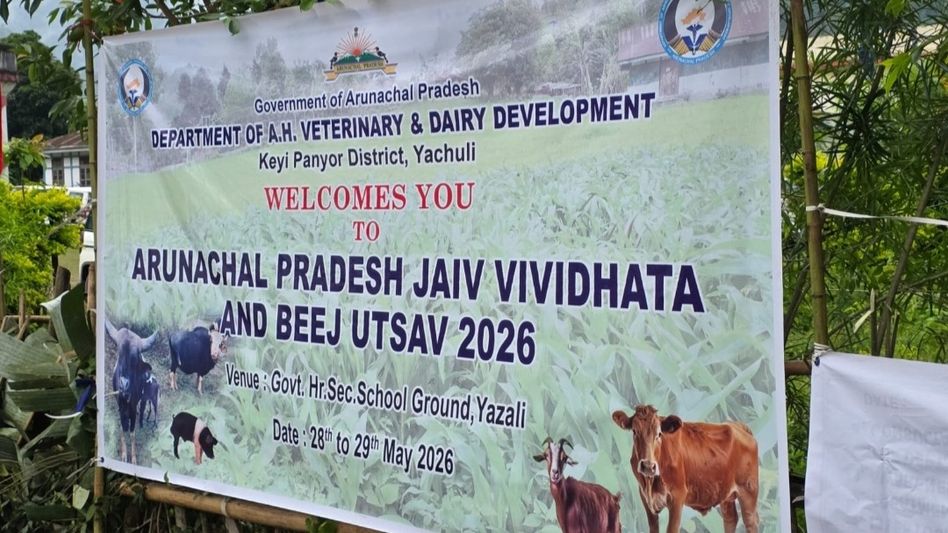
Agriculture Minister Gabriel D Wangsu on May 28 inaugurated the Arunachal Pradesh Jaiv Vividhata & Mvm Liid Soonam / Beej Utsav 2026 at Yazali, highlighting Keyi Panyor as a pioneering model for biohappiness-driven development and climate resilience.
The two-day festival and stakeholder consultation is being held at Government Higher Secondary School Yazali and has been jointly organised by the 16th YAC MLA Office, Krishi Vigyan Kendra Keyi Panyor, Arunachal State Rural Livelihoods Mission and M S Swaminathan Research Foundation.
During the inaugural session, Wangsu said traditional ecological knowledge remains Arunachal Pradesh’s strongest safeguard against climate change and stressed the importance of preserving indigenous crop varieties adapted to local conditions.
He noted that changing rainfall patterns, shorter winters and increasing floods have made locally adapted farming systems more important than ever for the region’s future food security.
The minister also praised farmer and seed conservator Hage Nanya for seeking protection under the Protection of Plant Varieties and Farmers' Rights Act for 12 indigenous paddy varieties from Lower Subansiri district.
Wangsu announced plans to strengthen community seed banks, local seed certification systems, storage infrastructure and women-led “Seed Guardian” networks to preserve traditional agricultural systems.
According to organisers, Keyi Panyor has been projected by state leaders as India’s first “Bio-Happy District”, integrating biodiversity conservation, indigenous culture, ecological sustainability and human well-being into development planning.
The event also featured participation from tribal leaders, farmers, researchers, forest officials and local entrepreneurs, with discussions focusing on agrobiodiversity conservation, climate-resilient farming, women-led governance, youth entrepreneurship and sustainable livelihoods.
Toko Tatung delivered the welcome address, while Soumya Swaminathan highlighted the role of biohappiness in linking environmental conservation with nutrition security, livelihoods and social equity.
The festival also included an agrobiodiversity and sustainable livelihoods exhibition showcasing indigenous seeds, traditional farming systems and local enterprises from Arunachal Pradesh.