Arunachal women's welfare society pushes for governance overhaul
The Arunachal Pradesh Women Welfare Society (APWWS) has submitted a comprehensive set of recommendations to the Arunachal Pradesh Administrative Reforms Commission (APARC), calling for sweeping administrative reforms to improve governance, public service delivery and transparency in the state.

- Jul 09, 2026,
- Updated Jul 09, 2026, 9:03 AM IST

The Arunachal Pradesh Women Welfare Society (APWWS) has submitted a comprehensive set of recommendations to the Arunachal Pradesh Administrative Reforms Commission (APARC), calling for sweeping administrative reforms to improve governance, public service delivery and transparency in the state.
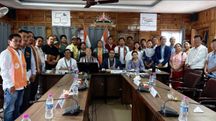
The recommendations were presented to APARC Chairman Pramod Jain for consideration while framing the state's administrative reform roadmap.
Among its key proposals, the APWWS sought a complete overhaul of the government recruitment system by making it more transparent, merit-based and professionally managed. It recommended involving trained human resource professionals in recruitment to strengthen talent assessment and competency evaluation.
The organisation also proposed a mandatory 30-day to 60-day district immersion programme for newly recruited Group 'A' and Group 'B' officers, under which they would live and work in remote villages and border areas before taking up regular postings to gain first-hand experience of local conditions and development challenges.
To improve manpower management, the APWWS recommended replacing the existing post-based staffing model with a workload-based system that factors in population served, geographical coverage, service demand and administrative complexity. It also proposed periodic staffing reviews through departmental committees with representation from women.
The society further suggested creating a real-time digital Human Resource Dashboard to monitor sanctioned posts, vacancies, promotions, transfers, retirements, training and deployment across government departments. It also advocated cross-functional training for officers, particularly to address manpower shortages in remote districts.
Emphasising accountability, the APWWS recommended introducing outcome-based Key Performance Indicators (KPIs) focusing on service delivery, grievance redressal, innovation, efficiency and citizen satisfaction. It also proposed a structured leadership and mentorship programme for young civil servants, a unified "One Government, One Citizen Interface" for integrated public services, five-year reviews of personnel administration and digital competency records for all government employees.
The organisation also urged the government to shift from expenditure-based evaluation to outcome-based governance by publishing annual departmental targets and measurable performance indicators in citizen-friendly formats while promoting greater transparency through proactive disclosure of information.
To strengthen workplace grievance redressal, the APWWS proposed establishing NYAYA-SHIELD—a state-managed digital grievance platform for all government employees irrespective of gender. The proposed system would address workplace harassment and gender-based discrimination, complementing existing mechanisms such as SHE-BOX while extending coverage to men, women, transgender and gender-diverse persons. The society suggested launching the platform as a one-year pilot project with an estimated budget of ₹1 crore to ₹1.2 crore.
During the meeting, APWWS president Jarjum Ete also expressed concern over the closure of schools in rural areas, saying students are now forced to travel long distances for education. She further called for effective implementation of the Central Civil Services (Conduct) Rules, stating that it could help curb polygamy in the state.
APARC Chairman Pramod Jain assured the delegation that the Commission would examine the recommendations and take up the matter with the state government.