Arunachal’s 5th Khangri Glacier Expedition strengthens climate monitoring efforts
The fifth Khangri Glacier Expedition in Arunachal Pradesh successfully gathered crucial data on glacial changes and climate impact. This effort strengthens ongoing environmental monitoring and conservation plans in the Himalayan region.

- May 11, 2026,
- Updated May 11, 2026, 12:47 PM IST

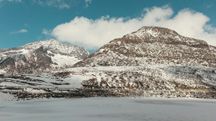
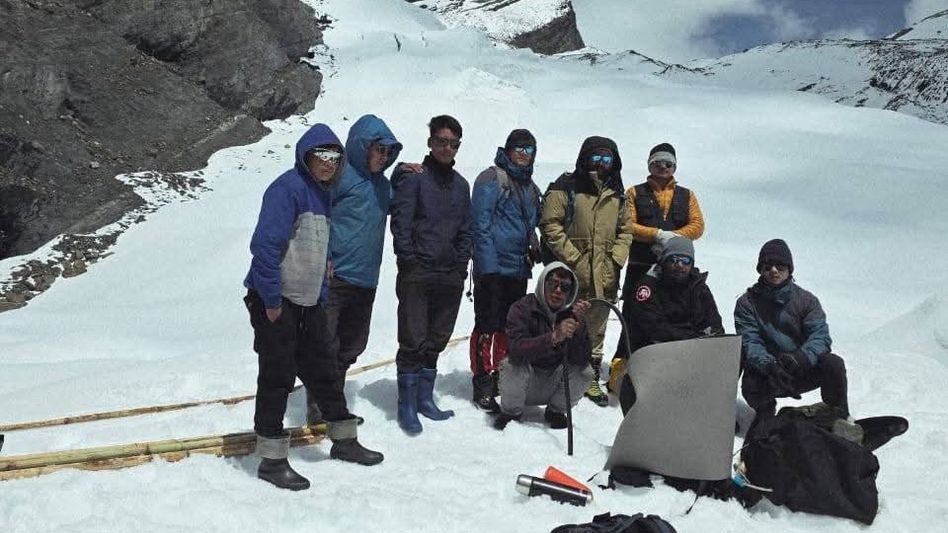
The Centre for Earth Sciences and Himalayan Studies (CESHS), in collaboration with National Centre for Polar and Ocean Research (NCPOR) and North Eastern Regional Institute of Science and Technology, successfully completed the 5th Khangri Glacier Expedition in the transboundary Mago Chu Basin of Tawang district.
The expedition was conducted in a strategically important headwater region linked to the larger Brahmaputra Basin system and focused on long-term glacier and climate monitoring in the eastern Himalayas.
During the expedition, scientists carried out maintenance of the existing Automatic Weather Station (AWS) and Automatic Water Level Recorder (AWLR). The team also successfully installed bamboo stakes using a steam ice-core drilling system along with precise DGPS positioning to continue glacier mass balance and surface velocity monitoring.
Field observations revealed significant expansion of supraglacial ponds and exposed ice-debris walls across debris-covered sections of the Khangri Glacier, indicating rapid and uneven glacier melting. Researchers observed that several supraglacial ponds were actively causing localized calving and small-scale ice detachments along pond margins, further accelerating glacier retreat.
The team additionally conducted studies on moraine systems, hanging glaciers, and glacial lakes in the region.
Officials stated that the expedition strengthens long-term cryospheric monitoring efforts in the eastern Himalayan region and will provide crucial scientific data related to glacier dynamics, water security, and emerging climate-related cryospheric hazards.