
Arunachal's Pangkang village clears way for pre-feasibility study of Siang multipurpose project
79 out of 86 households of Pangkang (Jorkong) village have signed a Memorandum of Understanding (MoU) with the Government of Arunachal Pradesh, granting consent for the conduct of Pre-Feasibility Report (PFR) activities for the Siang Upper Multipurpose Project.

- Mar 02, 2026,
- Updated Mar 02, 2026, 5:58 PM IST

79 out of 86 households of Pangkang (Jorkong) village have signed a Memorandum of Understanding (MoU) with the Government of Arunachal Pradesh, granting consent for the conduct of Pre-Feasibility Report (PFR) activities for the Siang Upper Multipurpose Project.
The MoU signing ceremony was held in the presence of Deputy Commissioner of Siang Tayi Taggu, SUMP Chairman Tamiyo Taga, Joint Secretary (Hydro Power) Hage Lailang, Chief Engineer (Hydro Power), Siang Basin, Er. Karom Perme, and State Nodal Officer SUMP Er. Atek Miyu, underscoring the administrative and technical significance of the initiative.
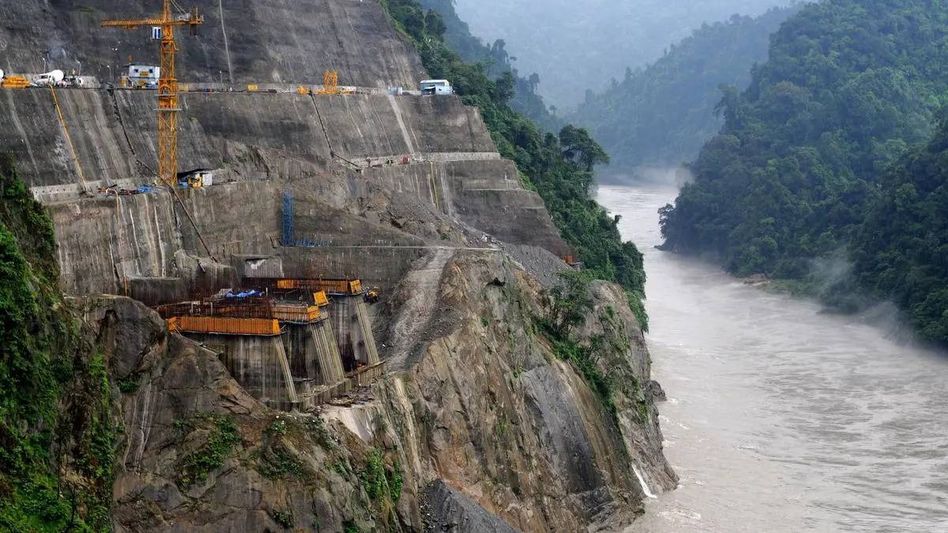
The proposed Siang Upper Multipurpose Project is considered a project of national importance, aimed at boosting hydropower generation, strengthening flood control mechanisms, and enhancing water resource management in the strategically sensitive Siang basin of Arunachal Pradesh.
Minister for Panchayati Raj and Transport Ojing Tasing described the signing as a reflection of the state government’s consultative and people-centric approach under the leadership of Chief Minister Pema Khandu. He emphasized that the government has prioritized dialogue and consensus-building with local communities before initiating any major developmental intervention.
Tasing also acknowledged the support of Prime Minister Narendra Modi for hydropower expansion in the Northeast, stating that while the project carries national strategic value, the state remains steadfast in safeguarding the rights, environmental concerns, and cultural heritage of indigenous communities.
Officials reiterated that the current consent pertains only to PFR-related activities — a preliminary stage involving technical surveys, environmental assessments, and viability studies — and not the commencement of construction. The government assured that due process, transparency, and continued engagement with stakeholders will guide subsequent steps.
With an overwhelming majority of households expressing willingness to cooperate, the development is being seen as a crucial milestone in balancing infrastructure growth with community participation in one of India’s ecologically and strategically sensitive regions.
MORE NEWS










Copyright©2026 Living Media India Limited. For reprint rights: Syndications Today
