Experts review flood threat from Khangri Glacier, discuss GLOF preparedness in Arunachal's Tawang
Experts, agencies and the Indian Army met in Tawang to assess GLOF risks linked to the Khangri Glacier. The review underlined the need for stronger monitoring, field studies and mitigation to protect downstream communities.

- Jun 04, 2026,
- Updated Jun 04, 2026, 6:24 PM IST

- National experts and agencies held a two-day consultation on glacial hazards
- Discussions centred on the Mago Chu Basin and downstream flood risks
- Limited field data leaves Eastern Himalayan glacial lakes among least studied
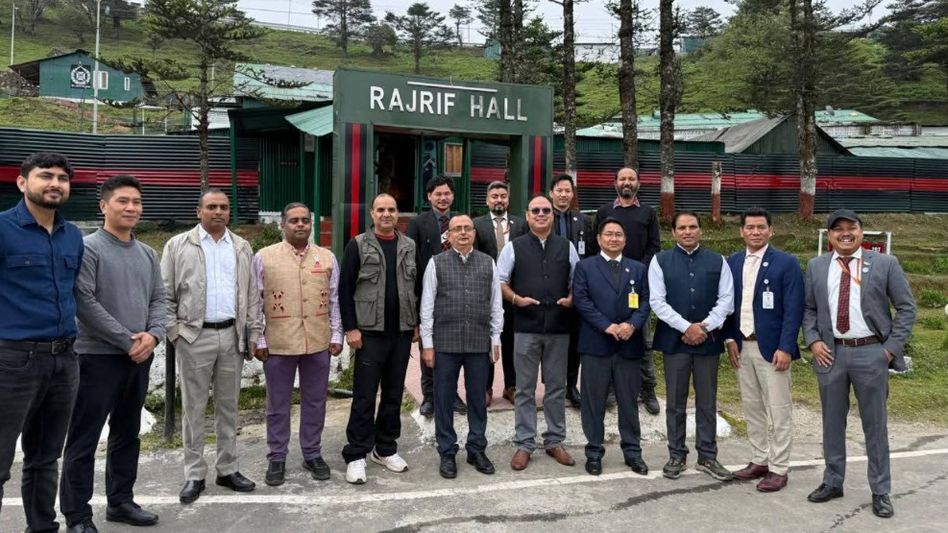
A high-level consultation involving national scientific institutions, government agencies and the Indian Army was held in Tawang to assess the growing threat of Glacial Lake Outburst Floods (GLOFs) originating from the Khangri Glacier and to strengthen disaster preparedness in the Eastern Himalayas.
The two-day deliberation focused on the Mago Chu Basin and brought together experts from leading institutions, including the National Centre for Polar and Ocean Research, Indian Institute of Technology Roorkee, Birbal Sahni Institute of Palaeosciences, Indian Institute of Technology Mandi, Central Water Commission, Department of Science and Technology and the Centre for Earth Sciences and Himalayan Studies (CES&HS).
Experts discussed science-based and technology-driven strategies to assess and mitigate GLOF risks, which could pose serious threats to infrastructure, livelihoods and downstream communities in the region.
The consultation highlighted the need for stronger collaboration among scientific institutions and government agencies to improve monitoring, field investigations and risk assessment in the Mago Chu Basin.
Participants noted that glaciers and glacial lakes in the Eastern Himalayas remain among the least studied due to difficult terrain, high altitudes and limited field data. Most existing studies rely on satellite imagery, which provides only partial information about lake depth, water volume and basin characteristics.
A key focus of the discussions was the assessment of Sangye Neku (Rani) Lake and other glacial lakes in the region. Experts stressed the importance of bathymetric surveys to accurately estimate stored water volumes and predict downstream flood scenarios in the event of a glacial lake breach.
Following a detailed review, specialists recommended several mitigation measures, including controlled lowering of lake water levels through a modular siphon-based drainage system. The approach was described as technically feasible and environmentally sensitive for fragile Himalayan ecosystems.
Addressing the gathering, the Director of CES&HS emphasized that changes occurring in the Himalayan cryosphere have far-reaching consequences beyond mountain regions, affecting river systems, water security, energy production, ecosystems and communities downstream.
The meeting concluded with a commitment from participating institutions to strengthen scientific research, enhance monitoring mechanisms and develop evidence-based strategies to protect vulnerable mountain communities and critical infrastructure from emerging glacial hazards in Arunachal Pradesh.