Indefinite bandh begins in Arunachal’s Lekang over government recruitment eligibility rules
Community groups, student unions and NGOs launched an indefinite bandh in Lekang against Arunachal Pradesh's new government recruitment criteria. Protesters say the policy could exclude domicile-holding non-APST residents from jobs and unsettle the existing reservation system.
 Representative Image
- Aug 14, 2026,
- Updated Aug 14, 2026, 3:16 PM IST

- Road blockades at three entry points disrupted daily movement from 5 am
- New rules require permanent residence, APST or indigenous status, and language proficiency
- Morang called the decision unconstitutional and warned of reservation-related legal challenges
An indefinite bandh called by community-based organisations, student unions and NGOs began in Arunachal Pradesh’s Lekang circle in Namsai district on Friday, August 14, to protest the state cabinet’s recent decision introducing uniform eligibility criteria for government recruitment.
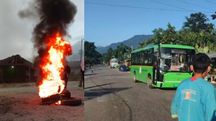
The shutdown began at 5 am, with protesters blocking roads at key entry points, including Banka Bridge, Bordumsa Gate and Dirak Gate, disrupting normal life in the area.
Under the new recruitment framework, permanent residence, Arunachal Pradesh Scheduled Tribe (APST) or indigenous status, along with proficiency in at least one indigenous tribal language, will be mandatory for applicants. The Arunachal Pradesh Public Service Commission and Arunachal Pradesh Staff Selection Board have been directed to incorporate the provisions into future direct recruitment for Group A, B and C posts.
Protesting organisations have opposed the policy, arguing that it could affect genuine non-APST residents of Lekang who possess valid domicile and resident certificates.
Horojit Morang, a representative of the protesting organisations, described the cabinet decision as “unconstitutional” and warned that it could expose the state’s existing reservation framework to legal challenges.
Referring to the Supreme Court’s 1992 judgment in the Indra Sawhney case, Morang said any judicial intervention could potentially affect the state’s existing reservation system.
Under the current 80:20 reservation arrangement, 80 per cent of vacancies are reserved for APST candidates, while 20 per cent are allocated to non-APST aspirants.
The protesters fear that changes to the existing arrangement could make domicile-holding candidates from Lekang ineligible for government jobs. They claimed that many such residents are indigenous inhabitants and possess historical land survey records dating back to 1968.
The protesting organisations had submitted a memorandum to Chief Minister Pema Khandu on August 12, urging the government and the Joint High-Powered Committee to examine historical records and domicile status before finalising the recruitment policy.
They demanded that genuine domicile and resident certificate holders from Lekang should not be excluded from government employment opportunities.
“We will not take the matter to court for now. Our demand is that reservation and employment protection must be ensured for the people of Lekang. If this is not done, we will take democratic steps,” Morang said.
Lekang Assistant Commissioner Tojum Ete said the bandh was continuing and no untoward incident had been reported so far.
“Police and paramilitary forces have been deployed and are patrolling the area to thwart any untoward incident,” Ete said.
In an effort to defuse the situation, Lekang MLA Likha Soni and Namsai Deputy Commissioner Lobsang Tsering are scheduled to hold discussions with representatives of the protesting organisations on Friday evening.