‘Solve your own house first’: Arunachal students’ union hits back at Kuki rights body
The All Arunachal Pradesh Students’ Union (AAPSU) on September 8 hit out at the Manipur-based Kuki Human Rights Council (KHRC) over its recent letter to the National Human Rights Commission (NHRC) and the United Nations regarding the Special Intensive Revision (SIR) exercise in Bordumsa, calling it “baseless, politically motivated and unwanted interference” in Arunachal Pradesh’s internal affairs.

- Sep 08, 2026,
- Updated Sep 08, 2026, 10:50 PM IST

The All Arunachal Pradesh Students’ Union (AAPSU) on September 8 hit out at the Manipur-based Kuki Human Rights Council (KHRC) over its recent letter to the National Human Rights Commission (NHRC) and the United Nations regarding the Special Intensive Revision (SIR) exercise in Bordumsa, calling it “baseless, politically motivated and unwanted interference” in Arunachal Pradesh’s internal affairs.
Reacting to the letter, AAPSU president Meje Taku said the KHRC had no locus standi to comment on issues concerning Arunachal’s indigenous communities.
“This is purely a matter of Arunachal Pradesh and its indigenous people. It has absolutely nothing to do with some community organisation sitting in Lamka, Churachandpur in another state. We strongly condemn this attempt to internationalise our internal issue,” Taku said in a statement.
AAPSU said the SIR is a statutory exercise undertaken by the Election Commission of India to revise and verify electoral rolls, and claimed that as a stakeholder it had the democratic right to ensure that “illegal and doubtful names” are not included in the state’s voter list.
The students’ union said the Chakma-Hajong issue should not be viewed merely as a minority rights matter, describing it as a decades-old concern over indigenous land, identity and demographic security.
According to AAPSU, Chakmas and Hajongs were brought to the region between 1964 and 1969 and settled on humanitarian grounds by the Government of India. It claimed that indigenous tribes in Changlang district were now facing the prospect of becoming a minority in their own land.
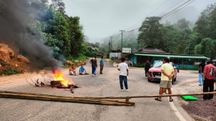
AAPSU said its protests during the Bordumsa SIR hearings were aimed at protecting indigenous land, culture and identity, which it said are safeguarded under constitutional and legal provisions including Article 371H and the Bengal Eastern Frontier Regulation, 1873.
Responding to the KHRC’s allegation of violent obstruction, AAPSU maintained that its agitation was democratic and peaceful and reflected concerns among indigenous communities.
“Instead of filing FIRs against our students, the administration should listen to the voice of the indigenous people,” it said.
AAPSU also criticised the KHRC over the situation in Manipur, asking the organisation to address human rights concerns in its own state before commenting on Arunachal Pradesh.
The union alleged that Manipur had been witnessing prolonged violence, with thousands of people displaced and living in relief camps. It said the KHRC should ensure “equality, justice and freedom” for people in Manipur before raising such issues in Arunachal Pradesh.
AAPSU further warned that Arunachal Pradesh would not accept what it described as “illegal settlement” or allow external organisations to dictate the state’s future.
“Arunachal belongs to its indigenous tribes. No amount of letters to the UN or NHRC by any outside organisation can change this historical and constitutional fact,” the union said.
AAPSU appealed to the Chief Election Commissioner of India and the Arunachal Pradesh government to complete the SIR process transparently and not succumb to what it termed external pressure tactics.
The students’ union also called upon the people of Arunachal Pradesh to remain united in protecting the state’s indigenous rights.