Tiger returns to Arunachal sanctuary after nearly two decades
A Royal Bengal Tiger has been photographed in D Ering Memorial Wildlife Sanctuary after nearly two decades. Officials said the image reflects ecosystem resilience and sustained conservation efforts.

- May 08, 2026,
- Updated May 08, 2026, 8:26 AM IST

- Forest teams intensified monitoring after indirect signs suggested big cat movement
- Camera trap surveys also recorded Chinese pangolin and endangered hispid hare
- Officials called the sighting proof of habitat health and ecosystem stability
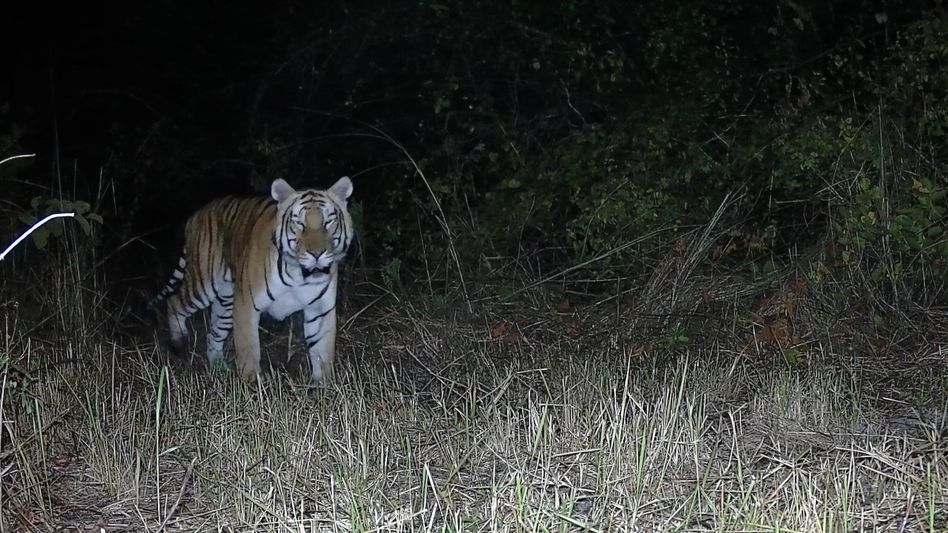
A Royal Bengal Tiger has been photographed in Arunachal Pradesh’s D Ering Memorial Wildlife Sanctuary for the first time in nearly two decades, confirming the return of the species to the protected area and marking a major development for wildlife conservation in the state.
The tiger was captured during the latest round of camera trap surveys carried out in the sanctuary with technical support from Ashoka Trust for Research in Ecology and the Environment. Forest officials said repeated monitoring exercises had been conducted over the past year after indirect signs suggested possible tiger movement in the landscape.
Earlier attempts did not yield photographic evidence, but officials continued surveillance with “renewed intensity and persistence” before finally recording the big cat on camera.
Apart from the tiger, surveys also documented the Critically Endangered Chinese Pangolin and the rare Endangered Hispid Hare, reinforcing the ecological importance of the sanctuary’s riverine grassland ecosystem.
Calling it an “immensely proud and emotional moment”, Divisional Forest Officer Kempi Ete said the tiger’s return reflected “the resilience of the ecosystem and the cumulative impact of sustained conservation efforts on the ground”.
“The return of the tiger after nearly two decades reflects the resilience of the ecosystem,” Ete said, adding that the achievement belonged equally to forest staff, Eco-Development Committees and local community organisations involved in conservation activities across the region.
Officials said the confirmed presence of a tiger is a significant ecological milestone because apex predators are considered indicators of habitat health and ecosystem stability.
Rajkamal Goswami, who leads biodiversity and bio-resource conservation initiatives for ATREE in Arunachal Pradesh, described the camera trap image as “historic photographic evidence” and said it highlighted the long-term efforts of sanctuary staff since the protected area was established.
He also said recent attempts to build collaborative conservation initiatives involving researchers and local communities had strengthened protection efforts in the sanctuary. Goswami expressed hope that the rediscovery would bring greater focus on scientific monitoring and stronger conservation support for the protected area, which is the only sanctuary in Arunachal Pradesh dominated by riparian grasslands.
The Forest Department said it would continue to strengthen habitat protection, scientific monitoring and community-led conservation programmes to secure wildlife populations in the landscape.
Mebo MLA Oken Tayeng said the tiger’s return was a “healthy sign” of improving ecological conditions in the sanctuary. He added that the presence of the species could improve tourism prospects and create employment opportunities for youths living in fringe villages around the protected area.
Tayeng had earlier initiated a proposal for rhino reintroduction in the sanctuary with the Arunachal Pradesh government. The proposal was later included in the state budget by Chief Minister Pema Khandu as part of plans to develop the sanctuary into a major biodiversity and eco-tourism destination.