93-year-old Assam man recovers after massive bee attack leaves him unconscious for 24 hours
A 93-year-old man from Dimow in Assam’s Sivasagar district has made a remarkable recovery after remaining unconscious for nearly 24 hours following a massive bee attack, in an incident that has also drawn attention to increasing bee attack cases in the state linked to changing climate conditions.

- Apr 30, 2026,
- Updated Apr 30, 2026, 8:24 AM IST

A 93-year-old man from Dimow in Assam’s Sivasagar district has made a remarkable recovery after remaining unconscious for nearly 24 hours following a massive bee attack, in an incident that has also drawn attention to increasing bee attack cases in the state linked to changing climate conditions.
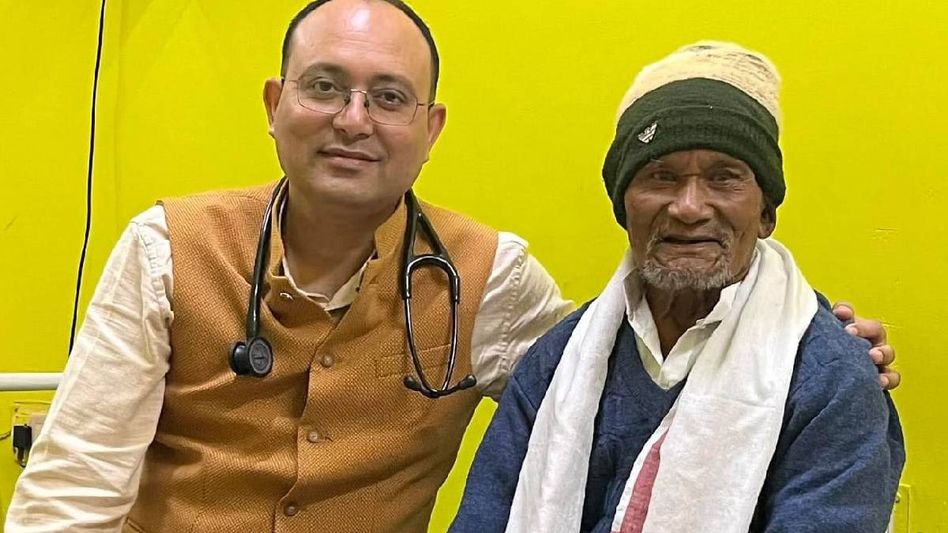
The elderly man, identified as Badan Koka, was attacked by an estimated swarm of around 500 bees on March 21 while working in his backyard. The attack left him critically injured and physically weakened.
Family members initially arranged medical treatment and brought him home, but his condition deteriorated soon afterwards. He reportedly became unconscious and stopped responding or speaking, prompting immediate concern among relatives.
The following day, he was rushed to Dimow Rural Hospital, where doctors conducted preliminary medical examinations. Despite the absence of advanced diagnostic facilities such as CT scan services, attending physicians clinically assessed the patient and ruled out the possibility of a stroke after monitoring his symptoms closely.
With limited rural medical infrastructure and the option of referral available, doctors decided to continue treatment locally through intensive medication, saline administration and continuous observation.
Hospital sources said the patient regained consciousness within 24 hours of treatment. Doctors subsequently managed additional complications successfully, leading to gradual recovery.
Medical personnel involved in the treatment stated that clinical judgement and timely intervention proved critical in saving the patient’s life. They also acknowledged the cooperation and trust shown by the patient’s family during the treatment process.
Experts have meanwhile noted that incidents involving aggressive bee behaviour are reportedly increasing in several parts of Assam, with changing climate patterns believed to be one of the contributing factors.
The incident has highlighted both emerging environmental concerns and the role of rural healthcare systems in handling medical emergencies under constrained conditions.