AFSPA likely to be lifted from most of Northeast by next year: Amit Shah
Amit Shah said AFSPA is likely to be withdrawn from almost the entire Northeast by next year after a tripartite MoU on oil exploration was signed by the Centre, Assam and Nagaland. He said the agreement reflects improving peace in the region and could unlock long-stalled resource development.
 Representative Image
- Jun 11, 2026,
- Updated Jun 11, 2026, 8:57 PM IST

- Centre, Assam and Nagaland signed a tripartite MoU for border exploration
- The deal revives oil and mineral activity stalled for over three decades
- Shah said the region's deposits remained untapped due to security issues
Union Home Minister Amit Shah on June 11 said the Armed Forces (Special Powers) Act (AFSPA) is likely to be withdrawn from almost the entire Northeast by next year, describing the shrinking areas under the law as a key indicator of improving peace and stability in the region.
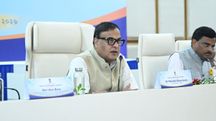
Speaking after the signing of a tripartite Memorandum of Understanding (MoU) between the Centre and the governments of Assam and Nagaland for mineral oil exploration in the disputed border belt, Shah expressed confidence that AFSPA would remain in force in only "one or two states" across the Northeast.
“I am confident that barring one or two states, we will withdraw AFSPA from the entire Northeast next year,” he said.
The agreement is expected to restart oil and mineral exploration activities in the Disputed Area Belt (DAB) along the Assam-Nagaland border, where operations had remained stalled for more than three decades because of jurisdictional disputes and security concerns.
Calling the MoU a “historic moment”, Shah said the agreement had removed a major obstacle to Prime Minister Narendra Modi’s vision of a developed Northeast. He added that the region possesses significant reserves of oil, natural gas and minerals that remained largely untapped due to prolonged law and order challenges.
“This will open new avenues for mineral exploration in the Northeast. The area not only has oil and gas but huge mineral deposits, which could not be explored due to law and order issues,” Shah said.
Highlighting the economic potential of the agreement, the Union minister claimed that oil extraction capacity in the area could increase nearly tenfold, from around 1,000–1,500 barrels per day. He also said that a single field in the region could yield recoverable resources worth more than Rs 15,000 crore.
“If we extract the oil deposits spread across Nagaland, we would be able to reduce dependence on foreign countries for our oil needs,” he said.
Shah linked the agreement to the broader peace process in the Northeast, noting that 12 accords have been signed since 2019 between various groups and state governments. According to him, these efforts have contributed to an around 80 per cent decline in violent incidents across the region.
He also credited Prime Minister Modi for maintaining a sustained focus on the Northeast, saying development initiatives had accelerated under his leadership.
“The development of both Assam and Nagaland remained hampered for a long time because a consensus could not be reached for an MoU. The avenue that opened today will open doors for development for both states. It is the best example of cooperative federalism,” Shah said.
The MoU is expected to pave the way for joint resource development in the border region while strengthening cooperation between Assam and Nagaland on long-pending economic and administrative issues.