Assam Health Minister defends MBBS fee hike, says revised rates lower than private colleges
Assam Health Minister Ashok Singhal on Saturday, October 24 defended the state government's decision to increase MBBS course fees, saying the revised rates remained significantly lower than the fees charged by private medical institutions. He said the increase was a deliberate policy decision and outlined the revised fee structure based on students' annual family income.

- Oct 24, 2026,
- Updated Oct 24, 2026, 12:54 PM IST

Assam Health Minister Ashok Singhal on Saturday, October 24 defended the state government's decision to increase MBBS course fees, saying the revised rates remained significantly lower than the fees charged by private medical institutions. He said the increase was a deliberate policy decision and outlined the revised fee structure based on students' annual family income.
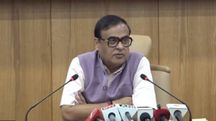
Speaking at a press conference in Guwahati, Singhal said students at private institutions could pay around Rs 40 lakh for medical education, while the fee increase introduced by the Assam government was comparatively small.
"Yes, the fees have been increased. Why? Because it was a decision of the government. In private institutes, people are paying Rs 40 lakh for it. We have made a very small increase," he said.
Under the revised fee structure, MBBS students from families earning more than Rs 9 lakh annually will pay Rs 1 lakh a year. Students whose family income falls between Rs 4 lakh and Rs 9 lakh will pay Rs 50,000 annually, while those from families earning below Rs 4 lakh will pay Rs 5,000, according to the minister.
The revised rates link the annual fee payable by medical students to their family's income, with the lowest fee applying to students from below-poverty-line families.
The fee hike comes amid continuing discussions over the cost of medical education and access to professional courses in Assam and other northeastern states, where expanding medical education infrastructure remains an important part of strengthening healthcare services.
Separately, Singhal said the state government was working to keep healthcare affordable, particularly for patients requiring specialised treatment.
He said around 33 to 34 kidney transplants were carried out in Assam last year at a cost of Rs 2.5 lakh to Rs 3 lakh. According to the minister, the expenses were covered under the Pradhan Mantri Arogya Nidhi and Mukhya Mantri Arogya Nidhi schemes.
Singhal also said more than 30 new dialysis centres had opened in the state over the past three months, expanding access to treatment for patients with kidney-related ailments.
The minister's remarks highlighted the government's stated efforts to address two aspects of healthcare in Assam: medical education costs for students and the affordability of specialised treatment for patients.
However, the revised MBBS fee structure and its implications for students from different income groups remain central to the debate over access to medical education in the state.