
Assam hydro projects seen as key to stabilising India’s renewable power grid
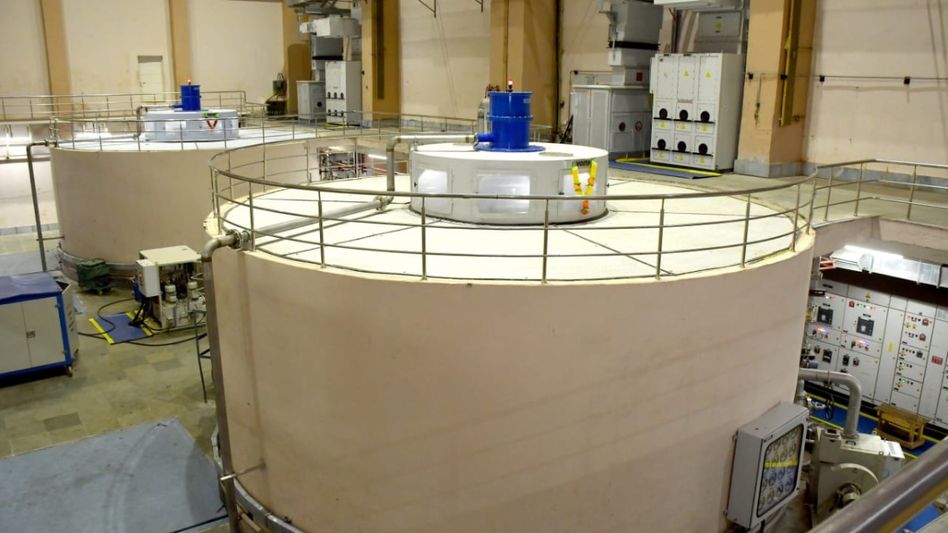
Media representatives visited NEEPCO’s Kopili Hydroelectric Power Station (275 MW) at Umrangso in Assam on December 10, 2025, to understand the role of such projects in the evolving energy landscape. Senior NEEPCO officials highlighted that India’s current power mix includes around 1,83,524 MW of installed solar and wind capacity, compared with just 50,348 MW of hydropower as of October 2025, creating long-term grid security concerns.

- Dec 13, 2025,
- Updated Dec 13, 2025, 1:35 PM IST

As India adds record levels of solar and wind capacity, hydropower projects in Assam are emerging as a critical tool to keep the national power grid stable and reliable.
With renewable energy generation rising sharply, grid managers are facing increasing difficulty in balancing supply and demand due to the intermittent nature of solar and wind power. Hydroelectric projects, including pumped storage projects (PSPs), are being positioned as a solution that can provide flexibility, rapid response and storage support.
Hydropower plants generate electricity by releasing stored water from higher elevations through turbines, while PSPs function as large-scale energy storage systems using two reservoirs at different heights. During periods of excess power, water is pumped to the upper reservoir, and during peak demand, it is released to generate electricity. Although PSPs consume more power than they produce overall, they play a vital role in balancing the grid.
Officials point out that PSPs offer a dual benefit: they supply power during peak demand and absorb surplus electricity during off-peak hours, especially when solar and wind generation is high.
Media representatives visited NEEPCO’s Kopili Hydroelectric Power Station (275 MW) at Umrangso in Assam on December 10, 2025, to understand the role of such projects in the evolving energy landscape. Senior NEEPCO officials highlighted that India’s current power mix includes around 1,83,524 MW of installed solar and wind capacity, compared with just 50,348 MW of hydropower as of October 2025, creating long-term grid security concerns.
NEEPCO has developed six hydro projects across the North East with a combined capacity of 1,525 MW, accounting for nearly 39 per cent of the region’s installed capacity. Another 1,126 MW is under construction in Arunachal Pradesh. According to the company, areas around these projects have seen major improvements in connectivity, infrastructure and living standards.
Beyond electricity generation, the projects have contributed to road and bridge construction, transmission networks, healthcare, education and market facilities. Local employment has been generated during both construction and operation, alongside skill development initiatives through ITIs and community programmes. Tourism has also grown around several reservoirs, including Kopili, while fishing and related livelihoods have expanded. Events such as the Amur Falcon festivals at Doyang and Kopili have gained international attention.
NEEPCO is now exploring new pumped storage projects in the North East and other regions. The existing Kopili and Umrong reservoirs are being studied for potential conversion into a PSP.
Hydropower and pumped storage have been identified as priority sectors by the Government of India, which has introduced measures such as renewable energy status, budgetary support for infrastructure, waiver of interstate transmission charges and policy frameworks to speed up approvals.
Energy experts stress that with proper design, safety standards and monitoring, hydro and pumped storage projects can play a decisive role in ensuring energy security while supporting India’s transition to cleaner power.
MORE NEWS












Copyright©2026 Living Media India Limited. For reprint rights: Syndications Today
