Assam, Meghalaya agree to continue farming in Lapangap, defer border demarcation
Assam and Meghalaya have agreed to let residents continue cultivation in designated parts of Lapangap. The arrangement keeps livelihoods going while a state-level committee examines the permanent boundary issue.

- Jun 02, 2026,
- Updated Jun 02, 2026, 10:30 PM IST

- The June 2 meeting brought leaders, officials and local bodies together
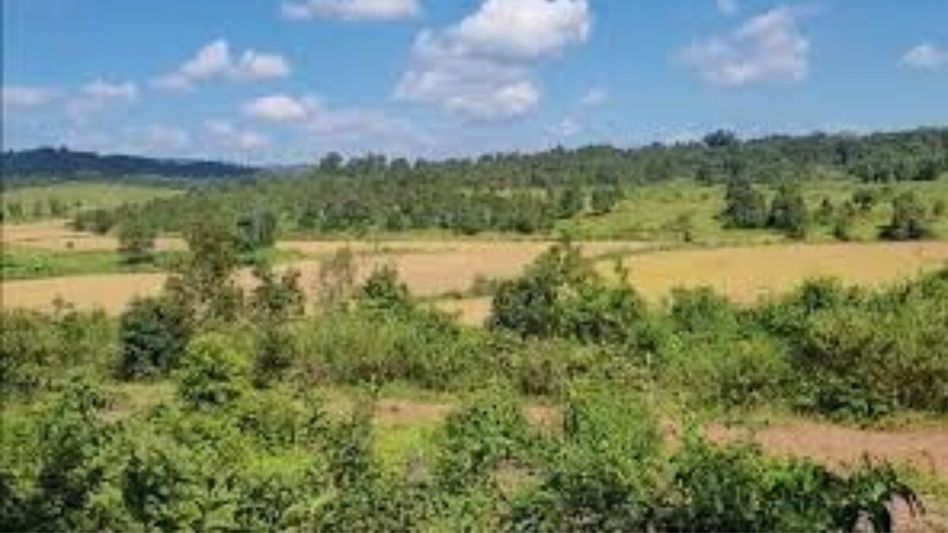
- Lapangap villagers will grow paddy in foothill areas under the arrangement
- Tahpat residents can cultivate banana, pineapple and ginger on hill slopes
The governments of Assam and Meghalaya on June 2 agreed to allow residents on both sides of the disputed Lapangap region to continue cultivation in designated areas, while leaving the issue of permanent boundary demarcation to a state-level committee.
The decision was taken at a high-level meeting held at the Assam Police Camp in Lapangap, attended by political leaders, senior administrative and police officials, and representatives of local bodies from both states.
Under the agreement, villagers of Lapangap will continue paddy cultivation in the foothill areas of the disputed region, while residents of Tahpat will be allowed to cultivate seasonal crops such as banana, pineapple and ginger on the hilltops and slopes.
The meeting followed recent discussions between Meghalaya Chief Minister Conrad Sangma and Assam Chief Minister Himanta Biswa Sarma aimed at resolving long-standing issues in the border area through dialogue.
According to a joint statement, both sides agreed that the question of permanent boundary demarcation in the area of difference would be taken up by the appropriate committee at the state level for a final decision.
The two governments also committed themselves to maintaining peace and harmony in the region and avoiding any activity that could affect the law and order situation.
Lapangap has remained a sensitive border location, particularly after a Karbi villager died following a clash between residents from the two sides in October last year.
The meeting brought together senior officials from Meghalaya, including Deputy Chief Minister Sniawbhalang Dhar, Principal Secretary Frederick R Kharkongor, Commissioner and Secretary Cyril V Diengdoh, Jaintia Hills Autonomous District Council Chief Executive Member Thombor Shiwat, West Jaintia Hills Deputy Commissioner Abhinav Singh and Superintendent of Police Jagpal Singh Dhanoa.
The Assam delegation included Karbi Anglong Autonomous Council Chief Executive Member and MLA Tuliram Ronghang, MP Amarsing Tisso, Additional Chief Secretary Ajay Kumar Tiwari, and legislators Surjya Rongphar, Lunsing Teron, Habbey Teron and Niso Terangpi, among others.
Officials noted that an earlier meeting of village representatives convened by the West Jaintia Hills district administration on May 18 had failed to reach a consensus because of differing views over the types of plantation activities that should be permitted in the area.
The latest agreement is being seen as a significant step towards easing tensions in Lapangap, with both state governments and local stakeholders opting for a practical arrangement that protects the livelihood interests of local communities while broader boundary issues remain under discussion.