ASSAM: MP BISWAJIT DAIMARY MEETS PM, RAISES RANGE OF ISSUES OF NORTHEAST
 Biswajit Daimary
- Jul 17, 2018,
- Updated Jun 29, 2022, 1:43 AM IST

17 July 2018:
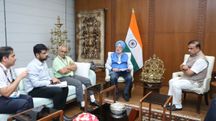
Assam MP, Biswajit Daimary, on Tuesday met Prime Minister Narendra Modi and raised a range of issues of Assam and the Northeast.
He said there was a long-standing demand for the inclusion of Bodo in the ST list in Karbi Anglong and NC Hills Autonomous District Councils and this was also committed in the Bodo Accord. Similarly, the Karbis are demanding for inclusion of the Karbi tribe in the ST list in plain areas of Assam.
In a memorandum submitted to the PM, Daimary wrote: “Both these issues have got good response from you and when you visited Kokrajhar in January, 2016, you had declared in front of lakhs of people that the issues will be resolved by taking a decision in the Cabinet and passing the necessary legislation in Parliament. The public were very excited and happy with your announcement. Thereafter, the Cabinet, under your initiative, had taken a decision and a bill, “The Constitution (Scheduled Castes and Scheduled Tribes) Orders (Amendment) Bill, 2016” was introduced in Parliament. However, the Bill is still pending in Lok Sabha till date. I have pursued the matter with the Hon’ble Parliamentary Affairs and Tribal Affairs Ministers since it was done on your assurance and announcement. I have been told that there is some problem relating to other communities in other States whose names have been included in the said Bill for inclusion in the ST list…
“If this is the reason, the matter can be resolved by amending/deleting those words/names from the Bill and the Bill for inclusion of Bodo-Kachari and Karbi in the ST list may be passed in the Monsoon Session of Parliament”.
He requested the PM to kindly look into the issue and get the matter resolved immediately.
On the tribals in Manipur, he wrote: “Sir, as you are aware, the tribal people of Manipur, namely the Nagas and the Zomis/Kukis have been struggling for the protection of their language, culture, identity, land and for their socio-economic development for the last so many years. Due to your initiative, the Naga Framework Agreement has been signed and at long last, a solution for the Naga people is in sight. However, the issues of the Zomi/Kuki people have been neglected. The United People’s Front (UPF) and Kuki National Organization (KNO) have given up violent activities and are in negotiation with the Government of India for the resolution of their problems. However, the progress of their negotiations has not been satisfactory and till date, a resolution of the matter is not in sight”.
On the issue of Kokborok/indigenous people of Tripura, he said the princely State of Tripura was merged with the Union of India on October 15, 1949. At that time, the then Home Minister, Sardar Patel, had assured that the language, culture, identity and land of the indigenous people of Tripura would be protected and the Government of India would take care of the development of Tripura. However, unfortunately, the indigenous people of Tripura have been marginalized and reduced to minority in their own land. Now, their very survival as a people is at stake. As a result, they have been demanding a separate State within their own State. Also, they have been demanding for the inclusion of Kokborok language in the 8th Schedule of the Constitution on the lines of inclusion of Manipuri language (their language was included after merger with the Union of India), he wrote.
On the implementation of Assam Accord, he wrote: “There was a commitment from the Government of India in Clause 6 of Assam Accord for Constitutional protection of the indigenous Assamese people of Assam. However, this has not been implemented since the last thirty years. The indigenous people of Assam like Assamese, Bodo, Karbi, Dimasa, Mising, Lalung, Rabha, Sonowal, etc are very simple and honest people having their own unique culture, language, food habits and behaviour which needs to be protected and preserved. The Government of India needs to provide them Constitutional protection so that their unique and distinct culture, language, food habits and behaviour are protected. Otherwise, they are in danger of losing their culture and identity in view of the present system of our country. This protection can happen only under your initiative”.
Union Home Minister Rajnath Singh, who was also present, assured that the Centre would look into the issues with all seriousness.