
Assam to get enhanced 90:10 central funding under new rural employment law
Assam is set to receive enhanced Central funding under the newly enacted Viksit Bharat Guarantee for Rozgar and Ajeevika Mission (Gramin) (VB-G RAM-G) Act, 2025, with the Centre extending a 90:10 funding pattern to the state, significantly strengthening rural livelihoods and infrastructure development.
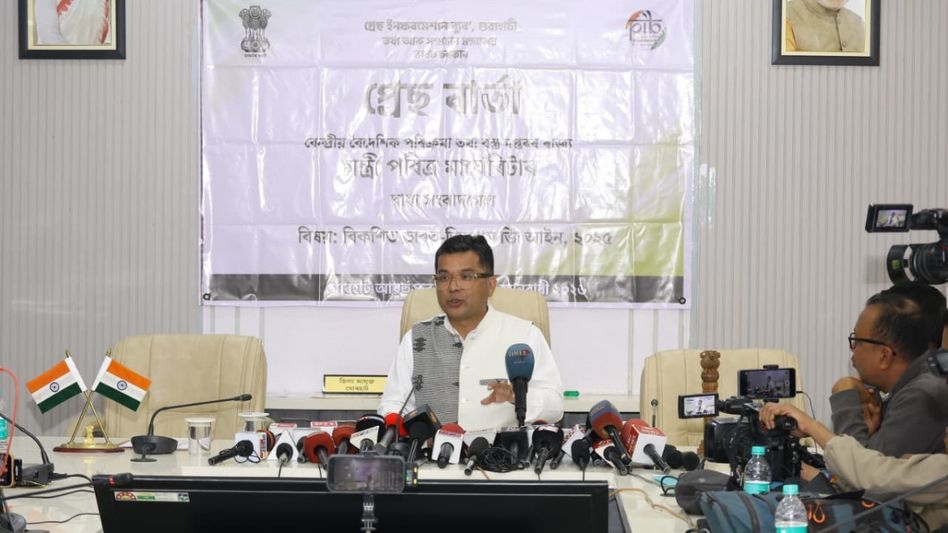

- Jan 22, 2026,
- Updated Jan 22, 2026, 9:11 PM IST

Assam is set to receive enhanced Central funding under the newly enacted Viksit Bharat Guarantee for Rozgar and Ajeevika Mission (Gramin) (VB-G RAM-G) Act, 2025, with the Centre extending a 90:10 funding pattern to the state, significantly strengthening rural livelihoods and infrastructure development.
Minister of State for External Affairs and Textiles Pabitra Margherita made the announcement while addressing a press conference at the Jorhat Circuit House on January 22.
Describing the passage of the VB-G RAM-G Act as a historic milestone, Margherita said the legislation marks a decisive shift in India’s rural employment policy and aligns with the national vision of Viksit Bharat by 2047.
The minister said the new law represents a transformation from a relief-driven approach to a productivity-oriented framework that recognises villages as engines of economic growth. He attributed this change to the leadership of Prime Minister Narendra Modi, whose governance philosophy, he said, prioritises dignity of labour, sustainable livelihoods and long-term development rather than temporary relief.
Expressing gratitude to Union Rural Development Minister Shivraj Singh Chouhan, Margherita said Chouhan’s understanding of rural realities played a crucial role in shaping the legislation. He explained that the transition from MGNREGA to VB-G RAM-G is a natural evolution informed by over two decades of implementation experience.
While acknowledging that MGNREGA initially served an important relief function, Margherita said structural weaknesses gradually surfaced, including fragmented asset creation, governance gaps, fake job cards, ghost beneficiaries and inflated muster rolls. He said repeated social and performance audits exposed systemic flaws that allowed leakages and misuse of funds, making comprehensive reform unavoidable.
Highlighting changing rural realities, the minister said policies designed in 2005 cannot adequately address the needs of rural India in 2025. With declining rural poverty, expanded social security coverage, improved connectivity, financial inclusion and digital penetration, he said a productivity-driven framework had become essential.
Detailing the key features of the VB-G RAM-G Act, Margherita said the law enhances the rural safety net by increasing guaranteed wage employment from 100 to 125 days per rural household. For the first time, it formally accounts for the agricultural cycle by mandating a 60-day pause in public works during peak sowing and harvesting seasons, ensuring the availability of labour for farming activities.
He added that the Act seeks to end delayed wage payments by mandating weekly disbursements, not exceeding a fortnight, with automatic compensation for delays. The system will be supported by enhanced digital transparency and artificial intelligence-based fraud detection mechanisms to eliminate ghost beneficiaries and fund leakages.
On funding, Margherita said the standard 60:40 Centre-State sharing model strengthens cooperative federalism through shared responsibility and accountability. He said the Prime Minister’s decision to extend a 90:10 funding pattern to Assam, other North-Eastern states and Himalayan states reflects recognition of their unique geographical and developmental challenges and underscores the Centre’s commitment to inclusive and region-sensitive growth.
He further noted that unlike earlier frameworks that resulted in scattered and short-term works, the VB-G RAM-G Act organises public works under four clearly defined verticals: water security, core rural infrastructure, livelihood-linked assets and climate resilience, ensuring durable assets and long-term developmental impact.
Concluding his address, Margherita said the VB-G RAM-G Act, 2025 marks a shift from symbolism to substance and from minimum relief to maximum productive growth, ensuring that villages play an active and central role in India’s journey towards becoming a developed nation by 2047.
MORE NEWS












Copyright©2026 Living Media India Limited. For reprint rights: Syndications Today
