
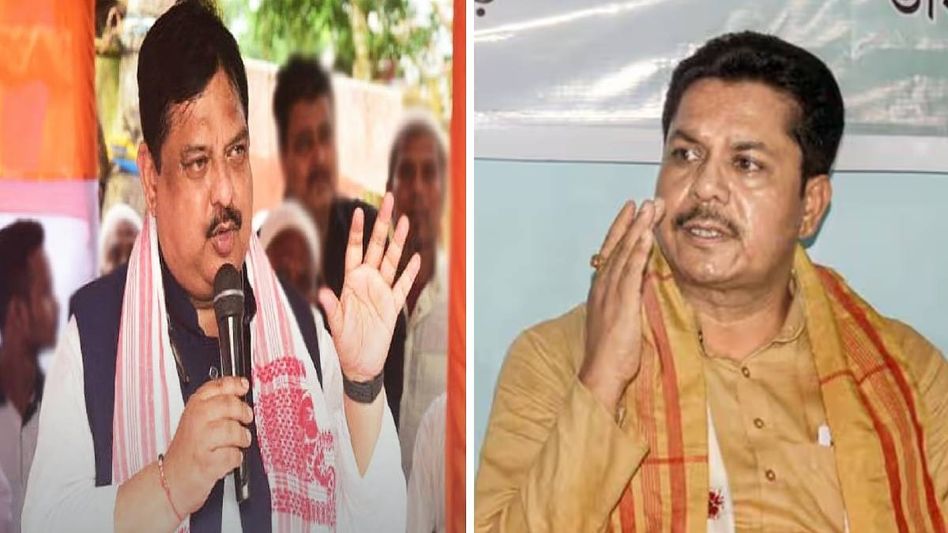
Bhupen Borah quits Congress amid internal turmoil. Was Rakibul Hussain’s 'clout' behind Borah's exit from party?
Just months before Assam heads into the crucial 2026 Assembly elections, the Congress has been jolted by a dramatic internal rupture. Former Assam Pradesh Congress Committee (APCC) president Bhupen Kumar Borah has resigned from the party, sending his resignation letter to Congress president Mallikarjun Kharge and forwarding a copy to senior leader Rahul Gandhi.

- Feb 16, 2026,
- Updated Feb 16, 2026, 12:33 PM IST

Just months before Assam heads into the crucial 2026 Assembly elections, the Congress has been jolted by a dramatic internal rupture. Former Assam Pradesh Congress Committee (APCC) president Bhupen Kumar Borah has resigned from the party, sending his resignation letter to Congress president Mallikarjun Kharge and forwarding a copy to senior leader Rahul Gandhi, as per sources.
Borah also removed 'Congress' from his X bio, indicating, no more association with the party.
Bhupen Borah allegedly criticised Rakibul Hussain, accusing him of meddling in organisational affairs and creating an uneasy atmosphere within the Assam Congress.
Borah, who served as President of the Assam Pradesh Congress Committee from 2021 to 2024, has been a prominent face of the party in the state. He represented the Bihpuria Assembly constituency for two consecutive terms from 2006 to 2016.
The resignation is being widely viewed not merely as an individual decision but as a symptom of deeper internal fractures within the Congress at a politically sensitive time, as another sitting Congress MLA Abdur Rashid Mandal from West Goalpara, will be joining Raijor Dal today. Abdur Rashid Mandal had allegedly blamed Rakibul Hussain for his ultimate exit from the party.
With the 2026 Assembly elections approaching, the Opposition’s real battle appears not only against the BJP, but within its own ranks.
The internal tensions intensified in recent months over the question of Opposition unity. Under APCC chief Gaurav Gogoi, the Congress had signalled its willingness to form a pre-poll alliance with regional forces such as Raijor Dal and Asom Jatiya Parishad.
Initially, Bhupen Borah was entrusted with leading alliance and seat-sharing negotiations, a move seen as balanced and strategic. However, the later inclusion of Rakibul Hussain in the negotiation process reportedly triggered confusion and mistrust, both within Congress and among potential allies.
Raijor Dal leader Akhil Gogoi publicly expressed discomfort over the development. The issue, he suggested, was not about personalities alone but about trust and transparency two critical elements in alliance politics.
In Assam, pre-election alliances often collapse not over ideology, but over seat distribution, leadership claims and internal distrust. The sudden shift in negotiation dynamics altered public perception and deepened suspicion among stakeholders.
Within the Congress, two clear camps have reportedly emerged. One faction supports sacrificing certain constituencies to cement Opposition unity. Another opposes conceding strategically significant seats such as Margherita, Dhing, Naobaicha and Mandia.
Instead of presenting a united front against the ruling party, the Congress appears to be wrestling with internal power equations.
Gaurav Gogoi, who gained political momentum during his Parivartan Yatra (Journey for Change) campaign and faced aggressive attacks, now finds himself navigating complex internal equations. While he has projected confidence about the party’s independent strength, he is equally aware that alliance arithmetic could be decisive in a polarised electoral landscape.
Reports of internal distancing, parallel consultations and even a possible “Plan B” to manage dissent indicate that the Congress is simultaneously fighting external political opponents and internal strategic disagreements.
In Upper Assam, opinions about key leaders remain divided. The inclusion of Rakibul Hussain in alliance negotiations may have consolidated one section within the party but unsettled others. Senior figures such as Debabrata Saikia have largely maintained silence, possibly assessing the evolving scenario.
Meanwhile, the Asom Jatiya Parishad, led by Lurinjyoti Gogoi, appears to be relying heavily on Congress for clarity on alliance terms, raising further questions about power balance within the proposed coalition.
Compounding the complexity are resurfacing debates around minority identity politics and past controversies such as the “Miya poetry” issue, which continue to influence voter sentiment in significant ways.
In this fragile atmosphere, Bhupen Borah’s resignation becomes more than a personal political move, it becomes a symbol of organisational instability.
As Assam inches closer to elections, the Congress faces a decisive test. Can it resolve internal disagreements before negotiating external partnerships? Can it reassure allies about clarity and consistency? Most importantly, can it project unity to voters who demand stability and direction?
The central question lingers: Has Rakibul Hussain’s growing role strengthened the party’s strategy or has it triggered a crisis at the worst possible time?
MORE NEWS












Copyright©2026 Living Media India Limited. For reprint rights: Syndications Today
