

Bichoni: The Walk and the Story
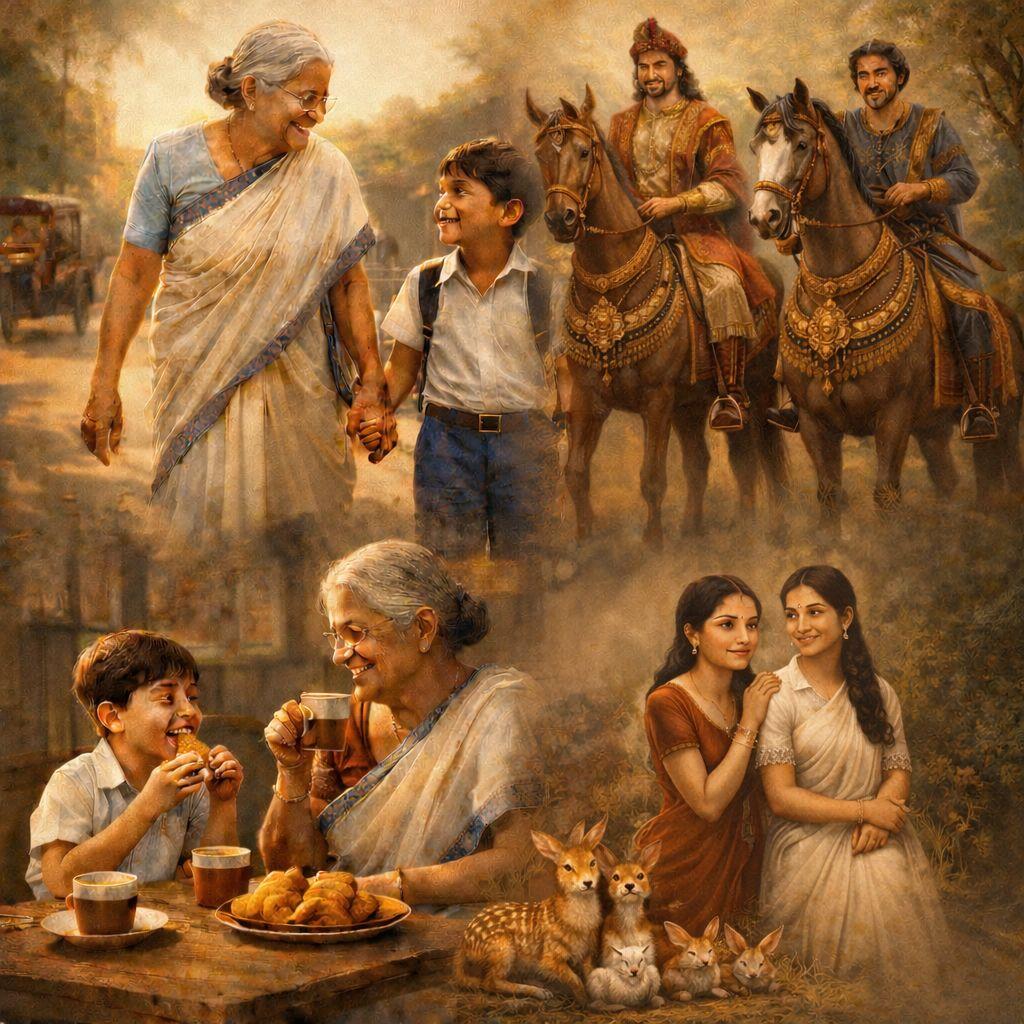
It was a hot summer afternoon in 1974 in Dibrugarh. The sun blazed fiercely, making the roads shimmer under its heat. A young schoolboy accompanied his grandmother, Aita, a teacher at Digholibazar Primary School, to a government office in Chowkidingi.
Advertisement


Biraj Das
- Jan 26, 2026,
- Updated Jan 26, 2026, 4:00 PM IST
It was a hot summer afternoon, perhaps in June or July of 1974. The sun stood fierce in the sky, pouring its fire on the streets of Dibrugarh. The roads shimmered under the heat, as if they too were tired of carrying people all day long. I was a small schoolboy then.
That day I had accompanied my grandmother, whom I lovingly called Aita, to a government office in Chowkidingi. Aita was a teacher in Digholibazar Primary School at Panchali. I studied in the same school too.
There was a quiet pride in me whenever I said that my grandmother was a teacher.
At that time, we were living in a rented house. Though we had our permanent home in the same locality, due to certain family reasons Aita and I stayed there alone.
Those days taught me, without words, the meaning of simplicity and silent strength.
Aita often took me with her when she went to offices, markets, or banks.
She never liked leaving me alone at home. Perhaps she also enjoyed my company as much as I enjoyed hers.
And she always had one gentle way of pampering me.
She promised me a singra and a cup of tea.
That day was no different.
After finishing her work, she took me to a small tea stall near the Chowkidingi bus stand. The place was modest, with wooden benches and the smell of frying oil filling the air.
She ordered one singra and one cup of tea. I loved singra dearly. But soon I noticed that Aita was quietly sharing my singra. She even divided her tea into two cups so that I could drink with her.
I frowned and said with a child’s honest annoyance,
“Aita, you ate most of my singra!”
She looked at me, smiled softly, and without a word ordered one more singra and another cup of tea.
It was my pampering that made her do so.
And soon, both of us were eating happily again, as if nothing had happened.
When we came out of the stall, the heat embraced us once more. The afternoon sun seemed harsher now.
Aita then said gently, “I will tell you a story today. But only if we walk home.”
I looked at her in surprise.
“Why can’t we go by rickshaw, Aita?”
She replied calmly, “If we go by rickshaw, the story will end too soon. If we walk, I can finish the whole story.”
Stories were more tempting to me than comfort. So I agreed at once, and we started walking side by side.
Holding my hand firmly, Aita began her story.
Once upon a time, two sisters lived in a small hut in a forest.
The elder was Sita, and the younger was Lata.
They were poor, but their hearts were rich with kindness. They loved the forest, its trees, birds, and animals, as if all were members of their own family. They believed that every living being had the right to live freely and without fear.
One morning, Sita went out to collect firewood. Before leaving, she gave Lata an important instruction.
“Only open the door if someone asks for water,” Sita said. “Water is life, and we must never deny it to anyone. But before opening the door, cover your face with ashes from the stove. It will protect you from people whose intentions may not be pure.”
After some time, a young man came riding a horse. Standing outside the hut, he loudly asked for water.
As Sita had advised, Lata covered her face with ashes and brought water for him.
Suddenly, a strange sound rose from the dry straw lying in the backyard. The stranger walked there and pushed the straw aside. Underneath, he saw baby deer and rabbits hiding, small and trembling with fear.
Angered by what he saw, the man threw water on Lata’s face. The ashes were washed away, and her beauty stood revealed.
Just then, Sita returned home.
The man demanded to know why they were hiding animals.
Though frightened, the sisters spoke the truth. They said that the prince of the kingdom hunted animals for pleasure, and they were sheltering these helpless creatures to save their lives.
The man stood silent for a long while.
Then he said quietly, “I am that prince.”
Shame crossed his face. He realized the cruelty of his own actions. He promised then and there that he would never hunt innocent animals again. The prince admired Lata’s courage and kindness and wished to marry her. But Lata refused gently, saying she could not leave her elder sister alone. Soon the prince’s friend, the minister’s son, arrived there. He wished to marry Sita. But the sisters placed one condition before agreeing. They said they would marry only if both men promised to stop hunting forever and to protect the forest people and animals. The prince and his friend agreed gladly and kept their promise.
From that day onward, the forest became peaceful.
Animals lived without fear.
People lived in harmony.
And the sisters lived with dignity, love, and respect.
By the time Aita finished the story, we had walked a long distance.
Yet I did not feel tired at all.
The heat no longer troubled me.
At home, Aita sat on her chair and began moving the bichoni, her handmade fan, slowly in the air.
She asked me to sit beside her so that I could enjoy the cool breeze too.
After a short silence, she said softly that the sisters could have asked for gold or wealth, but they chose safety and kindness instead, and that was what made them truly great. Then she spoke of Prahlad, who became dear to Lord Vishnu not because of power or riches, but because he was pure in heart, fearless in truth, and firm in faith. She explained that when a person chooses kindness over selfishness and truth over fear, life itself begins to stand by that person, sometimes quietly, sometimes through strength, and sometimes simply through peace of mind.
Then Aita looked at me and smiled gently.
“Do you know why we walked today?” she asked.
I replied happily, “To listen to your story.”
She shook her head softly and said, “I had money only for one singra and one tea. Your pampering made me buy another singra and tea, and that finished the rickshaw fare. So we had no choice but to walk.”
Seeing my surprised face, she added with a tender smile that she had told me the story only to divert my mind, so that I would not feel tired under the burning sun. And at that moment, sitting beside her under the slow, steady movement of the bichoni, I understood something without being directly taught that when the mind is engaged in something beautiful and the heart is guided by kindness, even the hardest paths become gentle, and life itself begins to feel like a journey worth walking till the very end.
Where compassion resides, Narayan dwells, and greatness emerges as a natural phenomenon.

POST A COMMENT
MORE NEWS












Copyright©2026 Living Media India Limited. For reprint rights: Syndications Today
