BJP fields six women for Assam polls, but the bigger picture remains bleak
The six constituencies where the BJP has fielded women candidates are Birsing-Jarua (Madhavi Das), Chamaria (Jyotsna Kalita), Mangaldai (Nilima Devi), Golaghat (Ajanta Neog), Diphu (Niso Terangpi), and Haflong (Rupali Langthasa).

- Mar 19, 2026,
- Updated Mar 19, 2026, 2:12 PM IST

The Bharatiya Janata Party released its candidate list for the April 9 Assam assembly elections on March 19, naming six women across its 88 announced seats — a number that is modest by any measure, yet noteworthy in a state where women's political representation has been in steady decline for over a decade.
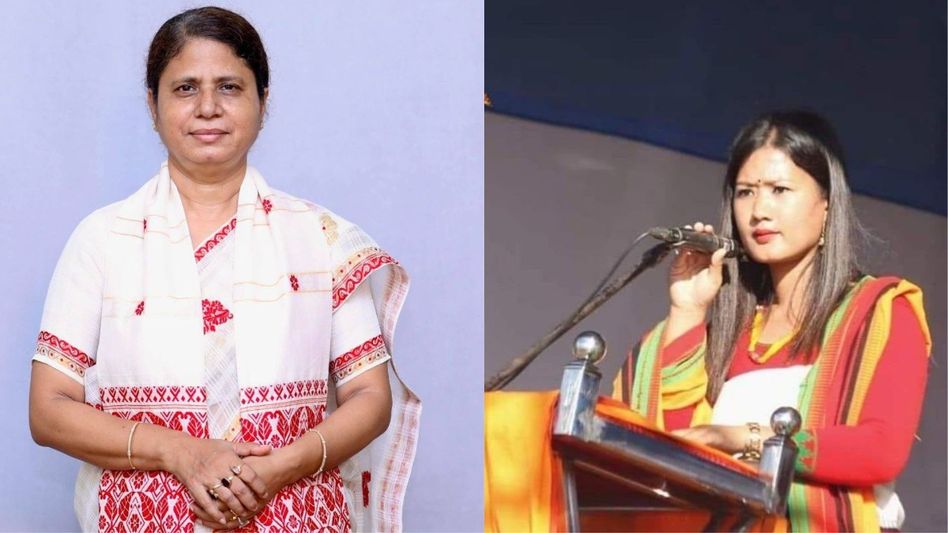
The six constituencies where the BJP has fielded women candidates are Birsing-Jarua (Madhavi Das), Chamaria (Jyotsna Kalita), Mangaldai (Nilima Devi), Golaghat (Ajanta Neog), Diphu (Niso Terangpi), and Haflong (Rupali Langthasa).
Of the six, Ajanta Neog is far and away the most established political figure. She has been representing the Golaghat assembly seat for five consecutive terms since 2001, and holds the record for being the longest-serving female legislator in Assam. Her political journey is anything but straightforward. She spent years in the Congress party, serving as a minister under Tarun Gogoi, before being expelled in December 2020 for alleged 'anti-party activities'.
She crossed the floor, won the 2021 election on a BJP ticket, and was subsequently inducted into the Himanta Biswa Sarma cabinet as the first woman to hold the Finance portfolio in Assam. Her story — a widow whose husband, former minister Nagen Neog, was killed by the ULFA in 1996 — is one of the more striking personal histories in Assam politics.
Rupali Langthasa will contest from Haflong, a seat in the hill district of Dima Hasao — an area that in 2021 returned Nandita Garlosa, described at the time as the first woman from a major national party to win an assembly seat from that district. Whether Langthasa can build on that precedent remains to be seen.
Niso Terangpi from Diphu represents the BJP's push into the Karbi Anglong tribal belt, a region the party has been working to consolidate in recent years. Madhavi Das in Birsing-Jarua, Jyotsna Kalita in Chamaria, and Nilima Devi in Mangaldai appear to be newer faces with less publicly available profiles, suggesting the party has drawn on local organisational networks for at least some of its women nominees.
The six names sit against a backdrop that is difficult to ignore. Women's political representation in Assam has been historically low, and 2021 saw the worst outcome in recent memory: only six women were elected to the 126-seat assembly, down from 14 in 2011 and seven in 2016. The BJP gave just 8 per cent of its tickets to women in 2021, a figure matched — not surpassed — by Congress.
Women constitute nearly half of Assam's electorate but have been consistently sidelined at the ticket-allocation stage. Of the six women who won in 2021, most had either prior experience as incumbents or strong family connections in politics. Women activists within the BJP's own Mahila Morcha have acknowledged that women do the grassroots work but are rarely rewarded with candidacies.
Six tickets out of 88 announced seats amounts to roughly 7 per cent, which puts the BJP marginally below its own 2021 performance and well short of anything approaching proportionate representation. The election is scheduled for April 9, with results on May 4. The incumbent NDA government won 75 of 126 seats in 2021 and is seeking a third consecutive term.