CCTOA Consultative Group rejects ST status proposal for six Assam communities, submits recommendations to GoM
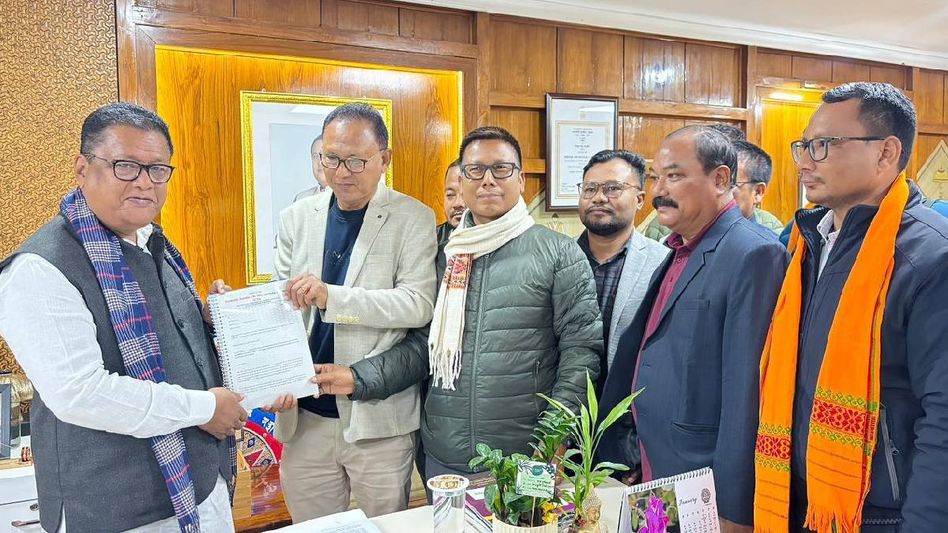
The Consultative Group of the Coordination Committee of Tribal Organisations of Assam (CCTOA) on January 6 formally submitted a detailed set of recommendations to the Chairperson of the Group of Ministers (GoM), Dr Ranoj Pegu, rejecting the proposal to grant Scheduled Tribe (ST) status to six communities in the State—Tai Ahom, Chutia, Moran, Motok, Koch-Rajbongshi and Tea Tribes.

- Jan 07, 2026,
- Updated Jan 07, 2026, 4:27 PM IST

The Consultative Group of the Coordination Committee of Tribal Organisations of Assam (CCTOA) on January 6 formally submitted a detailed set of recommendations to the Chairperson of the Group of Ministers (GoM), Dr Ranoj Pegu, rejecting the proposal to grant Scheduled Tribe (ST) status to six communities in the State—Tai Ahom, Chutia, Moran, Motok, Koch-Rajbongshi and Tea Tribes.
The recommendations were handed over at around 6.30 pm following extensive deliberations on the November 2025 report of the Group of Ministers, which examined various aspects of reservation for the six communities. The Consultative Group was constituted pursuant to a CCTOA meeting held on December 21, 2025, specifically to examine the constitutional, historical and legal implications of the proposed inclusion.
In its submission, the Consultative Group termed the GoM’s recommendation for inclusion of the six communities in the ST list as “unconstitutional, historically untenable and politically motivated.” It maintained that Scheduled Castes (SCs) and Scheduled Tribes (STs) are constitutionally distinct categories and cannot be treated interchangeably.
The Group underscored that ST status is determined on the basis of well-established criteria, including primitive traits, distinctive culture, geographical isolation and social backwardness, as laid down by the Lokur Committee in 1965. It asserted that none of the six communities fulfill these criteria.
Further, the Consultative Group pointed out that all six communities have already been identified as Other Backward Classes (OBCs) by the National Commission for Backward Classes, based on extensive research conducted by the Assam government itself. Reclassifying the same communities as Scheduled Tribes, the Group argued, would be legally impermissible and constitutionally inconsistent.
Citing historical records, the submission noted that successive committees since Independence—including the Constituent Assembly’s sub-committee chaired by Gopinath Bordoloi and the Lokur Committee—had unequivocally rejected the inclusion of Tea Tribes and ex-Tea Garden Tribes in the ST list, primarily on the grounds that they are not indigenous to Assam.
The Group further stated that Tai Ahoms, Chutias, Morans, Motoks and Koch-Rajbongshis have historically been part of the mainstream Assamese social fabric, and therefore do not meet the defining characteristics required for inclusion in the Scheduled Tribe category.
The submission also took strong exception to the expert committees constituted by the Assam government after 2009, alleging that these panels lacked independence and were dominated by experts recommended by the claimant communities themselves. It further referred to the rejection of ST status claims by the Registrar General of India in 2007, which had held that the State government’s proposals were mechanical in nature and unsupported by credible ethnographic evidence.
The Consultative Group urged the Group of Ministers to reconsider its position in light of constitutional provisions, historical findings and established legal precedents, warning that any deviation could have far-reaching implications for Assam’s tribal rights framework.