
Congress core ST group submits report highlighting crisis faced by Assam’s tribal communities
The Assam Pradesh Congress Committee (APCC) on Sunday, January 11 asserted that the state’s tribal communities are grappling with deepening livelihood insecurity and economic marginalisation, largely due to alleged violations and alienation of tribal land and forest rights. The party said these long-standing concerns will figure prominently in its manifesto for the Assam Assembly elections, expected to be held in March–April 2026.

- Jan 11, 2026,
- Updated Jan 11, 2026, 9:58 PM IST

- APCC highlights tribal livelihood insecurity in Assam.
- Tribal land rights violations are a key concern.
- Congress to focus on tribal issues in 2026 manifesto.
The Assam Pradesh Congress Committee (APCC) on Sunday, January 11 asserted that the state’s tribal communities are grappling with deepening livelihood insecurity and economic marginalisation, largely due to alleged violations and alienation of tribal land and forest rights. The party said these long-standing concerns will figure prominently in its manifesto for the Assam Assembly elections, expected to be held in March–April 2026.
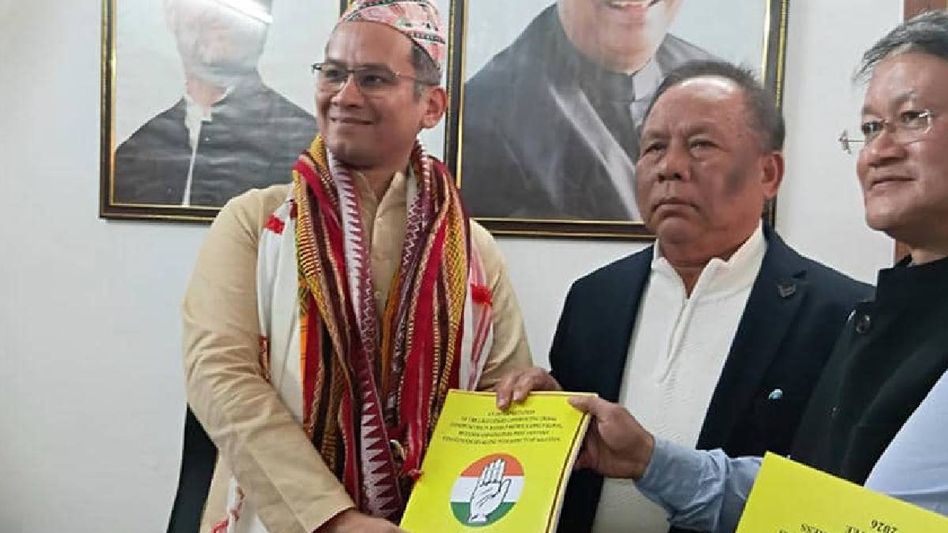
The issues were highlighted in a comprehensive report prepared by the Congress Core Scheduled Tribe (ST) Study Group and submitted to APCC president Gaurav Gogoi, according to a party press release.
The Study Group, headed by APCC general secretary Nirmal Langthasa, was constituted following a consultative meeting held in November last year with leaders from ST-majority Assembly constituencies including Dimoria, Boko, Dudhnoi and Goalpara West. The objective, the party said, was to examine in depth the long-pending challenges, demands and aspirations of tribal communities for incorporation into the Congress manifesto for the 2026 Assembly elections.
As part of its mandate, the Group conducted extensive field-level interactions across the four constituencies, holding meetings, consultations and detailed deliberations with tribal organisations, non-governmental organisations and individual representatives of Scheduled Tribe communities. These included Rabha, Garo, Bodo, Hajong, Amri Karbi, Tiwa and Mising groups.
Among the most pressing concerns identified was the alleged violation and alienation of tribal land and forest rights, including transfer of land to non-ST, non-local and external business interests. The report noted that such practices have directly undermined traditional livelihoods and accelerated economic marginalisation among tribal populations.
The Study Group also flagged inadequate and inequitable political representation of tribal communities, along with cultural erosion and a weakening of indigenous identity, as major challenges confronting the state’s tribal society.
A key demand emerging from the consultations was the urgent need for protection of tribal land, belts and blocks, along with the grant of land titles to genuine tribal forest dwellers. The party emphasised strict enforcement of existing legal provisions to prevent further alienation of tribal land.
Other significant demands included the establishment of a tribal university in Assam to promote indigenous education, culture and research; grant of Scheduled Tribe status to the Amri Karbi community; and immediate inclusion of the remaining 312 Bodo revenue villages under the Boro Kachar Welfare Autonomous Council.
The tribal groups also called for the creation of Development Councils for all plains tribal communities currently excluded from any such institutional framework, citing the need for equitable development, focused welfare planning and effective political representation.
Stating that the findings would play a decisive role in shaping its electoral roadmap, the Congress said the report would form the foundation of a “strong, inclusive and tribal-centric” manifesto for the Assam Assembly Elections 2026.
MORE NEWS







Copyright©2026 Living Media India Limited. For reprint rights: Syndications Today
