Controversy erupts over renovation of historic Math Mandir in Assam's Dhubri
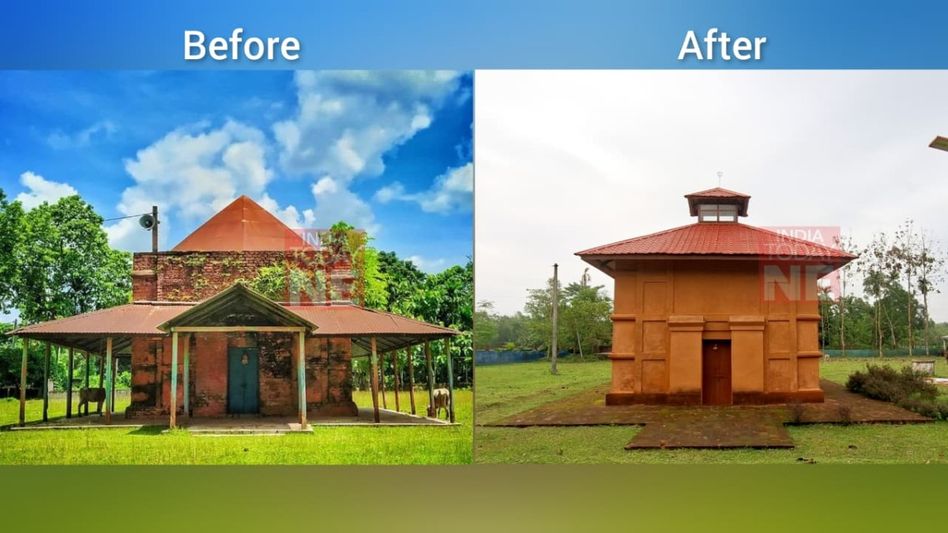
A major controversy has surfaced over the renovation of the over 500-year-old Math Mandir at Moterjhar, with locals and netizens alleging that recent restoration work has distorted the temple’s original architectural identity.

- Apr 21, 2026,
- Updated Apr 21, 2026, 8:38 AM IST

- Renovation of Dhubri's Math Mandir sparks major controversy
- Locals allege temple's architectural identity has been distorted
- Key structural features reportedly altered or erased
A major controversy has surfaced over the renovation of the over 500-year-old Math Mandir at Moterjhar, with locals and netizens alleging that recent restoration work has distorted the temple’s original architectural identity.
The renovation, carried out by the Directorate of Archaeology Assam, has triggered widespread criticism, with community members expressing “psychological unrest” over what they describe as a loss of cultural and historical authenticity.
At the centre of the dispute are claims that key structural features of the temple have been altered or erased. According to residents and temple representatives, the Mandir’s traditional baranda (veranda), once central to its design and usage, has been removed. Additionally, the distinctive exposed brick wall aesthetic, seen as a defining feature of the structure, has reportedly been modified, giving the site a more modern appearance.
The temple, believed to have been constructed during the reign of Raghudev Narayan between 1581 and 1603 CE, is historically identified as a late medieval brick-built Shiva temple. It holds significant cultural and religious importance for the people of Dhubri.
Bikramjit Roy, a senior advisor associated with the temple, has strongly criticised the renovation process, questioning the historical basis of the changes. He argued that such alterations go beyond physical modification and amount to a distortion of collective memory and heritage.
“On what reference has the department taken such a big decision? By altering these elements, they are not just changing a structure but reshaping history,” Roy said.
Locals have also raised concerns about the lack of community consultation, calling for a more inclusive and transparent approach to heritage conservation. Many believe that preserving historical sites in their original form is essential to maintaining the region’s cultural continuity.
Dhubri, known for its rich blend of religious and historical landmarks, has seen growing public demand for accountability. Residents and online users are urging authorities to clarify the historical documentation or blueprints used in the renovation.
As the debate intensifies, there are increasing calls for corrective measures to restore the temple’s original design and character. As of now, the Directorate of Archaeology, Assam has not issued an official statement addressing the concerns raised by the community.