Critically endangered Bengal Florican poached and consumed in Assam, social media posts trigger outrage
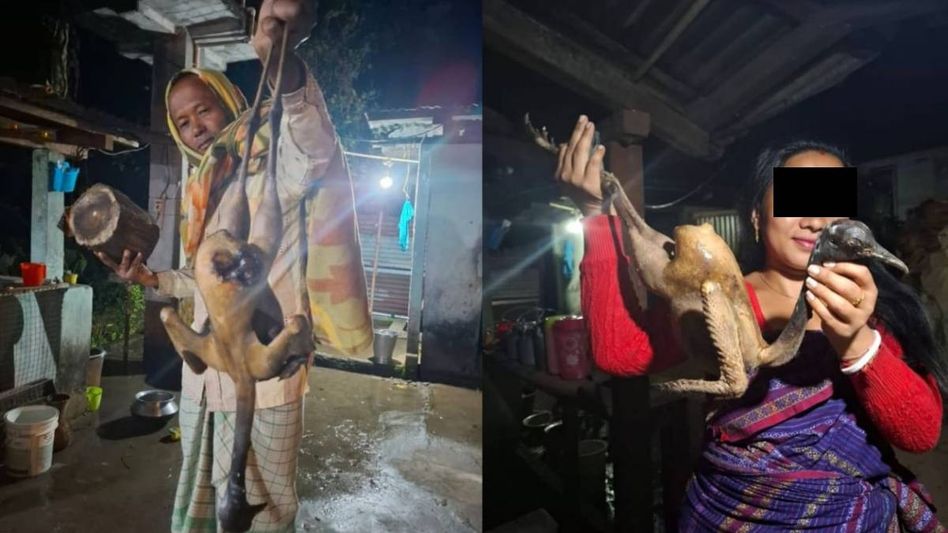
In a disturbing incident that has drawn sharp condemnation from conservationists and wildlife experts, a critically endangered Bengal Florican was allegedly poached and consumed in Assam’s Chirang district, with visuals of the act reportedly shared on social media by the accused.

- Dec 20, 2025,
- Updated Dec 20, 2025, 9:58 AM IST

In a disturbing incident that has drawn sharp condemnation from conservationists and wildlife experts, a critically endangered Bengal Florican was allegedly poached and consumed in Assam’s Chirang district, with visuals of the act reportedly shared on social media by the accused.
The incident took place in Khungring Forest Village, located between Sikhna Jwhwloa National Park and Sisubari range of Manas National Park, a globally recognised biodiversity hotspot. According to preliminary information, the bird killed was a subadult male Bengal Florican, one of the rarest avian species in the world.
The Bengal Florican (Houbaropsis bengalensis) is listed as Critically Endangered on the IUCN Red List and enjoys the highest level of protection under Schedule I of the Wildlife (Protection) Act, 1972. With an estimated global population of fewer than 1,000 individuals, conservationists say the killing of even a single bird represents a serious setback to ongoing global conservation efforts.
What has intensified public outrage is the allegation that the perpetrators—a local couple—filmed themselves cooking and consuming the bird and later shared the images and videos online. The visuals were reportedly circulated widely on social media platforms, leading to their rapid detection by wildlife activists and conservation groups.
Experts have expressed alarm not only over the poaching of such a rare species but also over the apparent ease with which the act was carried out and publicly displayed. The incident has raised questions about wildlife surveillance, enforcement mechanisms, and public awareness in ecologically sensitive regions.
Reacting to the incident, wildlife conservationist Dr. Nilutpal Mahanta underscored the need for strict accountability.
“We need to identify those responsible for this crime and ensure that they are punished according to law. Only strong legal deterrence can prevent such irreparable damage to our wildlife,” he said.
The matter has been brought to the notice of the Forest Department, and conservation organisations are urging authorities to act swiftly. Under Indian law, poaching or killing a Schedule I species attracts stringent punishment, including mandatory imprisonment and substantial fines.
Conservation groups have also called on law-enforcement agencies to use social media evidence to expedite the investigation and prosecution, stressing that a strong response is necessary to send a clear message that crimes against endangered wildlife will not be tolerated.