
Delimitation’s Quiet Faultline in the Northeast
In the Northeast, political faultlines rarely emerge dramatically. They tend to take shape gradually—first as unease, then as quiet reassessment, and only later, if at all, as open contestation. The ongoing conversation around delimitation reflects precisely this early stage of cautious attention

- Mar 24, 2026,
- Updated Mar 24, 2026, 9:40 AM IST

In the Northeast, political faultlines rarely emerge dramatically. They tend to take shape gradually—first as unease, then as quiet reassessment, and only later, if at all, as open contestation. The ongoing conversation around delimitation reflects precisely this early stage of cautious attention.
At its core, delimitation is a constitutional exercise—an essential mechanism to ensure that representation keeps pace with demographic change. It seeks to strengthen the principle of electoral fairness by aligning constituencies with population realities. Yet, in regions where demography itself carries historical and political meaning, such exercises inevitably acquire a wider resonance.
In Assam, numbers have rarely been read in isolation. They are often viewed through the prism of migration, settlement patterns, and evolving questions of belonging. Electoral politics in the state has long been shaped by these layered realities. As a result, any redrawing of constituencies is not seen purely as administrative adjustment, but also as part of a broader political process.
The scale of public engagement during the recent delimitation exercise in the state reflects this sensitivity. With a large number of representations submitted, the process generated responses that extended beyond technical concerns. Many of these reflected broader questions about balance, representation, and the distribution of political voice.
The discussion, therefore, is not about the necessity of delimitation, which remains widely acknowledged. Rather, it centres on how such an exercise is understood in a region where demographic change has historically intersected with political identity. In this context, even routine institutional processes tend to be viewed with a degree of attentiveness.
The Northeast’s perspective also differs from the dominant national framing of delimitation. While much of the country debates its implications in terms of federal balance, the concern here is more internal. It relates to how representation is structured within states—across regions, communities, and administrative units.
Existing disparities in constituency size further underline the need for periodic recalibration. Variations in electorate size can affect the principle of equal representation, making corrective exercises both relevant and necessary. At the same time, in a region where representation has evolved through a combination of constitutional design and political accommodation, such recalibration requires careful handling.
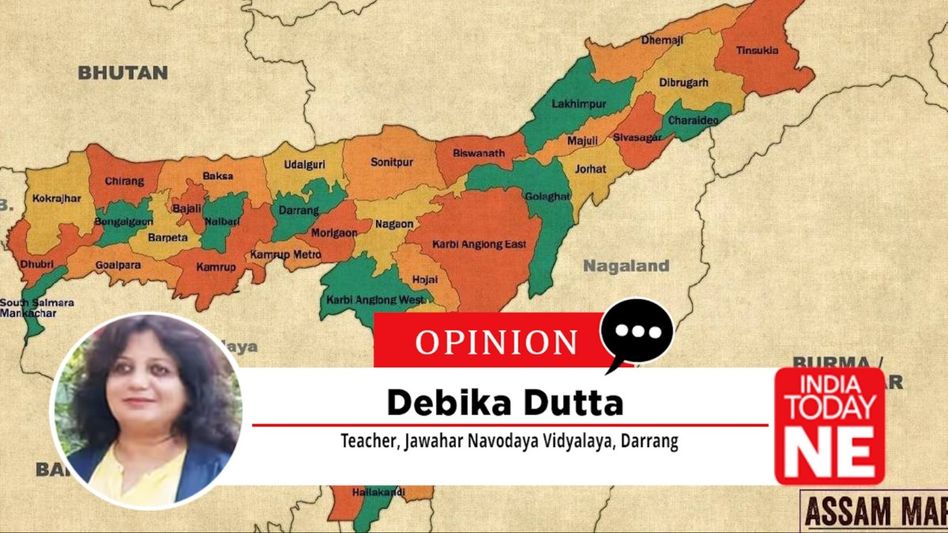
Assam’s present framework—126 Assembly seats and 14 parliamentary constituencies, with reserved segments built into its structure—reflects an effort to balance diversity
with representation. These arrangements have developed over time and form an important part of the state’s political equilibrium.
Alongside these considerations, there are also signs of a gradual shift in how representation is perceived. A younger electorate is increasingly engaging with politics through questions of governance, infrastructure, and opportunity. For many, the effectiveness of representation is linked as much to delivery as to identity. This evolving perspective adds another dimension to the conversation.
In this context, the manner in which delimitation is carried out becomes particularly significant. A process that is transparent, consultative, and attentive to regional contexts can reinforce public confidence and strengthen democratic institutions.
What is notable at present is the absence of overt mobilisation. Public discourse remains measured, and responses have largely been expressed through formal channels. In the Northeast, such quietness often reflects careful evaluation rather than disengagement.
Delimitation will, in time, redraw electoral boundaries. Equally important, it will shape how representation continues to be understood in a region marked by diversity and historical complexity. The attention it has drawn is a reflection not of resistance, but of the importance attached to ensuring that this process remains both fair and context-sensitive.
MORE NEWS












Copyright©2026 Living Media India Limited. For reprint rights: Syndications Today
