‘Far short of where Viksit Bharat needs to be’: Gaurav Gogoi flags India’s innovation, trade gaps
As the BRICS summit drew to a close, Gaurav Gogoi questioned India's economic and development record. He said gaps in trade, innovation, education and healthcare showed an urgent need to rethink priorities.

- Sep 14, 2026,
- Updated Sep 14, 2026, 9:57 AM IST

- Gogoi said India remains second-lowest in BRICS on GNI per capita
- He noted goods exports rose only marginally despite higher world income share
- India's trade deficit with BRICS tripled, driven largely by Chinese imports
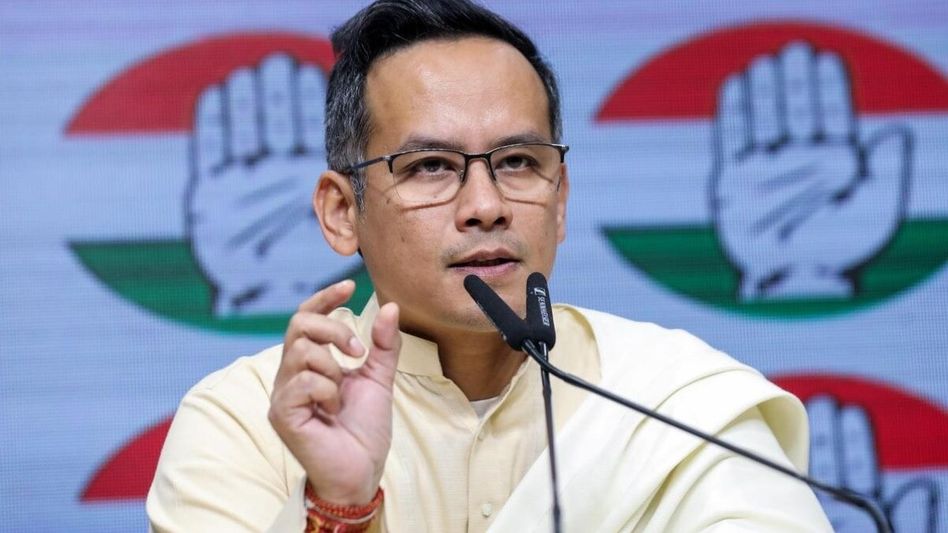
Assam Congress MP Gaurav Gogoi has raised questions over India’s economic performance and domestic development indicators, contrasting the country’s progress with that of other BRICS members as the grouping’s 18th summit draws to a close.
India is chairing BRICS in 2026, with the 18th BRICS Summit being held in New Delhi. The grouping now comprises 11 members — Brazil, Russia, India, China, South Africa, Egypt, Ethiopia, Iran, the United Arab Emirates, Indonesia and Saudi Arabia — following its recent expansion. Together, BRICS represents nearly half of the world’s population and around 40 per cent of global GDP.
Gogoi, in a post on X, pointed to India’s per-capita income, trade deficit, education, healthcare and innovation indicators to argue that economic growth has not translated evenly across key areas.
“India’s GNI per capita rose from $1,350 in 2011 to $2,760 in 2025,” Gogoi said. However, he noted that India remained the second-lowest among the 11 BRICS countries on this measure. He also pointed out that Ethiopia and China had nearly tripled their dollar incomes during the same period.
The Congress MP also highlighted India’s position in global trade, saying its share of world income had increased while its share of global goods exports remained below 2 per cent. According to Gogoi, the share rose only marginally from 1.5 per cent in 2011 to 1.8 per cent in 2023.
He linked this gap to India’s trade position within BRICS, particularly its trade with China.
“India’s trade deficit with BRICS more than tripled” from $74.5 billion in 2020-21 to $226.1 billion in 2025-26, Gogoi said, adding that the increase was driven substantially by imports from China.
Gogoi also cited domestic indicators in education and healthcare. He said undergraduate enrolment declined year-on-year for the first time in the All India Survey on Higher Education (AISHE) series in 2023-24, while government health expenditure stood at 1.43 per cent of GDP in 2022-23.
On innovation, he pointed to India’s 38th position among 139 economies in the Global Innovation Index, arguing that the ranking was “far short of where an aspiring Viksit Bharat needs to be”.
Taking aim at the Narendra Modi government’s economic priorities, Gogoi said the government had spent the past decade focusing on “capturing educational institutions, public capital expenditure and selective support for big businesses”.
“There is an urgent need to reevaluate the priorities,” he said.
India’s 2026 BRICS chairship has focused on the theme of resilience, innovation, cooperation and sustainability, with the grouping’s agenda spanning political and security cooperation, economic and financial issues, and people-to-people exchanges.