Former Congress MLA Debabrata Saikia seeks special Central package for Upper Assam flood victims, writes to PM
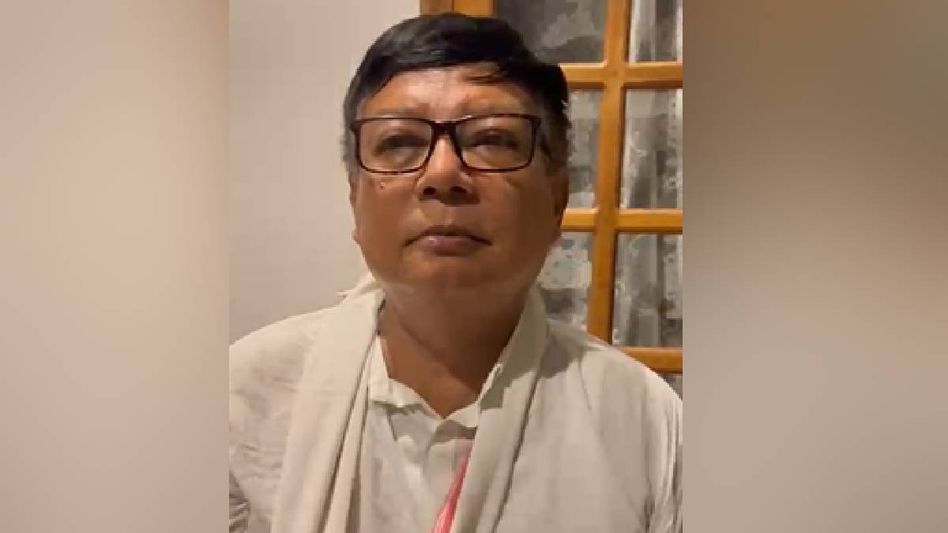
Former Congress MLA Debabrata Saikia has urged Prime Minister Narendra Modi to sanction a special Central rehabilitation and reconstruction package for victims of the unprecedented July 2026 floods in Upper Assam, particularly in Sivasagar, Charaideo, Jorhat and Golaghat districts.

- Aug 12, 2026,
- Updated Aug 12, 2026, 7:33 PM IST

Former Congress MLA Debabrata Saikia has urged Prime Minister Narendra Modi to sanction a special Central rehabilitation and reconstruction package for victims of the unprecedented July 2026 floods in Upper Assam, particularly in Sivasagar, Charaideo, Jorhat and Golaghat districts.
In a detailed letter to the Prime Minister, Saikia sought a comprehensive programme covering rehabilitation, livelihood restoration, reconstruction, agricultural land reclamation and long-term flood mitigation. He said the scale of destruction warranted treating the disaster as more than a conventional relief operation.
Saikia said he had spent around 15 days visiting flood-affected areas, meeting victims and assessing the damage on the ground. Drawing on his 15-year association with the Nazira Assembly constituency, which he represented until 2026, he said the devastation witnessed during the visits was significantly different from the recurring seasonal flooding experienced by Assam.
According to Saikia, many families had lost the productive assets on which their livelihoods depended, including workshops, sewing machines, commercial vehicles, agricultural equipment, livestock, shops and household belongings.
He cited the cases of a trained fitter and welder whose workshop machinery was destroyed, a tailor who lost sewing machines purchased from years of savings, and an e-rickshaw driver whose only earning asset was washed away while his bank loan obligations remained.
"The flood destroyed the assets, but it did not destroy the debts," Saikia said in the representation, arguing that affected people should not be treated solely as recipients of conventional flood relief.
He called for a Special Central Upper Assam Flood Rehabilitation, Livelihood Restoration and Reconstruction Package, to be based on a comprehensive Post-Disaster Needs Assessment (PDNA).
The proposed assessment, he said, should capture the complete economic position of each affected household, including deaths and injuries, house damage, household belongings, crop losses, agricultural land affected by sand and silt deposition, livestock and poultry losses, fisheries, commercial vehicles, business inventories, machinery and tools, outstanding loans, insurance coverage and the principal livelihood lost.
Saikia proposed occupation-specific assistance to restore earning capacity. This could include welding equipment for mechanics, sewing machines for tailors, subsidised replacement e-rickshaws, agricultural implements and pumps, machinery for artisans and micro-enterprises, livestock, fishing equipment and working capital for affected businesses.
He also called for grants rather than additional loans for the poorest households whose productive assets were destroyed.
On the financial side, Saikia sought coordinated intervention by the Ministry of Finance, the Reserve Bank of India, NABARD and the State Level Bankers' Committee for restructuring and rescheduling of affected loans, suitable moratoriums, waiver of penal charges during rehabilitation, protection against coercive recovery, extended repayment periods, credit-history protection and concessional finance for replacement of destroyed assets.
He also proposed a dedicated agricultural land-reclamation programme for areas covered by sand, silt and sludge. The programme should include mapping, mechanical removal where technically appropriate, soil testing, drainage restoration, land reclamation, provision of seeds and fertilisers, replacement of agricultural equipment and assistance until cultivation can resume.
The representation also called for enhanced assistance to families that lost livestock, reconstruction of animal sheds and veterinary support.
For damaged houses, Saikia proposed disaster-resilient reconstruction incorporating raised plinths and improved drainage. He also sought separate assistance for families whose houses remained standing but whose essential household belongings, including beds, clothes, appliances and educational materials, were destroyed.
He further sought educational assistance for affected children, replacement of books, certificates and electronic devices, as well as special camps to expedite insurance claims.
Saikia proposed monthly subsistence assistance for three to six months for eligible families until their livelihoods are restored.
On flood-response operations, he urged the Centre to examine the deployment of specialised engineering and ecological units, including Territorial Army, Ecological Task Forces or Army Engineer Task Forces, for clearing mud and debris, restoring access to isolated settlements, emergency engineering works, temporary bridges, drainage clearance and restoration of community infrastructure.
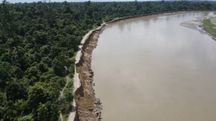
He also sought an independent multidisciplinary investigation into the causes and contributing factors behind the flooding, particularly concerning the Dikhow river system and other vulnerable rivers.
The proposed committee should include experts in hydrology, river engineering, sediment transport, geology, environmental science and disaster-risk management, preferably involving an IIT, Saikia said.
The investigation, according to the representation, should examine changes in river morphology and carrying capacity, sediment deposition, the condition and maintenance history of embankments, the possible impact of riverbed extraction or mining, the need for scientifically targeted dredging, previous warnings issued by government or expert bodies, the adequacy of flood forecasting and evacuation systems, and permanent measures required to reduce future risks.
Saikia cautioned against indiscriminate dredging and called for technical sediment-transport and hydrological studies before any large-scale desiltation is undertaken.
He also sought a long-term flood mitigation programme covering river morphology and sediment management, embankment strengthening, bank protection, drainage restoration, catchment treatment, regulation of mining and riverbed extraction, real-time rainfall and river-level monitoring, improved flood forecasting, community warning systems, evacuation routes and shelters.
He proposed annual independent pre-monsoon safety audits of vulnerable infrastructure and greater use of Central and State disaster mitigation funds for eligible projects.
For greater accountability, Saikia called for a village-wise public dashboard showing the number of affected households, categories of losses, assessed damage, assistance sanctioned and paid, houses sanctioned, productive assets restored, agricultural land requiring reclamation and grievance status.
He also proposed a joint Centre-State rehabilitation mission with a six-month deadline to ensure that every severely affected family either has its livelihood restored or receives a funded plan for restoration.
Saikia referred to the Central government's deployment of an Inter-Ministerial Central Team for flood damage assessment and the Assam government's digital damage assessment exercise, describing both as welcome measures but stressing that assessment should be followed by comprehensive economic rehabilitation.
He urged the Prime Minister to ensure additional Central assistance based on the actual assessed losses and to treat the reconstruction of Upper Assam as a joint national responsibility.
The letter also called for accountability if any negligence, unauthorised activity or failure to act on established warnings is established through an independent investigation.