
From entry to exit: 60 hours of Rejaul Karim Sarkar in Congress. What went wrong
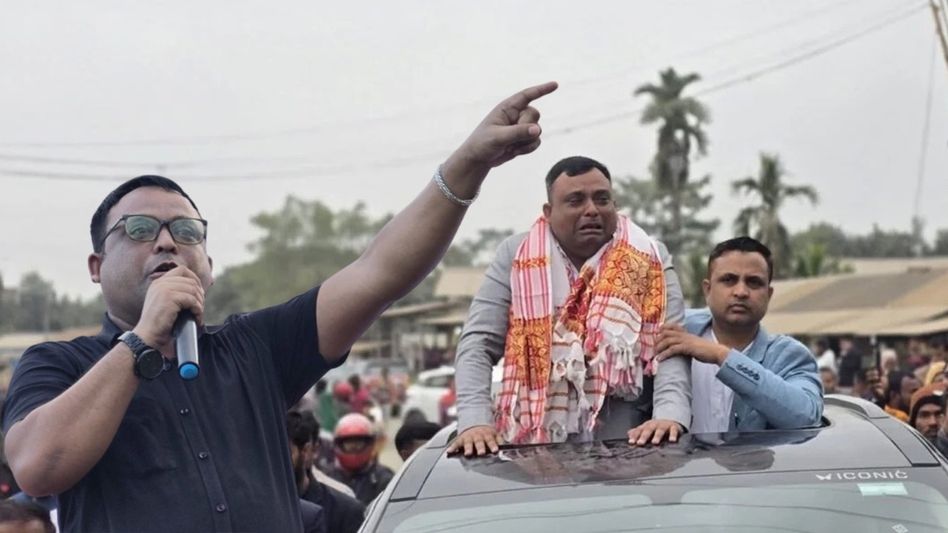
On January 11, 2026, Rejaul Karim Sarkar, former president of the All Assam Minorities Students’ Union (AAMSU), formally joined the Indian National Congress in the presence of Assam Pradesh Congress Committee president Gaurav Gogoi at the Manabendra Sharma Complex in Guwahati.

- Jan 14, 2026,
- Updated Jan 14, 2026, 9:59 AM IST

On January 11, 2026, Rejaul Karim Sarkar, former president of the All Assam Minorities Students’ Union (AAMSU), formally joined the Indian National Congress in the presence of Assam Pradesh Congress Committee president Gaurav Gogoi at the Manabendra Sharma Complex in Guwahati.
The induction was aimed at strengthening the party ahead of the 2026 Assam Assembly elections and had initially projected an image of Congress reaching out to minority youth leaders.
However, the optimism surrounding Sarkar’s induction was short-lived. During the joining ceremony, Sarkar made highly controversial remarks, stating that districts in Assam would be transformed into one another:
“We will make Sivasagar like Dhubri, will turn Dhubri into Sivasagar, will make Barak like Sivasagar, and will turn Tinsukia into Dhubri.” He justified these statements as part of the party’s vision under Gaurav Gogoi, invoking the idea of “Bor Asom” or greater Assam.
The comments immediately triggered strong backlash. Assam Chief Minister Himanta Biswa Sarma criticised Gogoi for not intervening to check Sarkar’s statements, suggesting that the remarks amounted to a threat of relocating Bangladeshi-origin migrants into indigenous-majority districts.
Sarma warned that such a move could alter Assam’s demographic composition and described the statement as unacceptable, asserting that anyone making such remarks in his presence would have been “shoved out.”
Political opponents and civil society organisations quickly reacted. Akhil Gogoi, Sivasagar MLA and Raijor Dal chief, expressed sharp concern over the statement, warning that any deliberate attempt to incite social or political discord would be firmly opposed. Demonstrations erupted in Lakhimpur and Amguri, with nationalist groups like Bir Lachit Sena and Asomiya Yuva Mancha staging protests, issuing ultimatums, and burning effigies of Sarkar.
Also Read: “Inappropriate and Damaging”: Debabrata Saikia criticises controversial statement by new Congress inductee
Within the Congress, the induction sparked immediate internal dissent. Assam Congress Legislature Party leader Debabrata Saikia labelled Sarkar’s remarks “inappropriate and damaging,” highlighting the potential political fallout ahead of the elections.
Bongaigaon District Congress Committee president Girish Baruah also raised concerns, pointing out that projecting Sarkar as a candidate in socially sensitive constituencies like Srijangram could alienate grassroots workers and consolidate Hindu votes against the party. He cited Sarkar’s previous tenure in AAMSU, alleging that his influence did not translate into organisational support for Congress candidates.
Facing mounting protests, criticism from senior party leaders, and potential electoral fallout, Sarkar issued a public apology. Gaurav Gogoi acknowledged that Sarkar’s comments were “unnecessary” and urged him to exercise caution in future statements.
Despite the apology, the controversy deepened. On January 14, 2026, just 60 hours after joining the party, Rejaul Karim Sarkar resigned from Congress.
In his resignation letter to Gaurav Gogoi, Sarkar cited “deep ideological and moral differences” with senior party leaders, specifically naming Debabrata Saikia and Nagaon MP Pradyut Bordoloi, whom he described as “BJP agents” undermining the party from within. Sarkar said that the conduct of these leaders had demoralised him, tarnished his public image, and made it impossible for him to continue within the party.
The brief tenure of Rejaul Karim Sarkar in Congress highlights a combination of missteps: the lack of thorough vetting before induction, inadequate briefing on public communication, and insufficient internal coordination to manage potentially sensitive statements in a socially and politically charged environment. Sarkar’s remarks, the party’s delayed response, and visible internal disagreements created a perfect storm, forcing a rapid exit and raising questions about Congress’s strategy in engaging minority youth leaders ahead of the elections.
Sarkar’s resignation leaves Congress facing both a public relations setback and an internal credibility challenge, particularly in minority-dominated constituencies where the party had hoped to consolidate support.
MORE NEWS









Copyright©2026 Living Media India Limited. For reprint rights: Syndications Today
