Guwahati theatre group stages plays on fading folk traditions, social reform
Abhigyanm staged Kamra Seou and Nokiyampo in Guwahati on November 6. The plays examined cultural survival, gender discrimination and community-led social change.

- Nov 08, 2026,
- Updated Nov 08, 2026, 9:01 AM IST

- Performances drew audiences and leading members of Assam's cultural fraternity
- Kamra Seou follows an artist reluctant to pass on his profession
- Nokiyampo revisits a marriage custom abolished nearly eight decades ago
Abhigyanm's productions, Kamra Seou and Nokiyampo, explore the uncertain future of Assam's traditional dholiya performers and the fight against an oppressive social custom in Arunachal Pradesh
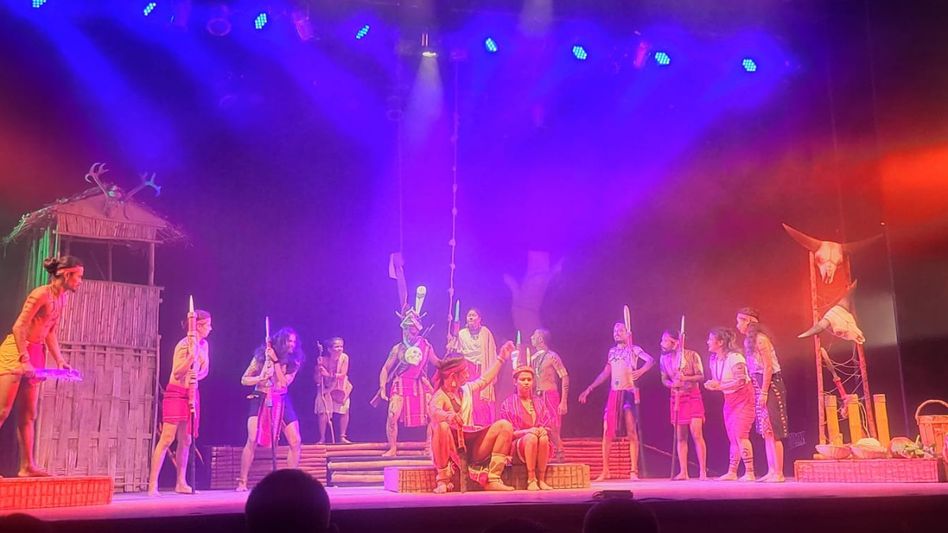
A traditional folk artist's struggle to keep his cultural legacy alive and a community's fight against an inhuman social practice were at the centre of two plays staged by Guwahati-based theatre organisation Abhigyanm on November 6.
The productions, Kamra Seou and Nokiyampo, were staged at the Sri Sri Madhavdev International Auditorium in Guwahati, bringing together audiences and members of Assam's theatre and cultural fraternity.
Written, conceptualised and directed by Kuladeep Talukdar, Kamra Seou examines the uncertain future of Assam's traditional Nalbariya Dholiya artists and the challenges involved in preserving folk art.
The play follows the emotional journey of a traditional dholiya artist who, despite being deeply connected to his profession, does not want his own child to follow the same path. His reluctance reflects the difficulties faced by traditional performers, including declining interest among younger generations and the diminishing prospects of sustaining inherited art forms.
Through the character's aspirations, disappointments and personal struggles, the production explores the gradual erosion of an artistic identity and the larger question of whether traditional folk practices can survive changing social realities.
Ranhang Choudhury served as the artistic mentor. The cast included Ajanta Hazarika as Aaita, Chinmoy Kalita as Surjya, Kuladeep Talukdar as Padum, Barasha Das as Jeuti and Torali Basumatary as Gohaini. Raktim Mahanta, Suman Deka, Gitraj Kalita, Dibya Jyoti Hazarika and Nilanjyoti Thakuria portrayed Surjya's friends, while Raktim Deka, Hridoy Barman, Jyoti Prakash and Hridoy Deka played the dholiyas.
The second production, Nokiyampo, turned to a different social reality, drawing attention to a discriminatory marriage-related custom that once existed in a remote village in Arunachal Pradesh.
Based on Paharor Saa, a story by noted writer Yeshe Dorjee Thongchi, the play was written and conceptualised by Ranhang Choudhury and directed by Choudhury and Kuladeep Talukdar.
Set in Laju village in Tirap district, the production examines an oppressive social practice that affected women's dignity and rights. It traces how the community confronted and eventually abolished the custom nearly eight decades ago.
By revisiting this chapter of the region's social history, Nokiyampo raises questions about gender discrimination, entrenched social prejudices and the ability of communities to challenge practices that violate human dignity.
The cast featured Sunami Das as Kamthok, Tutumoni Kalita as Nenthok, Rupam Saikia as Noklor, Prabal Goswami as Tukhumur, Suraj Kalita as Ranhang, Bhaswati Bora as Sajan Ninu, Ripam Bharadwaj as Taimba, Ajay Mech (Boga) as Wapo, Barasha Das as Mata Ji, Torali Basumatary as Khunpa, Hridoy Deka as Pahap and Chandan Kumar Nath as the organisational leader. Kuladeep Talukdar and Dhruv Karjee portrayed village men, while Kristina Chetia played the village women.
Although the productions explore different themes, both engage with questions of cultural continuity and social change. While Kamra Seou focuses on the struggle to preserve a traditional art form, Nokiyampo looks at how communities can break away from harmful customs.
Several prominent members of Assam's theatre and cultural fraternity attended the performances, including theatre director Abinash Sharma, Naren Patgiri, Nayan Prasad, Himangshu Prasad Das, Rabijita Gogoi, Anup Hazarika and Pakiza Begum.
The guests appreciated the storytelling, thematic depth and theatrical presentation of both productions.
The technical teams included Dimpal Kumar Das for lighting design, with separate teams handling music, set design, construction, makeup and costumes for the two plays. Ranhang Choudhury also served as artistic mentor for Nokiyampo, while Kuladeep Talukdar was its production manager and Bidyut Bikash Choudhury the assistant production manager.
The staging highlighted two concerns that continue to shape conversations around society and culture in the Northeast: the survival of traditional artistic practices and the need to challenge discriminatory customs.