He sang for a lifetime, he lives through his songs: Remembering Zubeen Garg on his birth anniversary
There are voices that entertain, voices that inspire, and then there are voices that become part of a people's identity. Zubeen Garg belonged to the rarest category. For Assam, he was never just a singer. He was an emotion, a companion through different phases of life, a cultural phenomenon and, for millions, a voice that felt like home.
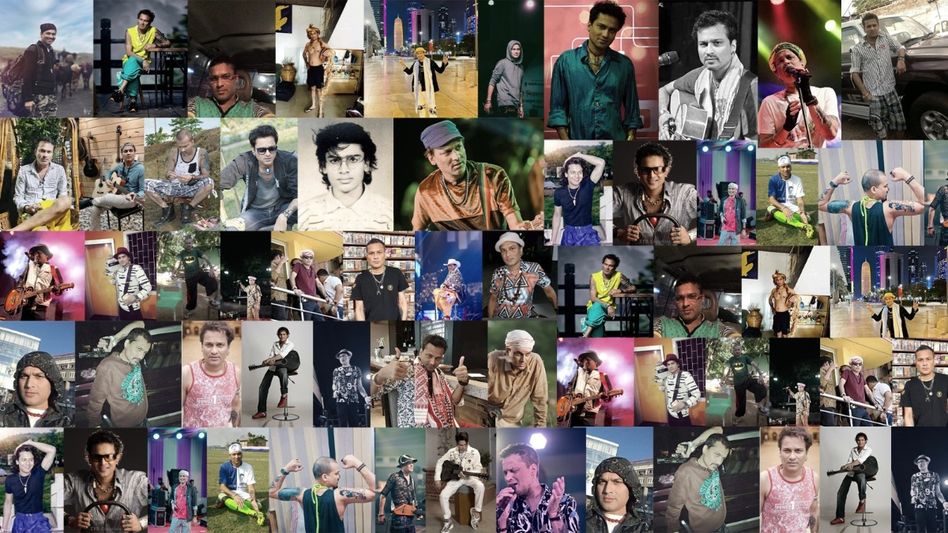

- Nov 18, 2026,
- Updated Nov 18, 2026, 11:38 AM IST

There are voices that entertain, voices that inspire, and then there are voices that become part of a people's identity. Zubeen Garg belonged to the rarest category. For Assam, he was never just a singer. He was an emotion, a companion through different phases of life, a cultural phenomenon and, for millions, a voice that felt like home.
November 18 is no longer just another date on Assam's cultural calendar. It is the day the state celebrates the birth of a man whose music transcended generations, languages, geographical boundaries and social differences. But this November 18 is different. For the first time, Assam marks the birthday of its beloved music icon in his absence, following his death in Singapore on September 19.
The celebrations may have given way to remembrance, the familiar birthday wishes to prayers and tributes, but one thing remains unchanged: Zubeen Garg continues to occupy a place in the collective consciousness of Assam that few artists can ever hope to achieve.
There is perhaps no single way to describe what he meant to Assam. To some, he was the man behind the unforgettable melodies that accompanied their childhood. To others, he was the voice of love, heartbreak, friendship, rebellion and hope. To an entire generation, he was the artist who made Assamese music feel contemporary without allowing it to lose its roots.
And to those who never met him, his songs often made them feel as though they knew him personally.
A boy from Tura who became the voice of millions
Born on November 18, 1972, in Tura, Meghalaya, Zubeen Garg was named Jibon Borthakur at birth. Born to a bureaucrat father and a mother who was a homemaker and singer, Zubeen's childhood was shaped by music, creativity and a deep connection with Assamese culture.
He began singing when he was barely three years old. What started as a childhood fascination gradually grew into a lifelong passion, eventually taking him to some of the biggest musical platforms in the country.
His professional musical journey took off with the release of his debut Assamese album, Anamika, in 1992. He was just 19. The album marked the beginning of a remarkable career that would go on to redefine contemporary Assamese music.
But Zubeen was never an artist who believed in staying within boundaries. He experimented with musical styles, blended traditional Assamese sounds with contemporary influences and gave audiences songs that were as diverse as the emotions they represented.
From romantic melodies and soulful compositions to energetic Bihu numbers, rock, folk, classical and devotional music, his versatility was extraordinary. He could make people dance, cry, fall in love, remember their roots and find comfort in a song.
His voice had an unmistakable quality. It was raw, powerful, sometimes unconventional, but always deeply personal. He did not merely sing songs; he made listeners feel them.
Over a musical career spanning more than three decades, Zubeen recorded songs in more than 40 languages and dialects. His contribution extended far beyond singing. He was a composer, lyricist, music director, instrumentalist, actor, filmmaker and writer. His musical repertoire reportedly crossed 40,000 songs, an extraordinary body of work that reflects the scale of his creative journey.
'Ya Ali' took him beyond Assam, but Assam remained his home
While Zubeen was already a household name in Assam and the Northeast, it was his 2006 chartbuster Ya Ali from the Hindi film Gangster: A Love Story that introduced his voice to millions across the country.
The song became a national sensation, establishing him as one of the most distinctive voices in the Indian music industry. It also earned him the Best Playback Singer award at the Global Indian Film Awards in 2006.
For many outside the Northeast, Ya Ali was their first introduction to Zubeen Garg. For those in Assam, however, he had already been their own superstar for years.
He went on to lend his voice to several Hindi film songs, including Dilruba from Namastey London and Jag Lal Lal Lal from Big Brother. Yet, despite the opportunities and recognition that came with his success in the Hindi film industry, Zubeen eventually returned his focus to Assam.
He never appeared interested in being defined only by Bollywood success. His heart remained firmly connected to his language, his people and his land.
And perhaps that is what made him different.
For Zubeen, success was never simply about becoming a nationally recognised singer. It was also about giving Assamese music a wider platform, creating opportunities for local artists and ensuring that the language and culture he grew up with continued to find expression through music.
More than a singer: An artist who wore many hats
To describe Zubeen Garg only as a singer would be to overlook a significant part of his creative personality.
He composed music for 38 Assamese films, four Bengali films and three Hindi films. He also acted in 27 Assamese films, including Tumi Mur Mathu Mur, Dinabandhu, Mon Jai, Ramdhenu, Kanchanjunga, Mission China, Dr Bezbarua 2, Tumi Ahibane, The Underworld and Wide Angle.
His work as a filmmaker was equally significant. He directed three Assamese films — Tumi Mur Mathu Mur, Kanchanjunga and Mission China. He also appeared in the Assamese television serial Anuradha in 2011.
He was a storyteller who moved comfortably between music and cinema, using both mediums to express his ideas and connect with audiences.
In 2024, the University of Science and Technology Meghalaya conferred an honorary Doctor of Literature (D.Litt.) degree on him in recognition of his contribution to music and culture.
It was an acknowledgement of an artist whose influence could not be measured merely through album sales, awards or the number of songs he had recorded.
The songs that became memories for an entire generation
There are songs that become popular for a season, and then there are songs that become part of people's lives. Zubeen had a rare ability to create the latter.
For Assam, his songs were never confined to playlists or music albums. They were part of everyday existence.
Mayabini, Anamika, Pakhi Pakhi Ei Mon, Maya and countless other Assamese compositions became timeless favourites. His Bihu songs brought people together during celebrations, his romantic numbers became the soundtrack of countless love stories, and his soulful melodies offered comfort during moments of loneliness and heartbreak.
For someone growing up in Assam, it was almost impossible to escape Zubeen's music. His songs played in buses, tea stalls, college festivals, wedding celebrations, community gatherings, village functions and homes.
He belonged to everyone.
A young person could identify with his rebellious spirit. A middle-aged listener could find nostalgia in his older compositions. An elderly person could appreciate the folk influences and cultural roots in his music.
He was one of those rare artists who managed to remain relevant across generations without losing his distinctive identity.
His music also travelled with Assamese people who moved away from their homeland. For those living in different parts of India and abroad, a Zubeen song often became an instant connection to Assam.
It brought back memories of home, childhood, family, friends, the Brahmaputra, the monsoon and the familiar landscape of the state.
Perhaps that is why his music was never merely entertainment. It was a cultural connection.
An artist who refused to remain silent
Beyond his music, Zubeen Garg was known for his outspoken personality and strong convictions.
He was never an artist who restricted himself to the stage or recording studio. He frequently expressed his views on social, cultural and political issues, sometimes taking positions that invited criticism and controversy.
He opposed attempts to dictate what artists could sing, including restrictions imposed by the banned ULFA on Hindi songs at Bihu programmes. He maintained that artists should have the freedom to express themselves through music.
He was also among the prominent voices opposing the Citizenship (Amendment) Act (CAA) in Assam, joining the movement that brought together students, artists, intellectuals and ordinary citizens.
His public positions reflected his strong attachment to Assam's language, identity and cultural interests.
He also established the Kalaguru Artiste Foundation, through which he extended support to people in need, including those affected by floods in Assam.
For him, being an artist was not just about performing before thousands of people. It also meant remaining connected to society and responding to the concerns of ordinary people.
His contribution to society, therefore, went beyond the stage.
September 19: The day Assam lost its beloved voice
On September 17, 2025, Zubeen Garg travelled to Singapore to participate in the fourth edition of the North East India Festival. He was scheduled to perform at the event.
Nobody could have imagined that the journey would become his last.
On September 18, a day before his scheduled performance, he was seen singing at a restaurant in Singapore. Among the songs he reportedly performed was Eric Clapton's Tears in Heaven.
The following day, September 19, 2025, Zubeen died following a swimming incident in the waters off Lazarus Island in Singapore. He was 52.
The news sent shockwaves across Assam and the rest of the country. For a state that had grown up listening to his voice, the loss was difficult to comprehend.
The circumstances surrounding his death led to investigations in Singapore and a separate probe by Assam authorities. Singapore's State Coroner subsequently ruled his death an accidental drowning, with no evidence of foul play, following a detailed inquiry.
His mortal remains were brought back to Assam, where he was cremated with full state honours at Sonapur. The final farewell drew an extraordinary number of mourners, with reports estimating that more than a million people gathered to pay their last respects.
The crowds, the tears, the flowers, the songs and the sea of people at his final journey reflected something that no award or popularity chart could adequately measure.
Assam had lost someone it considered its own.
For days, his songs echoed through homes, streets and public gatherings. People who had never met him personally mourned him as though they had lost a family member.
And in a way, they had.
For Zubeen had been part of their lives for decades.
A legacy that refuses to fade
Even after his death, Zubeen's presence has continued to be felt across Assam.
His cremation site at Sonapur, now known as Zubeen Kshetra, has become a place of remembrance for admirers. His first death anniversary in September 2026 was observed through a three-day Zubeen Divas celebration, featuring prayers, music and cultural programmes.
His wife, Garima Saikia Garg, has also spoken about the immense love people continue to shower on him and the family's efforts to seek answers about his death. Musicians and admirers from different parts of the country have joined in remembering his contribution.
His cinematic legacy, too, continues to reach audiences. His film Roi Roi Binale, directed by Rajesh Bhuyan, was released after his death, giving admirers another opportunity to celebrate his creative work.
But perhaps the most enduring tribute to Zubeen is not a memorial, a concert or a commemorative event. It is the fact that his songs continue to be played, sung and passed on to younger generations.
Every time Mayabini plays, someone remembers a loved one. Every time his Bihu songs fill the air, a celebration feels complete. Every time his voice comes through a speaker, there is a moment when it feels as though he is still around.
That is the extraordinary power of music. It allows an artist to remain present long after he is gone.
November 18: A birthday without the birthday boy
Today, November 18, would have been Zubeen Garg's 54th birthday.
In previous years, the date meant celebrations, birthday messages, music, gatherings and the familiar excitement among fans eager to wish their favourite singer. This year, the celebrations carry a different meaning.
There is happiness in remembering the man he was, but there is also an unmistakable sadness in knowing that he is no longer physically present.
For his family, especially his wife Garima, his absence is a deeply personal loss. For his friends, fellow musicians and colleagues, it is the loss of someone with whom they shared years of music, memories and experiences. And for Assam, it is the loss of an artist whose contribution to its cultural identity is difficult to put into words.
But perhaps the best way to celebrate Zubeen Garg's birthday is to return to what he gave the world.
Listen to his songs. Remember the stories behind them. Celebrate the music he created. Introduce his work to children who may not have had the opportunity to see him perform. And continue to give Assamese music the love and recognition he worked so hard to bring it.
Because Zubeen's greatest achievement was not that he became famous. It was that he made millions of people feel represented, understood and connected through his music.
He sang in different languages, but his heart always spoke to Assam.
He travelled across the world, but his music always found its way home.
He was imperfect, outspoken, unconventional and unapologetically himself. He did not always follow the rules, nor did he attempt to fit into a conventional definition of stardom. Perhaps that was precisely what made him so relatable.
Today, as Assam celebrates his birth anniversary, there may be no new song from him, no birthday appearance and no familiar voice wishing everyone well.
But there will be music.
And as long as his songs continue to play, Zubeen Garg will remain a part of Assam's everyday life.
Some people leave behind wealth, some leave behind achievements, and some leave behind memories. Zubeen left behind an entire musical world.
He may no longer be among us, but he will never be absent from the music of Assam.
Happy birthday, Zubeen Da. Your voice may have fallen silent, but your songs will never stop singing.