History of Bisa Raja reaches Japan as researchers archive books on Singpho Heritage
The historical legacy of Bisa Raja and the Singpho community from Margherita has gained international recognition after two books documenting their history were taken to Japan for preservation and research purposes.

- May 08, 2026,
- Updated May 08, 2026, 7:05 PM IST

The historical legacy of Bisa Raja and the Singpho community from Margherita has gained international recognition after two books documenting their history were taken to Japan for preservation and research purposes.
A six-member Japanese research team recently visited Assam and toured several areas under the Margherita Co-District to conduct a study on the traditional tea culture of the Singpho community, particularly their indigenous tea known as Falap.
During the visit, the team inspected organically managed tea gardens in Margherita and closely studied the traditional process of preparing Falap tea, which is considered one of the oldest forms of tea consumed in the region.
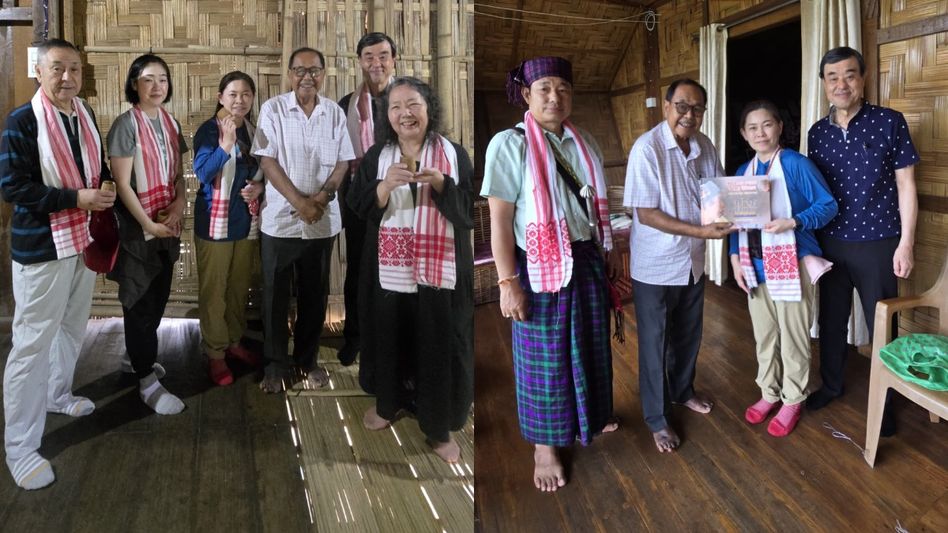
The researchers also visited the historic Bisa village in Ledo, where they were hosted by Mungdang Gam Singpho.
To understand the history of Bisa Raja and the Singpho community, the researchers purchased copies of two recently published books authored by noted writer and journalist Jagat Changmai.
The books, titled *“Bisa Rajar Perat Abaddha Swarnil Itihas”* and *“Singpho Jati aru Bisa Raja Itibritta”*, were also collected in additional numbers for archival preservation and academic research in Japan.
Members of the team reportedly used AI-assisted Japanese translation tools to read and understand the contents of the books and expressed appreciation for the historical documentation work carried out by the author.
The team encouraged Jagat Changmai to continue researching and writing on the history and culture of the region, noting that the books reaching Japan was a matter of pride for Assam.
The delegation was led by Yoshie Matsumiya, who expressed admiration for Assam’s natural beauty during the visit. She also praised the traditional Singpho Falap tea after tasting it during the interaction with local residents.
The Japanese researcher further expressed interest in continuing research work in Assam in the future, particularly on indigenous tea culture and the heritage of the Singpho people.