
How a hydropower project gave Assam one of its most poetic songs
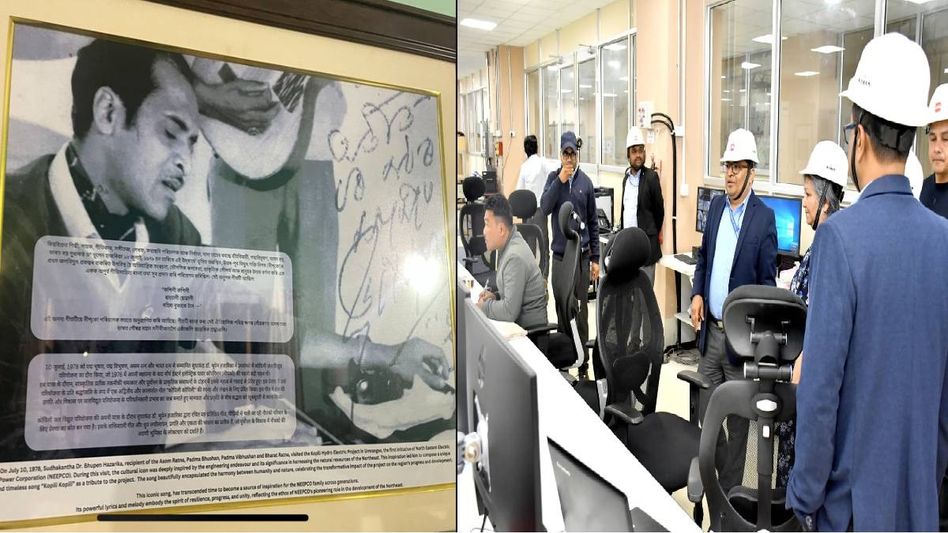
On July 10, 1978, legendary cultural icon and Sudhakantha Dr Bhupen Hazarika—later conferred with the Asom Ratna, Padma Vibhushan and Bharat Ratna—visited the Kopili Hydropower Electric Project at Umrangso, marking a moment that would leave a lasting imprint on Assam’s cultural and developmental narrative.

- Dec 13, 2025,
- Updated Dec 13, 2025, 3:38 PM IST

- Dr Hazarika's visit to Kopili Project marked a pivotal moment in Assam's history.
- Kopili Hydropower Project harnessed Assam's river energy for progress.
- Dr Hazarika's song 'Kopili Kopili' reflects cultural and ecological themes.
On July 10, 1978, legendary cultural icon and Sudhakantha Dr Bhupen Hazarika—later conferred with the Asom Ratna, Padma Vibhushan and Bharat Ratna—visited the Kopili Hydropower Electric Project at Umrangso, marking a moment that would leave a lasting imprint on Assam’s cultural and developmental narrative.
At the time, the Kopili project was among the earliest flagship ventures of the North Eastern Electric Power Corporation (NEEPCO), conceived to harness the vast hydropower potential of the region’s rivers. Situated in the present-day Dima Hasao district, the project draws its energy from the Kopili River, a significant tributary of the Brahmaputra that winds through dense forests, hills and tribal habitations, shaping the socio-economic life of the region for generations.
Dr Hazarika’s visit went beyond a formal inspection of infrastructure. Deeply connected to the land and its people, he was struck by the effort to transform the natural force of the river into a source of collective progress, while remaining intertwined with the region’s cultural and emotional fabric. This experience inspired him to compose the iconic song “Kopili Kopili”, which would later occupy a special place in Assam’s musical and historical memory.
Unlike conventional narratives celebrating industrial development, “Kopili Kopili” portrays the river as a living presence—bearing witness to change while continuing to nurture life along its banks. Through evocative lyrics and melody, Dr Hazarika blended themes of human endeavour, ecological harmony and quiet optimism, reflecting his belief that development must be guided by empathy, cultural awareness and respect for nature.
The song also offered a broader reflection on the Northeast, a region abundant in rivers such as the Brahmaputra, Barak, Subansiri and Kopili, yet often viewed primarily through a strategic or resource-driven lens. Dr Hazarika’s composition challenged this perspective by foregrounding the human, ecological and cultural dimensions of progress.
Nearly five decades on, “Kopili Kopili” continues to resonate as more than a musical tribute to a hydropower project. It stands as a cultural record of a pivotal moment in the Northeast’s journey towards modernity—capturing the aspirations of a region seeking to overcome isolation and underdevelopment while preserving its identity.
As the Kopili Hydropower Project remains an integral part of the region’s power infrastructure, Dr Bhupen Hazarika’s timeless composition endures as a reminder that art can interpret history with a depth and sensitivity often absent from official accounts. In weaving together river, people and purpose, “Kopili Kopili” continues to echo the Northeast’s ongoing dialogue between tradition and transformation.
MORE NEWS












Copyright©2026 Living Media India Limited. For reprint rights: Syndications Today
