India achieves first captive breeding of Assamese snakehead, boosting ornamental fisheries
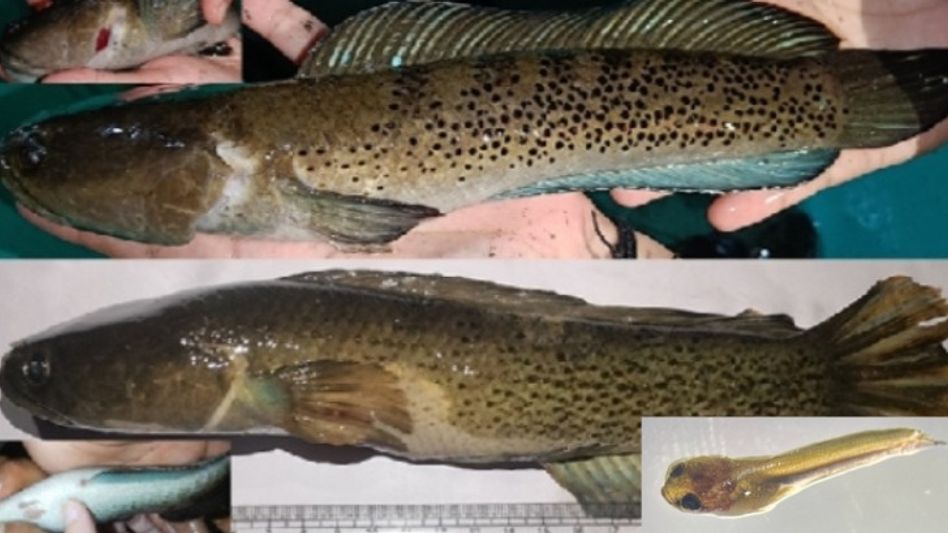
Scientists at the ICAR-Central Inland Fisheries Research Institute have successfully carried out the country’s first captive breeding and larval rearing of Channa stewartii, a rare ornamental fish native to the upper Brahmaputra basin.

- May 01, 2026,
- Updated May 01, 2026, 2:43 PM IST

- Breakthrough was recorded in April 2026 at the Guwahati Regional Centre
- Researchers conditioned nearly 30 wild brooders in a semi-natural spawning setup
- A mature pair spawned naturally in a tank without hormonal induction
Scientists at the ICAR-Central Inland Fisheries Research Institute have successfully carried out the country’s first captive breeding and larval rearing of Channa stewartii, a rare ornamental fish native to the upper Brahmaputra basin.
The achievement, recorded in April 2026 at the institute’s Guwahati Regional Centre, is being seen as a crucial step towards reducing dependence on wild-caught stocks and promoting sustainable fish trade.
Popularly known as the Assamese snakehead, the species is prized in the ornamental fish market for its iridescent blue fins and visual appeal, fetching between Rs 600 and Rs 1,200 per pair. However, the lack of a standardised breeding protocol had earlier forced traders to rely on wild populations, raising concerns over overexploitation in fragile hill-stream ecosystems of Northeast India.
The breakthrough comes under the All India Network Project on Ornamental Fish Breeding and Culture, launched in April 2024. Researchers conditioned nearly 30 wild brooders in a semi-natural environment using sand substrates, bamboo structures and earthen shelters to replicate natural habitats and encourage spawning.
A mature breeding pair was later transferred to a fibre-reinforced plastic tank, where it spawned naturally without hormonal induction. The pair produced between 1,578 and 2,769 eggs, with a hatching success rate of 73 per cent. The larvae, measuring about 8.4 mm, showed healthy growth and active swimming behaviour under controlled conditions.
Institute Director Pradip Dey described the development as a “major step towards sustainable ornamental fisheries,” noting its potential to support aquaculture-based entrepreneurship while easing ecological pressure on wild fish populations.
He also stressed the need to scale up hatchery production under the Pradhan Mantri Matsya Sampada Yojana and introduce certification systems for captive-bred ornamental fish.
Experts say the breakthrough not only strengthens biodiversity conservation efforts but also opens up new livelihood opportunities, linking scientific innovation with sustainable economic growth.