India hosts first global mercury conference; Northeast research takes centre stage
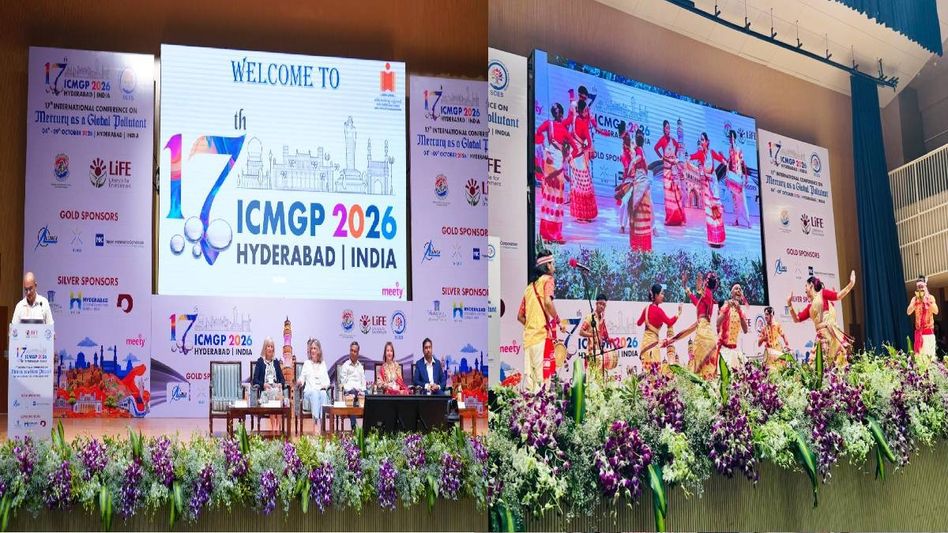
India hosted the 17th International Conference on Mercury as a Global Pollutant (ICMGP 2026) for the first time in the event’s 36 year history, bringing together scientists, policymakers and researchers from 26 countries at IIT Hyderabad between October 4 and 9.

- Oct 13, 2026,
- Updated Oct 13, 2026, 1:49 PM IST

India hosted the 17th International Conference on Mercury as a Global Pollutant (ICMGP 2026) for the first time in the event’s 36 year history, bringing together scientists, policymakers and researchers from 26 countries at IIT Hyderabad between October 4 and 9.
The six day conference, themed “Reaching Ten Years of Enforcement of the Minamata Convention,” examined mercury contamination, atmospheric emissions, ecosystem health and human exposure, along with how scientific evidence can be translated into effective environmental policy. It was jointly chaired by Professor Asif Qureshi of IIT Hyderabad and Dr Jagannath Biswakarma of the University of Bristol, UK.
A key highlight was the first official participation of the World Health Organization (WHO) in the conference series. Dr Elena Jardan of WHO’s Chemical Safety and Health Unit led a plenary session on mercury and human health, covering biomonitoring, exposure assessment and national public health responses. The Secretariat of the Minamata Convention on Mercury also took part, with Executive Secretary Monika Stankiewicz addressing the role of research in supporting international mercury governance.
One of the most significant moments came from Masami Ogata, a Minamata disease patient and storyteller from Japan, who shared his experience of the long term human and social impact of industrial mercury contamination. His testimony linked the historical tragedy of Minamata disease, caused by industrial mercury discharge into Japan’s coastal waters, with ongoing global efforts to prevent similar disasters.
Scientific sessions brought together specialists in atmospheric mercury, toxicology, aquatic ecosystems and pollution monitoring, with researchers from South Africa, China, Russia, Brazil and Argentina discussing gaps in long term monitoring and emissions data, particularly in developing economies.
The conference also gave Northeast India a visible place in the global mercury debate. Researchers from Nagaon University in Assam presented work on mercury contamination in agricultural soils and crops, while Dr Farishta Yasmin of the university served on the event’s Scientific Steering Committee. The region’s engagement with environmental pollution has historical roots: coal mining in Assam’s Makum coalfield dates back to the late 19th century, and mining waste from high-sulphur coal can release heavy metals, including mercury, into soil, water and air. For a state situated in the Brahmaputra basin and dependent on agriculture, such research carries direct implications for food safety, water quality and public health. During the valedictory session, Gumjum Haider from Arunachal Pradesh further highlighted community-led biodiversity conservation in the Eastern Himalayas, speaking about the Singchung Bugun Village Community Reserve, efforts to protect the endangered Bugun liocichla, and hornbill conservation near Pakke Tiger Reserve.
The event, which began in Sweden in 1990, received support from the Government of Telangana and India’s Ministry of Environment, Forest and Climate Change. It concluded with poster awards for 11 student researchers, recognising young scientists working across the field.
Organisers said the discussions and partnerships formed in Hyderabad are expected to feed into continuing international efforts to address mercury pollution and strengthen the link between scientific research and policy action.