
Integrated Judicial Court complex to make justice accessible and inclusive: CJI Surya Kant
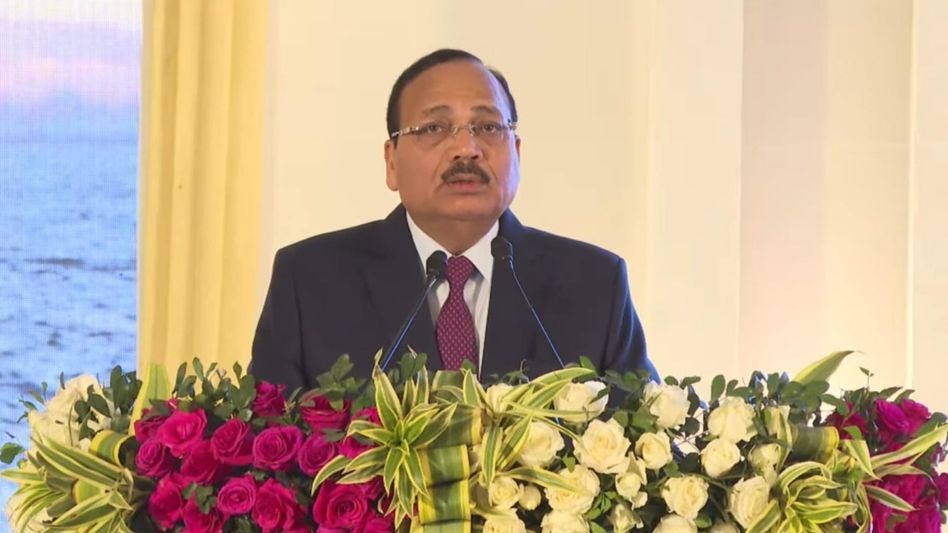
Chief Justice of India Surya Kant on Sunday, January 11 emphasised that justice delivery must function as a unified system rather than a collection of isolated institutions, stating that true access to justice depends on integration, efficiency, and humaneness.

- Jan 11, 2026,
- Updated Jan 11, 2026, 9:00 PM IST

Chief Justice of India Justice Surya Kant on Sunday, January 11 emphasised that justice delivery must function as a unified system rather than a collection of isolated institutions, stating that true access to justice depends on integration, efficiency, and humaneness.
Addressing a gathering during the foundation stone laying ceremony of the Integrated Judicial Court Complex, CJI Surya Kant said the process of justice involves judges, lawyers, litigants, prosecutors, court staff, legal aid institutions, and alternative dispute resolution mechanisms. When these components operate separately, the justice system becomes fragmented and exhausting, particularly for litigants.
He pointed out that for many citizens, the struggle begins even before entering the courtroom. Litigants are often forced to travel across cities—from the High Court to district courts and legal aid offices—draining their time, energy, and resources. “The burden of navigation should not overshadow the pursuit of justice,” he observed.
The proposed Integrated Judicial Court Complex, which will house the Gauhati High Court, the Kamrup Metro district judiciary, and all essential services in one location, is expected to fundamentally change this experience. According to the CJI, the new complex will allow people to focus on being heard and seeking justice rather than merely finding their way through the system.
Justice Surya Kant also raised concerns about the challenges faced by young lawyers due to fragmented and saturated court infrastructure. He noted that existing court complexes are largely dominated by senior members of the Bar, leaving limited space for young and emerging advocates to consult clients or establish their practice. This, he said, creates an unfair burden on new entrants and preserves unhealthy monopolies within the legal profession.
“As the head of the Indian judiciary, my priority is the future—young lawyers who are studying today and those who will join the Bar tomorrow,” he said, stressing the need for infrastructure planning that caters to the next generation before urban land scarcity makes such development impossible.
Expressing surprise over opposition to the project by sections of the Bar Association, the CJI said resistance based on personal convenience or vested interests cannot justify obstructing modern, future-ready infrastructure. He appealed to the State Government and the Chief Justice of the High Court to ensure equitable accommodation for young lawyers, irrespective of socio-economic background or seniority.
He proposed a tiered approach, prioritising young entrants to the profession while allowing well-established and financially secure lawyers to wait if necessary. However, he acknowledged that the scale of the project and liberal funding by the state would ultimately provide space for young, senior, and established lawyers alike.
Justice Surya Kant also recommended the creation of separate bar rooms for women lawyers and welcomed the inclusion of a dedicated primary health centre and an exclusive approach road to reduce travel time. He described these facilities as essential civic amenities and a matter of human rights.
Calling upon senior members of the Bar to support the initiative, the CJI urged collective responsibility to dismantle geographical monopolies and ensure the early completion of the complex. He concluded by reminding the legal fraternity that while the profession stands on the shoulders of its giants, its true strength lies in empowering the generations yet to come.
MORE NEWS












Copyright©2026 Living Media India Limited. For reprint rights: Syndications Today
