
Meet Nuru Karim: The architect who turned Guwahati's new airport terminal into a 'living forest'
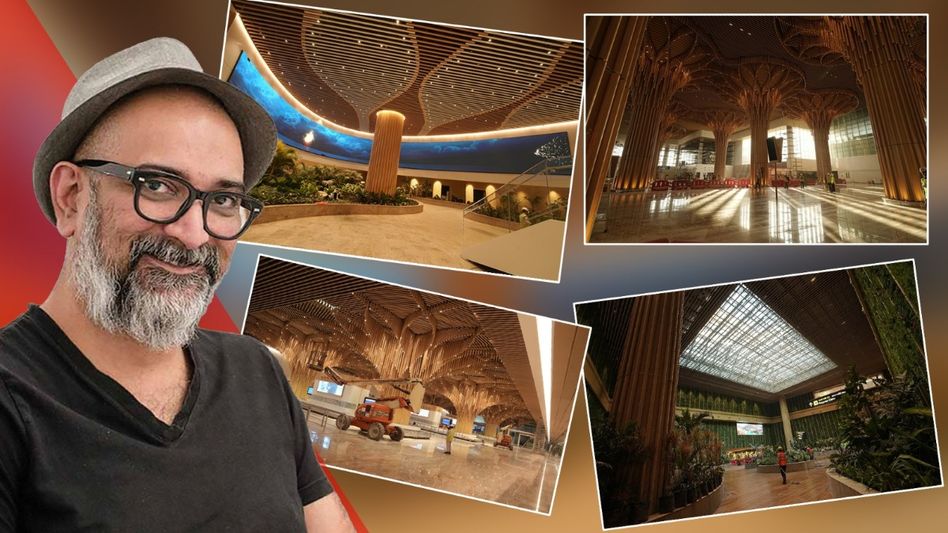
Meet Nuru Karim, the architect who has redefined how India imagines airport infrastructure by transforming Guwahati Airport’s new Terminal 2 into what many describe as a “living forest.”

- Dec 23, 2025,
- Updated Dec 23, 2025, 4:05 PM IST

Meet Nuru Karim, the architect who has redefined how India imagines airport infrastructure by transforming Guwahati Airport’s new Terminal 2 into what many describe as a “living forest.”
Inspired by Assam’s natural heritage, the terminal has now earned global recognition after being awarded the International Architectural Award 2025.
Designed by Karim with a strong emphasis on sustainability and passenger wellbeing, Terminal 2 draws from the visual language of foxtail orchids, indigenous bamboo, and the floodplain landscapes of Kaziranga National Park. Rather than imposing a concrete-heavy structure on the environment, the design allows nature to guide form, material, and movement, creating a space where architecture and ecology coexist.
One of the defining features of the terminal is its extensive use of bamboo, a renewable and locally resonant material, combined with skylights that flood the interiors with natural daylight. The terminal incorporates open volumes, green pockets, and what designers describe as “sky forests,” helping regulate temperature naturally while offering travellers a calming, biophilic experience rarely associated with busy airports.
Beyond aesthetics, the project prioritises smart and sustainable design principles. Optimised airflow, reduced dependence on artificial lighting, and climate-responsive planning significantly lower energy consumption. The terminal’s layout is also designed to reduce stress and improve passenger movement, reinforcing the idea that infrastructure should serve human comfort as much as operational efficiency.
Also Read: Bamboo, Orchids and new identity: Guwahati Airport’s terminal as gateway to Assam’s future
The International Architectural Award 2025 jury cited the Guwahati project as an example of how large-scale public infrastructure can embrace environmental responsibility without sacrificing modern functionality. The recognition places Guwahati Airport among a select group of global airports acknowledged for innovative, eco-conscious architecture.
Nuru Karim is the founder and principal architect of Mumbai-based practice NU.DE (Nuru Karim Design Establishment). An alumnus of the Academy of Architecture, Mumbai, Karim is widely recognised for his experimental, research-driven approach that blends architecture, interior design, and landscape thinking. His work often explores the relationship between built form, climate, material innovation, and human experience.
Over the years, Karim has designed a diverse portfolio spanning cultural spaces, hospitality projects, exhibitions, and large-scale public infrastructure. He has represented India at international architecture platforms, including the Venice Architecture Biennale, and has received several national and global accolades for his contribution to contemporary Indian architecture. With Guwahati Airport’s Terminal 2, Karim further cements his reputation as an architect who demonstrates that progressive design can remain deeply rooted in ecology and regional identity.
With Terminal 2, Guwahati Airport has not only expanded its capacity but also made a powerful statement about Assam’s development philosophy. The project underscores that modern infrastructure need not conquer nature to succeed—instead, it can learn from it, grow with it, and reflect the cultural and environmental ethos of the land it serves.
MORE NEWS










Copyright©2026 Living Media India Limited. For reprint rights: Syndications Today
