

Mood of Assam: 49 per cent Hindus find electoral roll revision fair, 46 per cent Muslims say it favoured the BJP
A survey in Assam reveals 49 per cent Hindus consider the electoral roll revision fair, whereas 46 per cent Muslims feel it favours the BJP. The results highlight contrasting community perceptions about the electoral process
Advertisement

India TodayNE
- Feb 02, 2026,
- Updated Feb 02, 2026, 6:19 PM IST
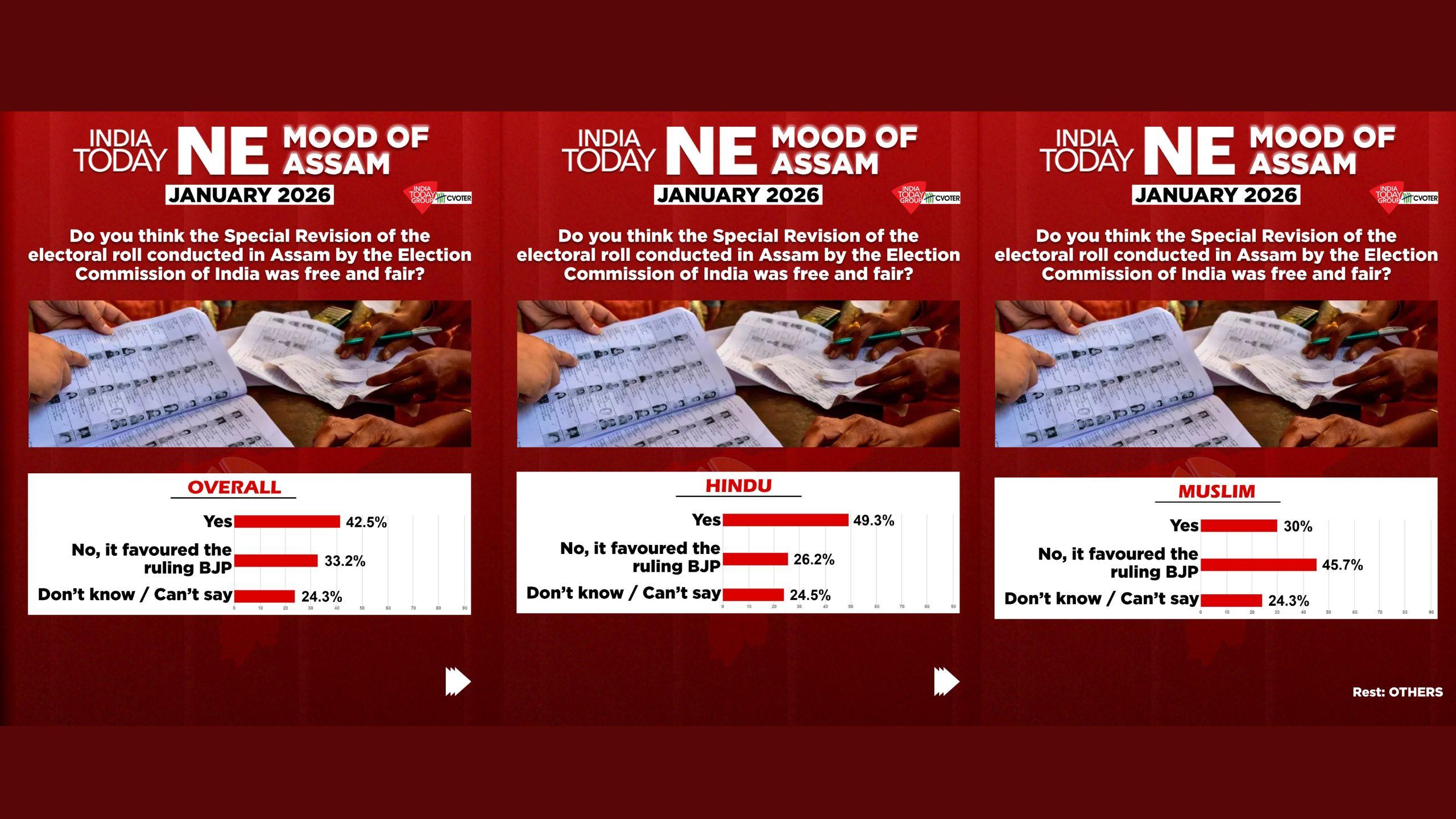
A 19-percentage point chasm separates how Hindu and Muslim voters view Assam's electoral integrity, with the India Today–CVoter Mood of the Nation poll conducted in January 2026 exposing a state fundamentally divided over the most basic democratic process—who gets to vote. While 49.3 per cent of Hindu respondents believe the Election Commission's Special Revision of electoral rolls was free and fair, only 30 per cent of Muslims share this confidence. Nearly half of Muslims—45.7 per cent—believe the revision was unfair, compared to just 26.2 per cent of Hindus.
This isn't a marginal difference of opinion. It represents communities inhabiting fundamentally different political realities about the same state institution conducting the same electoral process. Overall, 42.5 per cent of all respondents believe the process was fair, while 33.2 per cent express scepticism, and 24.3 per cent declined to offer an opinion. But these aggregate numbers conceal the religious fault lines that define Assam's political landscape ahead of the March-April 2026 elections.
The 'Others' category mirrors Hindu confidence at 49.3 per cent, trusting the process, though showing higher scepticism at 38 per cent. The pattern is clear: communities that support the ruling BJP's stance on citizenship and immigration tend to trust electoral processes, while communities that feel targeted by these measures view them as threats to their political participation.
The divergence reflects lived experiences shaped by recent history. The National Register of Citizens exercise excluded 1.9 million people from the final 2019 list, creating widespread anxieties, particularly among Bengali-speaking Muslims. The Citizenship Amendment Act of 2019, offering citizenship to non-Muslim refugees while excluding Muslims, deepened the perception among Muslim communities that state processes are designed to marginalise them. For Hindu respondents, the Special Revision represents necessary housekeeping—removing duplicate entries and ensuring only legitimate voters participate. For Muslim respondents, particularly in Lower Assam districts, it represents another mechanism potentially targeting their community.
Opposition parties, including Congress and the All India United Democratic Front, have documented cases where legitimate Muslim voters reportedly faced difficulties retaining their names on rolls, reinforcing community fears. The Election Commission maintains the revision followed established procedures with adequate grievance redressal. But institutional assurances mean different things to different communities. Hindu respondents, who largely support the ruling BJP's stance, view electoral integrity measures as protecting democracy. Muslim respondents view them as threats.
The divide has direct electoral implications. Muslims constitute approximately 34 per cent of Assam's population, concentrated in the Lower Assam districts. If 45.7 per cent of this community believes the electoral process is rigged against them, it could affect turnout, political mobilisation, and ultimately election legitimacy. Hindu voters, comprising roughly 61 per cent of the population, provide the BJP's core base—and their 49.3 per cent confidence level suggests Chief Minister Himanta Biswa Sarma's narrative on electoral integrity resonates with his primary constituency.
Sarma has championed stricter measures on citizenship and voter verification, positioning them as safeguards against illegal immigration. This messaging consolidates Hindu support but deepens Muslim alienation—exactly what the survey numbers reveal. Opposition parties attempting to consolidate Muslim votes face the challenge of overcoming deep institutional distrust, while Hindu voters remain confident in the current processes.
The substantial 24.3 per cent who declined to offer opinions—nearly identical across Hindu (24.5 per cent) and Muslim (24.3 per cent) communities—suggests another dimension: people unwilling or unable to take sides on increasingly contentious issues. In a healthier democracy, electoral administration would command a broad consensus. In Assam 2026, it has become yet another battlefield in identity politics.
When Hindu and Muslim citizens of the same state view the same electoral process through such different lenses—49.3 per cent versus 30 per cent trust—it indicates more than partisan disagreement. It reveals a society where communities no longer share common frameworks for evaluating basic democratic functions. The 19-percentage point gap isn't just a survey finding; it's a measure of how deeply divided Assam has become along communal lines.
As Assam heads to polls with assembly tenure ending May 2026, the question isn't just who wins, but whether election outcomes will be accepted as legitimate across community lines. The India Today–CVoter survey reveals a state where the answer increasingly depends on which community you ask—and that divergence may be the most consequential election result of all.
POST A COMMENT
MORE NEWS



Copyright©2026 Living Media India Limited. For reprint rights: Syndications Today
