

Mood of Assam: 54 per cent feel there was conspiracy behind Zubeen Garg’s death
Over half of Assam's population suspects foul play in Zubeen Garg's death, urging authorities for a detailed probe. The state remains tense as calls for transparency grow louder
Advertisement

India TodayNE
- Feb 02, 2026,
- Updated Feb 02, 2026, 6:20 PM IST
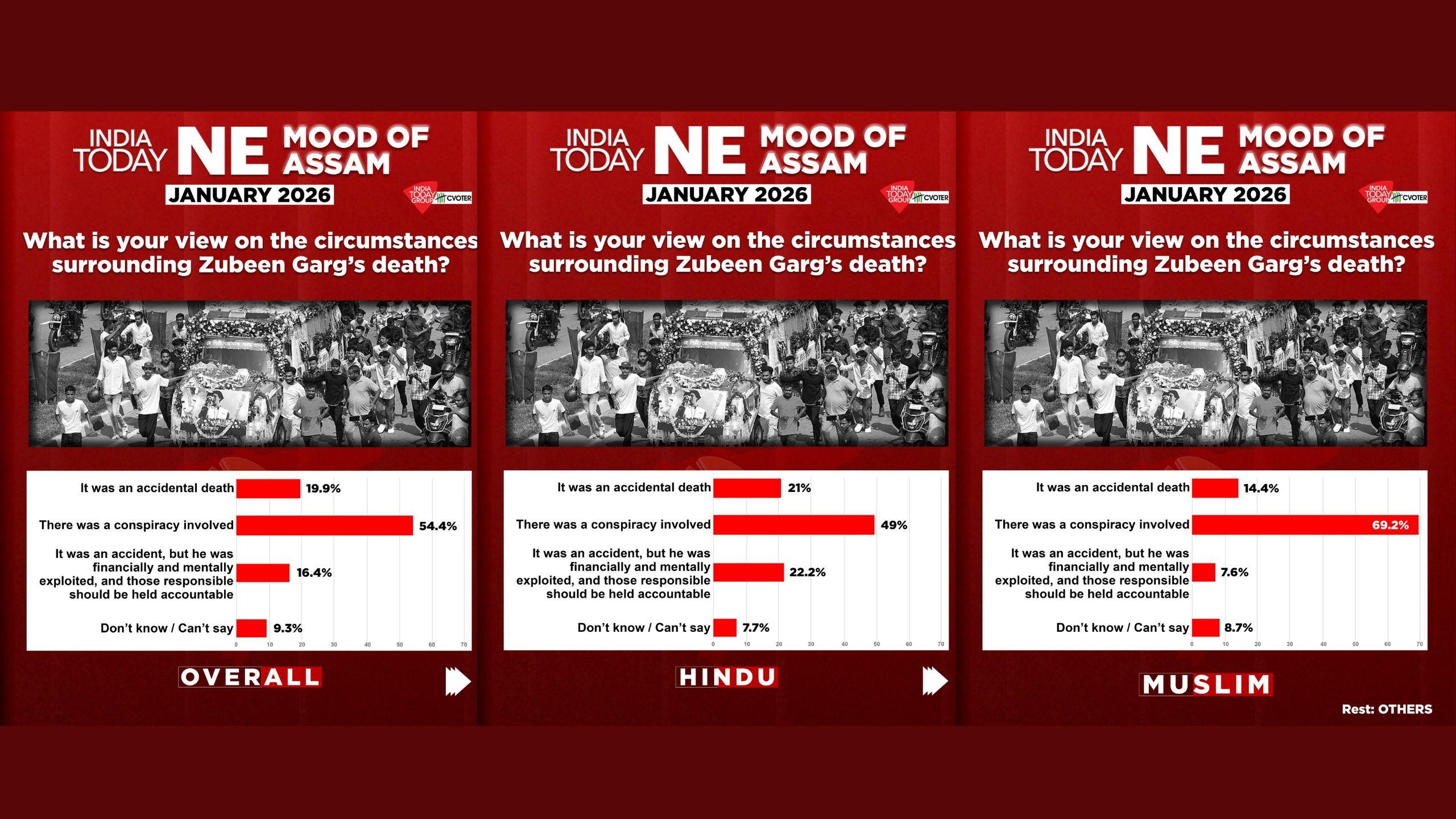
The death of Assamese cultural icon Zubeen Garg has exposed deep communal fault lines, with the India Today–CVoter Mood of the Nation poll conducted in January 2026 revealing a 20-percentage point gap separating Muslim and Hindu beliefs about what happened. While 69.2 per cent of Muslims believe conspiracy was involved in the singer's drowning in Singapore, 49 per cent of Hindus share this suspicion—both majorities, but reflecting vastly different levels of institutional distrust as the state heads toward March-April 2026 elections.
Overall, 54.4 per cent of respondents believe conspiracy was involved, with only 19.9 per cent accepting it as accidental and 16.4 per cent taking a middle position that it was accidental but exploitation occurred. Among Muslims, conspiracy belief reaches 69.2 per cent, while only 14.4 per cent accept the accidental explanation.
Among Hindus, 49 per cent believe in conspiracy, while 21 per cent accept it as accidental. This gap persists despite Singapore authorities finding no foul play in the January 14, 2026, coroner's court testimony, which established that Garg drowned while severely intoxicated with a blood alcohol concentration of 333mg/100ml after removing his life jacket.
Facts have failed to convince either community, revealing how differently Muslims and Hindus process the same official information. The 'Others' category shows 44.4 per cent believing it was accidental—significantly higher than both Hindu and Muslim respondents—while 29.2 per cent believe in conspiracy and 6.9 per cent want accountability for exploitation. This suggests the voters in this category are less invested in conspiracy narratives that dominate Hindu and Muslim discourse.
The communal divide extends to blame for political exploitation. Among Hindus, only 29.6 per cent blame the ruling BJP for politicising Garg's death, while 41.2 per cent blame opposition parties. Among Muslims, 55.1 per cent blame opposition parties, while just 19.1 per cent blame the BJP. The numbers are striking because they show Muslims blaming the opposition more than the ruling party, suggesting complex political calculations or perhaps disillusionment with opposition effectiveness. Overall, 37.5 per cent blame the BJP, 32 per cent blame opposition, 10.3 per cent blame both sides, and 5.4 per cent blame neither.
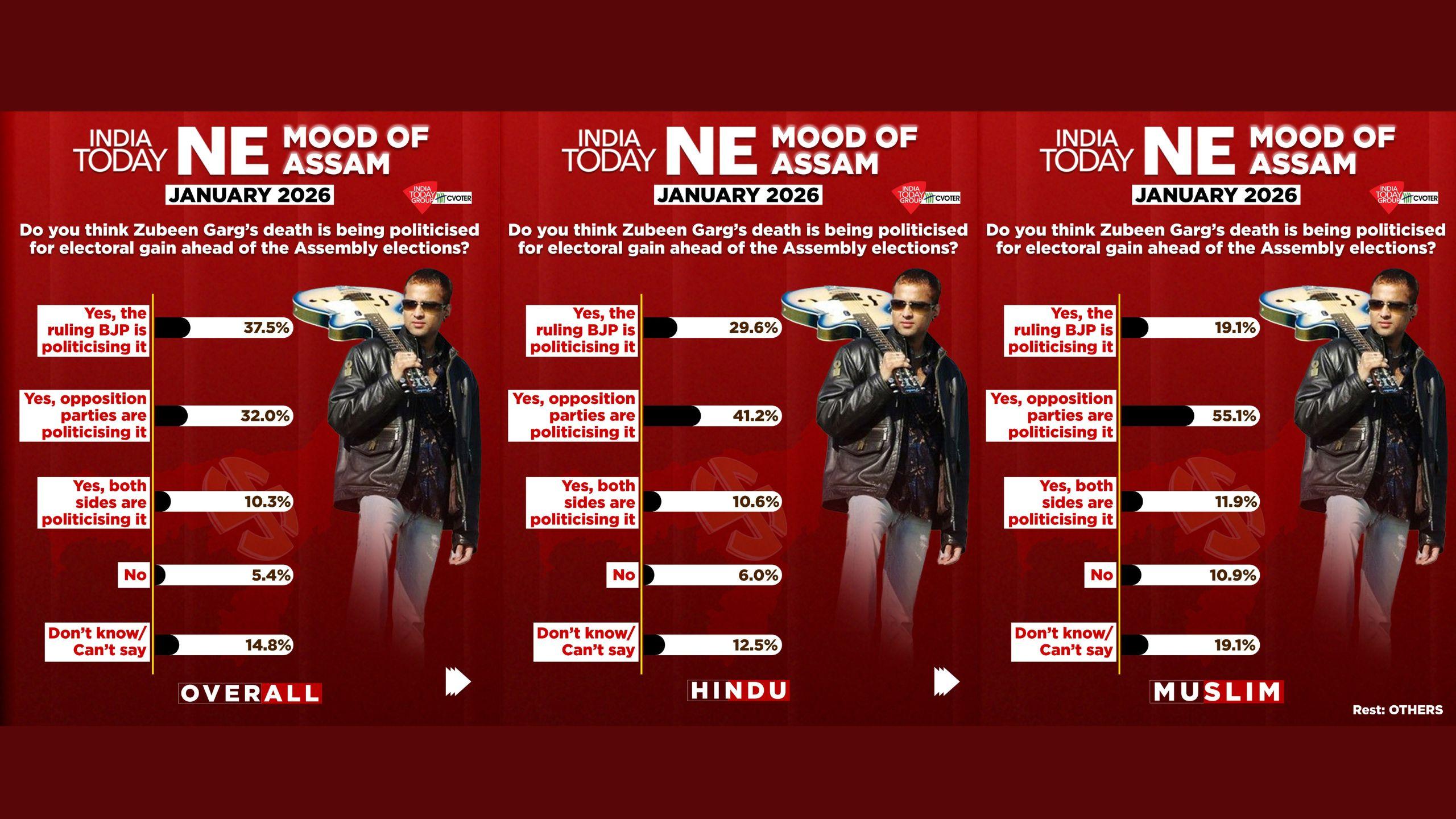
The ones in the 'Others' category show the most cynicism: 68.1 per cent believe both sides are politicising the death, with only 5.6 per cent blaming BJP alone and 18.1 per cent blaming the opposition exclusively. This suggests different communities see different villains in the same political drama, with the voters uniquely disgusted by all parties.
Trust in Assam Police's investigation reveals the starkest communal chasm. Among Hindus, 52.3 per cent express confidence in the probe. Among Muslims, only 24.6 per cent trust it, while 63.3 per cent believe it's politically influenced—a devastating 38.7-percentage point gap in how communities view the same investigation by the same institution. Overall, 42.4 per cent trust the investigation while 42.3 per cent see political influence—a virtual tie that conceals massive communal divergence. The 'Others' category shows 75 per cent confidence, suggesting these communities maintain higher institutional trust than Muslims.
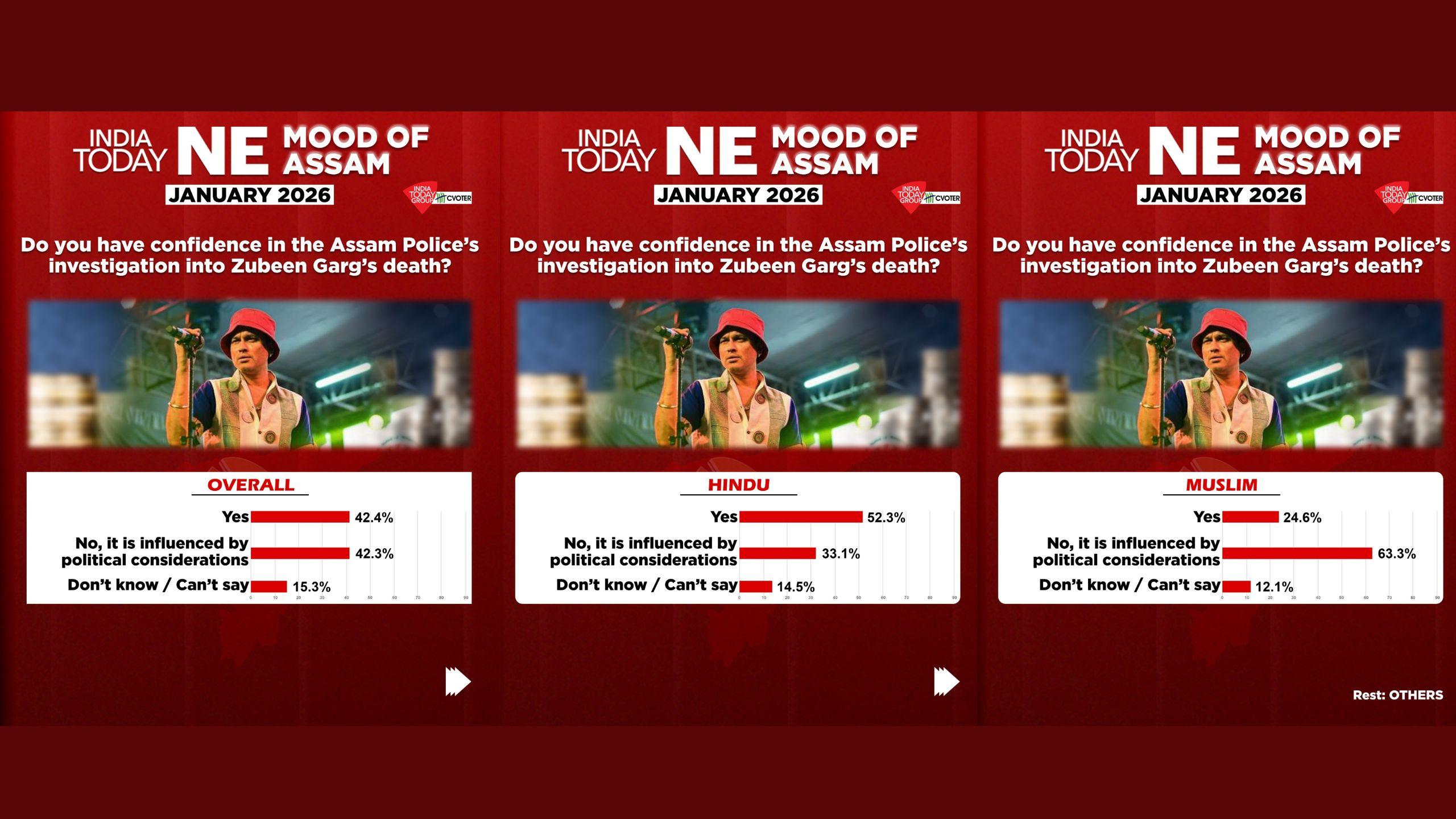
Only 15.3 per cent overall remain uncertain about the investigation—far lower than typical political issues—indicating Garg's death has forced most people to take sides. The December 12, 2025, chargesheet charged seven individuals, including festival organiser Shyamkanu Mahanta, with murder, alleging they intentionally intoxicated Garg and instigated him to jump into water despite epilepsy and medical advice. Yet allegations persist that Mahanta, reportedly close to Chief Minister Himanta Biswa Sarma, is being shielded—allegations that resonate very differently across communities based on baseline institutional trust levels.
Sarma's October 2025 declaration—that voters shouldn't support the BJP if his government fails to deliver justice—was a calculated gamble on Hindu voters trusting the process. With 52.3 per cent of Hindus confident in the investigation versus 24.6 per cent of Muslims, the gamble appears targeted at his core base. Congress MP Gaurav Gogoi's accusations of weak chargesheets and political shielding resonate with the 63.3 per cent of Muslims who see political influence, but struggle to penetrate Hindu confidence. The depth of public emotions was evident in violent protests outside the Baksa district jail when accused individuals were transferred to judicial custody.
Garg's funeral drew hundreds of thousands, making it one of the world's largest. What began as unified grief has fractured along familiar communal lines—not because communities loved Garg differently, but because they trust institutions differently. The 20-point gap in conspiracy belief, the 38-point gap in police trust, and opposite conclusions about political exploitation reveal that Muslims and Hindus increasingly inhabit separate information ecosystems with separate truths.
Political analysts suggest this represents Sarma's most formidable challenge, potentially more difficult than managing protests over the Citizenship Amendment Act. When more than half the population believes in conspiracy theories surrounding a high-profile death, and nearly equal numbers trust and distrust the investigation, it indicates that official narratives have lost credibility. Whether these conspiracy theories have a factual basis becomes secondary to their widespread acceptance, which shapes political behaviour and social attitudes.
As assembly tenure ends in May 2026, the Zubeen Garg case has become an unexpected axis for political mobilisation. The India Today–CVoter survey reveals a state where institutional trust varies dramatically by community, conspiracy theories flourish in environments of scepticism, and even the memory of a beloved cultural icon gets consumed by identity politics. The communal divide that defines every issue—electoral rolls, police investigations, political motivations—has now consumed shared grief, turning it into competing narratives shaped by which Assam you belong to.
POST A COMMENT
MORE NEWS












Copyright©2026 Living Media India Limited. For reprint rights: Syndications Today
