Remembering Parvati Prasad Barua: A cultural icon of Assam this generation should know
Assam is marking Parvati Prasad Barua's death anniversary by revisiting his work across music, theatre and cinema. The occasion has renewed focus on how he helped shape modern Assamese cultural identity and public life.

- Jun 07, 2026,
- Updated Jun 07, 2026, 2:46 PM IST

- Born in Sivasagar, he grew up amid literature, music and intellectual life
- Tagore's work influenced him deeply during his studies in Kolkata
- He blended folk melodies, Borgeets and lyric poetry into modern songs
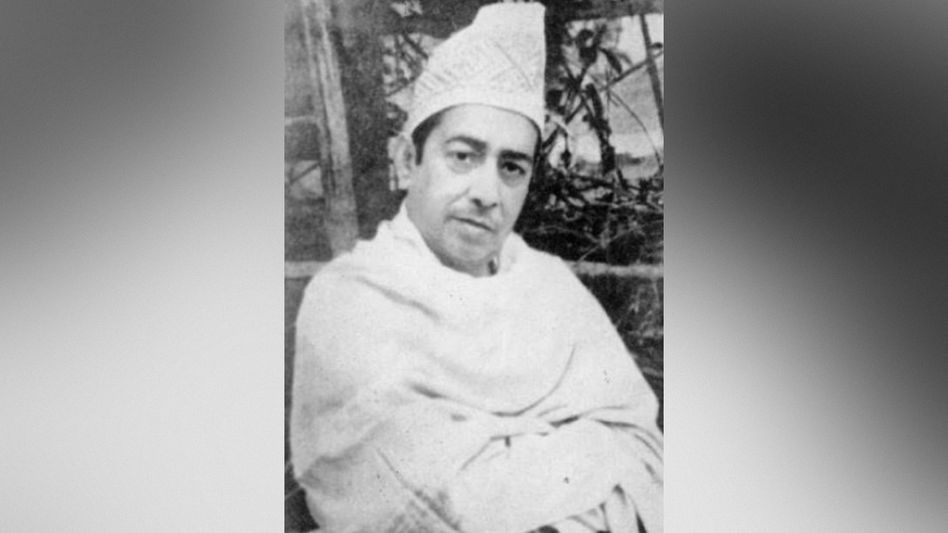
Every society has a few cultural figures whose influence extends far beyond their lifetime. In Assam, one such towering personality was Parvati Prasad Barua - poet, lyricist, playwright, filmmaker, music composer and cultural reformer. More than six decades after his death, his songs continue to be sung, his ideas continue to inspire and his contributions continue to shape the cultural identity of Assam.
Yet, outside literary and cultural circles, many young people today know surprisingly little about the man who helped redefine Assamese music, theatre and cinema.
June 7 marks the death anniversary of Parvati Prasad Barua, fondly remembered as the "Geetikobi" or lyrical poet of Assam. It is also an occasion to revisit the extraordinary life of a man who dedicated himself to preserving and enriching Assamese culture during a period of immense social and cultural change.
Born on August 19, 1904, in Sivasagar on the banks of the Dikhow River, Parvati Prasad belonged to a prominent family of tea planters and intellectuals. His father, Radhika Prasad Barua, and mother, Himala Devi, were both associated with literature. His elder brother, Bhagavati Prasad Barua, was celebrated as the "Shelley of Assamese Poetry."
Growing up in such an environment, literature and music became a natural part of his life. While studying in Sivasagar and later at Cotton College in Guwahati and Scottish Church College in Kolkata, he immersed himself in poetry, theatre and music. His exposure to the works of Rabindranath Tagore during his years in Kolkata left a lasting impression on him. He admired Tagore deeply and was known to have memorised and sung more than 2,000 Rabindra Sangeets.
But Parvati Prasad was never content with simply admiring great art. He wanted to create something uniquely Assamese.
At a time when modern Assamese songs were largely influenced by Bengali tunes, he began composing lyrical poems and setting them to Assamese folk melodies, Borgeets and indigenous musical traditions. In doing so, he played a pioneering role in creating a distinct modern Assamese musical identity.
His creative energy extended far beyond music.
In 1921, he launched a handwritten magazine called Jhupitora and co-founded a literary organisation named Bimalalaya. These initiatives became important platforms for literary discussions and experimentation among young Assamese writers and thinkers.
His contribution to cinema was equally groundbreaking.
In 1940, Parvati Prasad produced, directed and acted in Rupohi, the fourth Assamese feature film. He also composed its music and introduced the term "Bol Sobi" for talking pictures. At a time when the Assamese film industry was still in its infancy, his efforts helped lay the foundation for future generations of filmmakers.
Theatre, too, underwent significant transformation under his influence. He encouraged productions rooted in Assamese culture and choreographed performances inspired by indigenous dance traditions rather than borrowing heavily from outside influences.
What distinguished Parvati Prasad was his belief that culture should belong to ordinary people.
Perhaps his most enduring social contribution was the introduction of the "Jonaki Mel" concept — an open cultural gathering where anyone could perform a song, recite a poem, tell a story or showcase talent. Decades later, similar community-based cultural events remain a vibrant part of Assamese society.
His commitment to Assam and India became particularly evident during the 1962 Sino-Indian War. As Chinese forces advanced through the Northeast, Parvati Prasad joined hands with legendary musician Dr. Bhupen Hazarika to inspire citizens through patriotic songs. The duo travelled across Guwahati on open trucks, singing and encouraging people during a period of uncertainty and anxiety.
His literary legacy remains equally significant. Collections such as Bhonga Tukarir Sur and Khel Bhonga Khel, along with songbooks like Gungunani, Luiti and Sukula Dawor Oi Kohuwa Phul, continue to occupy an important place in Assamese literature and music.
However, the later years of his life were marked by ill health. Beginning in 1953, he suffered a series of debilitating strokes. After battling health complications for more than a decade, he passed away on June 7, 1964, following his fifth major stroke.
This year, on his death anniversary, Assam Chief Minister Himanta Biswa Sarma paid tribute to the cultural icon through a post on social media platform X, remembering his invaluable contributions to Assamese literature, music, theatre and cinema.
In an age dominated by social media trends, viral content and rapidly changing cultural tastes, Parvati Prasad Barua's life offers an important lesson. He demonstrated that cultural identity is not built overnight. It is shaped by individuals who dedicate themselves to preserving language, nurturing creativity and building institutions that outlive them.
For Assam, Parvati Prasad Barua was not merely a poet or filmmaker. He was a cultural architect who helped define what it meant to be Assamese in the modern era.
And that is precisely why he remains a cultural icon this generation should know.