Supreme Court acquits main accused in 2017 Assam rape-murder case of 58-year-old headmistress, cites probe lapses
Supreme Court of India acquitted Moinul Haque, the prime accused in the 2017 rape and murder case of a primary school headmistress in Assam’s Hojai district, citing serious lapses in the police investigation and prosecution.
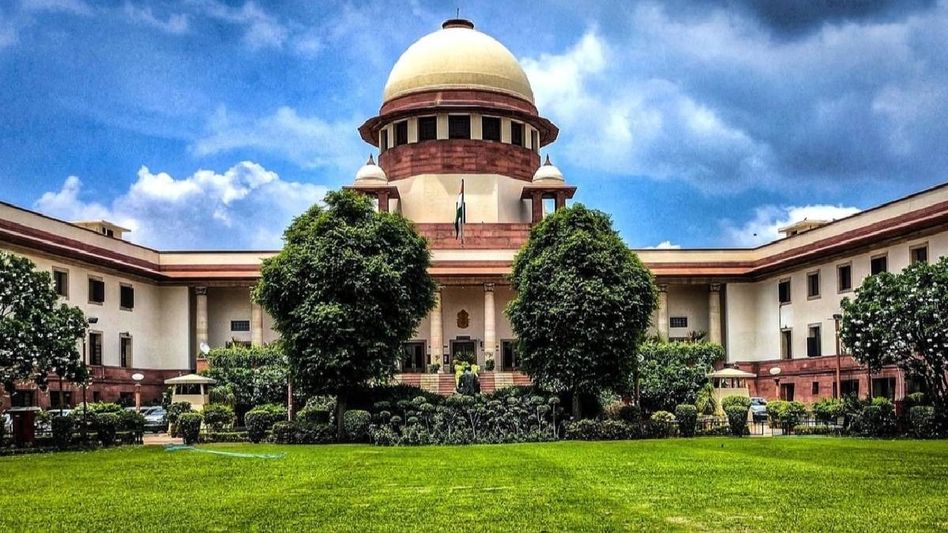

- Apr 21, 2026,
- Updated Apr 21, 2026, 9:18 PM IST

Supreme Court of India acquitted Moinul Haque, the prime accused in the 2017 rape and murder case of a primary school headmistress in Assam’s Hojai district, citing serious lapses in the police investigation and prosecution.
A bench comprising Justices Vikram Nath and Sandeep Mehta upheld the 2022 judgment of the Gauhati High Court, which had acquitted Haque of charges of rape and murder. The apex court dismissed the Assam government’s appeal challenging the acquittal.
In its April 16 verdict, the court observed that the arrest of the accused was “shrouded in a cloud of doubt” and highlighted fundamental deficiencies in the prosecution’s case. It held that there was no reliable evidence linking Haque to the crime and that the chain of circumstances required in a case based entirely on circumstantial evidence was incomplete and unconvincing.
The bench also set aside Haque’s conviction under Section 201 of the Indian Penal Code, related to destruction of evidence, even though the accused had not appealed against that portion of the verdict. The court clarified that its appellate jurisdiction empowers it to intervene to ensure complete justice, irrespective of whether the accused has challenged a specific finding.
“The absence of an appeal by the accused-respondent does not, by itself, denude this Court of its appellate jurisdiction,” the bench noted, adding that the conviction under Section 201 was unsustainable in both fact and law.
Haque was directed to be released immediately.
The case dates back to May 31, 2017, when a 58-year-old headmistress was allegedly raped and murdered in Hojai. Her body was recovered the following day near the Kopili River at Jamunamukh. Police had arrested Haque and co-accused Salim Uddin, who allegedly confessed to following the victim, assaulting her, and disposing of the body.
A trial court in Hojai had sentenced Haque to death and awarded a five-year rigorous imprisonment to Uddin for a lesser offence. However, the Gauhati High Court, while hearing their appeal in 2022, acquitted both accused of rape and murder, citing lack of substantive evidence. It had reduced Haque’s sentence to three years in connection with destruction of evidence.
The Supreme Court endorsed the high court’s findings, pointing to inconsistencies in the investigation and lack of credible proof supporting the prosecution’s claims, including the absence of concrete evidence of rape.
During the proceedings, senior additional advocate general Chinmoy Pradip Sharma appeared for the Assam government, while senior advocate PV Dinesh assisted the court as amicus curiae.
The ruling also brings focus on shortcomings in the investigation. Then Assam Director General of Police Bhaskar Jyoti Mahanta had earlier acknowledged deficiencies in the probe, noting that relevant charges under Sections 120(B) and 34 of the IPC were not invoked. He had stressed the need for greater diligence in future investigations.
Following the high court’s acquittal in 2022, Assam Chief Minister Himanta Biswa Sarma had indicated that the state would examine the verdict and consider approaching the Supreme Court, which subsequently led to the appeal being filed.
The apex court, while acquitting the accused of all charges, reiterated that criminal convictions must be based on clear, cogent, and reliable evidence, and cannot rest solely on suspicion, irrespective of its intensity.