
The prodigy, the professor and the 14-year-old still figuring it all out
At 14, Suborno Isaac Bari is already working towards a PhD, lecturing at universities and taking on questions that have baffled mathematicians for centuries. But spend a little time with him and the more interesting question is not how far ahead he is — it is what it means to grow up when everyone around you is already calling you extraordinary.
Advertisement

Aparmita Das
- Aug 22, 2026,
- Updated Aug 22, 2026, 3:52 PM IST
Story highlights
- He credits hard work and luck far above innate talent
- His father’s study routine and mother’s support shaped his early learning
- He warns AI could erode truth, judgement and independent thinking
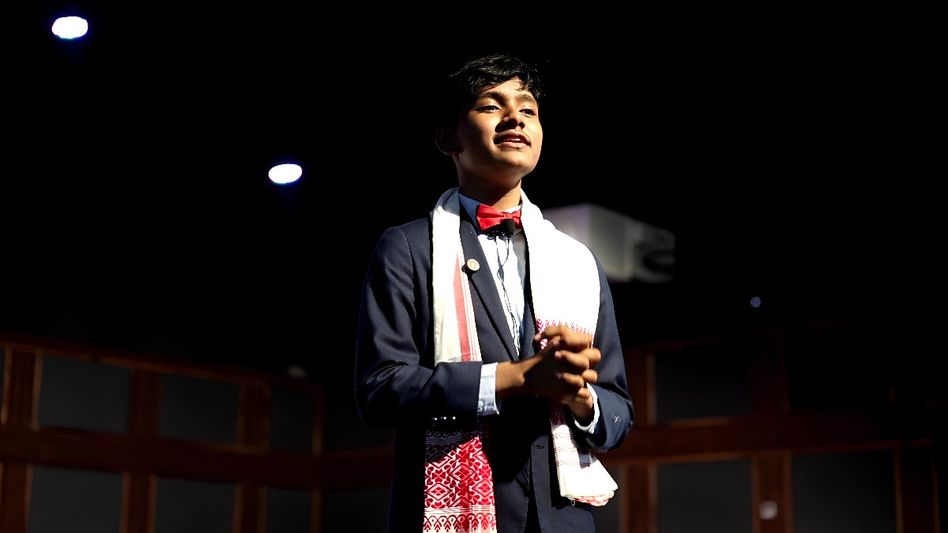
He shakes hands with everyone in the room, then picks up a chocolate from the table. Before he can unwrap it, his father tells him to put it down: he's already had too many sweets in the green room, and there's a sugar crash to think about. Suborno Isaac Bari, fourteen years old, dubbed the world's youngest professor, a boy who has lectured at IITs and is about to start a PhD, puts the chocolate back.
It's a small moment, but it tells you something the headlines don't: that behind the "child prodigy" tag is a teenager whose day still runs on decisions made by his dad.
Bari was in Guwahati for an event with Green School International, organised by the Byatikram group, one stop on a life that has taken him to universities across the world. He was born in 2012, graduated high school at twelve, and is now a researcher at NYU working on a problem tied to the Riemann zeta function: one of those unsolved corners of mathematics that has resisted proof for three centuries. He is also, by his own admission, someone who hasn't met another fourteen-year-old outside his family in about three years.
"Most of them are 21, 22," he says of his friends, "and I'm fine with that because we can communicate at the same level, both academically and emotionally." The conversations, he's quick to add, are mostly about homework: "how do you solve this problem", not parties. He can't go to those anyway. There's work to do at home.
It would be easy to write Suborno as the boy who skipped childhood. He doesn't see it that way, and he pushes back hard on the framing that made him famous in the first place. Ask him about talent, about the difference between someone born gifted and someone who grinds their way there, and he doesn't take the compliment.
"I think it's very disingenuous to just reduce someone who is successful at a young age to 'prodigy' or 'genius,'" he says, "because it doesn't just take a lot of effort from their side, which is the main reason, but also a lot of luck from their circumstances and backgrounds." He runs through the counterfactuals almost mechanically: a broken family, a bad school district, a mean principal, the wrong country. "If I was born in North Korea right now, you would not be hearing from me." His own number for it, delivered without much drama: 90 per cent effort, 9 per cent luck, 1 per cent talent. "The talent doesn't make that much of a difference at the end of the day. It's the luck and the hard work that do."
The effort part traces straight back to his father, who studied for a master's degree in physics during the day and worked night shifts as a security guard to support the family. Nobody was breaking in to steal physics textbooks, Suborno points out: there was no reason to actually guard anything. So his father spent those nights doing maths and physics problems, and kept talking about them at home afterwards, even to a toddler who understood none of it.
"I was so fascinated by it that I aspired to be like him, even though I didn't know what maths and physics actually were." His mother, he says, handled everything else: the food, the travel to remote cities for lectures, the emotional ballast. "Without her, I would never exist," he says, then clarifies: "Quite literally, but also mentally." His older brother, 23 now and working with NASA, gets a different kind of tribute: Suborno calls him "a creature of pure evil" before immediately walking it back: "No, seriously, he's a very great person too."
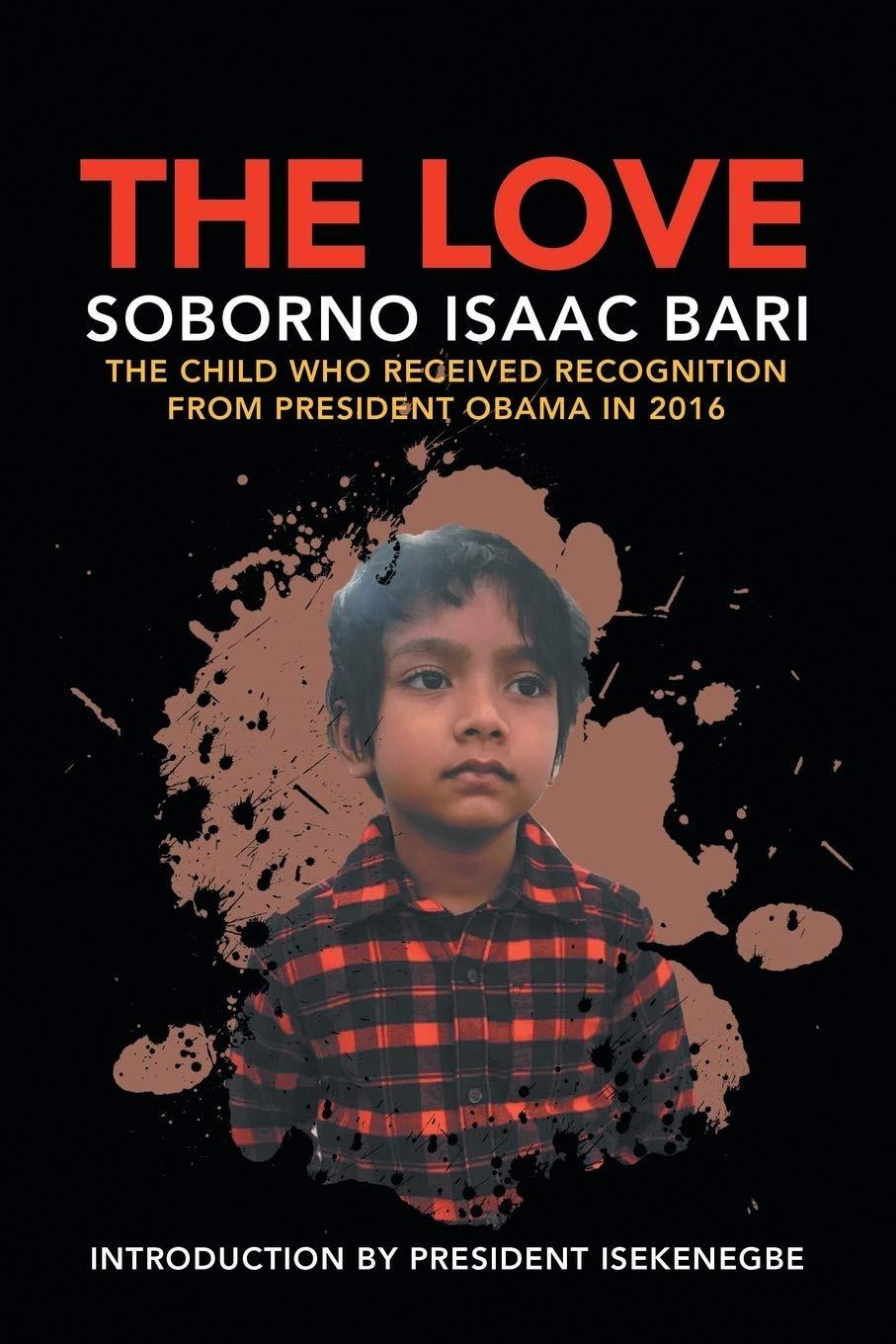
He wrote a book at four. It was called The Love, and the idea, as he remembers it, was almost embarrassingly simple: if there were one more book on a stack of fifteen hundred preaching religious peace, maybe the world would start talking to itself differently. He calls that naive now. What the book actually did, he says, was give him somewhere to put his frustration: at anti-Muslim prejudice, and at Muslim prejudice against other religions. "I guess I was screaming into the void there along with some people."
On artificial intelligence, Suborno sounds less like a fourteen-year-old and more like someone who's spent real time worrying about this specific thing. Put the question to him… what his generation stands to gain or lose from it, and his answer is flat: "Nothing. They're having everything taken from them." The casualty he names first is objective truth. A staged video, he points out, usually leaves some trace of being staged. An AI-generated one, by 2036, might not.
"We're going to have to do much more in-depth fact-checking in order to confirm whether something is real or fake," he says, and he doesn't think people will actually do it. He imagines a fake video of a political opponent doing something monstrous, and how even knowing it's fake won't stop the association from sticking. Used well, he says, AI doesn't have to hollow anyone out: his brother runs five AI tools a day without it touching his ability to think. But he doesn't expect that discipline to be common. "The vast majority of them will just let it do all the thinking for them." What worries him more, longer-term, is emotional intelligence: specifically, that AI has none of it. Tell it something false often enough, he says, and eventually it folds. "It doesn't have the emotional intelligence required to stand firm and say, 'No, no, I know this is correct, and you are not going to fool me.'"
The maths itself he treats far more lightly than the AI question, almost as an aside. He was eleven when he stumbled onto the Riemann zeta function while poking around unrelated areas of mathematics, and noticed a question sitting close to its basic definition that nobody had answered: is the value of the function at 5 irrational? He doesn't expect to settle it: people have been failing at that for three hundred years. The actual goal is smaller: prove something adjacent, something that shows the question is still worth chasing, and that he's capable of doing the kind of work a PhD demands. Not the theory of everything. Just the next brick.
He's less interested in being diplomatic about the Indian education system. The exams, he says, are so hard that they crowd out creative thinking entirely: students learn the exact shape of the questions and nothing beyond it, "plug numbers into formulas," and the ones best at pattern-matching end up at the best universities, which he doesn't think measures much of anything real. But he's careful not to let this turn into a simple import-the-American-model argument. Fifty million students and five hundred million students, he says, are not the same problem, and loosening the rules that let him finish high school at twelve would create chaos at that scale. He's also unbothered by the idea that not everyone should love this stuff. If someone's already happy in their job and hates maths, he sees no point pushing them. "What's the point of trying to convince someone forcibly to do something they don't like if they're already successful in their own job?"
ALSO WATCH:
Off the clock, he's fairly ordinary. He gave up piano: tried it because everyone around him played something, hated practising chords, wasn't especially good at it, and let it go. "If it's not clicking with you, you just have to let it go," he says, which will come back around later. He listens to alternative pop, names Chris Martin from Coldplay as a favourite, and just finished a murder mystery he found boring. On whether he counts as Gen Alpha, he doesn't quite commit: "Well, it depends on your definition", and pressed on whether he's at least early Gen Alpha, he allows it, but qualifies: "It depends, yeah."
Ten years out, his own best guess is unglamorous: a professorship in the US, regular trips back to India to keep teaching. There's been talk of starting a small school here: something aimed at inspiring young kids, he says, without going into more detail. He hasn't been to Bangladesh yet, despite his family's roots there, and he barely speaks Bengali: his parents chose to focus entirely on English when he was small, back when their own English was still shaky. He's visited India six or seven times now, he says, and can't quite remember the exact count: and as the number leaves his mouth, so does the hand gesture that goes with it, the "six-seven" thing every kid his age does now without noticing they're doing it.
His message to the students who lined up afterwards for autographs, some older than him and some younger, isn't really about maths at all. Keep asking questions, he tells them: of teachers, of anyone above them, and if a question gets shut down, that person wasn't a good teacher to begin with. Then, when it's turned back on him: does he have a question of his own to end on? He admits he's never been good at that part. What he lands on instead isn't advice so much as a check-in: do you actually like what you're doing- maths, science, art, yoga, whatever it is, and if you don't, what's keeping you there? "Can you let it go?" he asks. "Because at the end of the day, when you're much older, you're not going to be happy with what you did if you didn't enjoy it in the moment."
POST A COMMENT