Treetops to tar: Fragmented Assam forests push ‘exiled’ golden langurs onto deadly highways
Golden langurs in Assam are forced to cross highways due to forest fragmentation, risking fatal accidents. Conservationists call for urgent habitat restoration to safeguard the species.

- Mar 05, 2026,
- Updated Mar 05, 2026, 4:09 PM IST

The recent recovery of carcasses of mature male golden langurs from non-traditional habitats in Lower Assam has raised serious concerns among conservationists, who say the deaths reflect a deeper ecological crisis driven by habitat fragmentation.
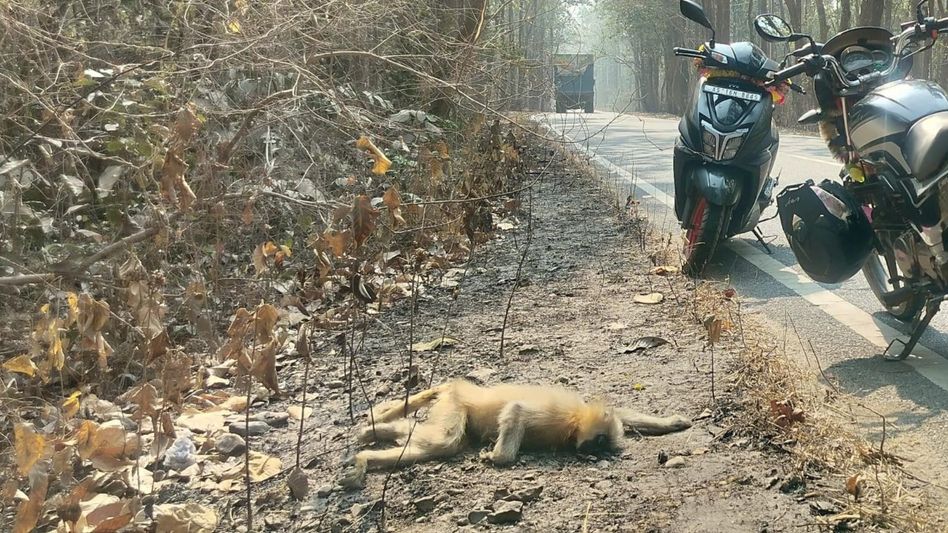
On March 5, a mature male golden langur was found dead on the Siljan–Charaikhola stretch in Kokrajhar. The incident followed a similar case reported on March 2 near Chapar Police Station in Dhubri district. What initially appeared to be road accidents are now being linked to a biological and social process within langur groups, intensified by shrinking forest cover.
According to Dr Jihosuo Biswas, Senior Scientist at the Primate Research Centre NE India, the deaths are closely connected to the social hierarchy of the Golden langur (Trachypithecus geei). During the dry season, territorial conflicts often erupt between resident male and younger maturing males within a troop.
When younger males lose such confrontations, they are forced to disperse from the group. In intact forests, these displaced males would typically move through continuous tree canopies to locate new territories or form bachelor groups or a new group as a resident male. However, increasing deforestation and infrastructure development have broken these canopy corridors.
With natural tree cover fragmented by roads and settlements, the langurs are compelled to descend to the ground in search of food or new groups, an unfamiliar and dangerous environment for an arboreal species. The absence of canopy connectivity pushes them toward highways and human settlements, where vehicular traffic often proves fatal.
The Golden langur is one of the world’s most endangered primates, found only in western Assam and parts of Bhutan. Conservationists warn that the loss of mature males not only reduces population numbers but also impacts the species’ genetic diversity.
Experts caution that unless forest corridors are restored and protective measures such as canopy bridges and habitat conservation policies are implemented, similar incidents may continue, particularly during the dry season when dispersal activity peaks.