Unearthed 1999 tapes reveal intimate side of Bhupen Hazarika in new documentary
A documentary built entirely from candid footage recorded nearly three decades ago presents a raw and intimate portrait of Bhupen Hazarika, capturing the legendary artiste in conversation on music, relationships and his personal philosophy.

- May 02, 2026,
- Updated May 02, 2026, 5:23 PM IST

A documentary built entirely from candid footage recorded nearly three decades ago presents a raw and intimate portrait of Bhupen Hazarika, capturing the legendary artiste in conversation on music, relationships and his personal philosophy.
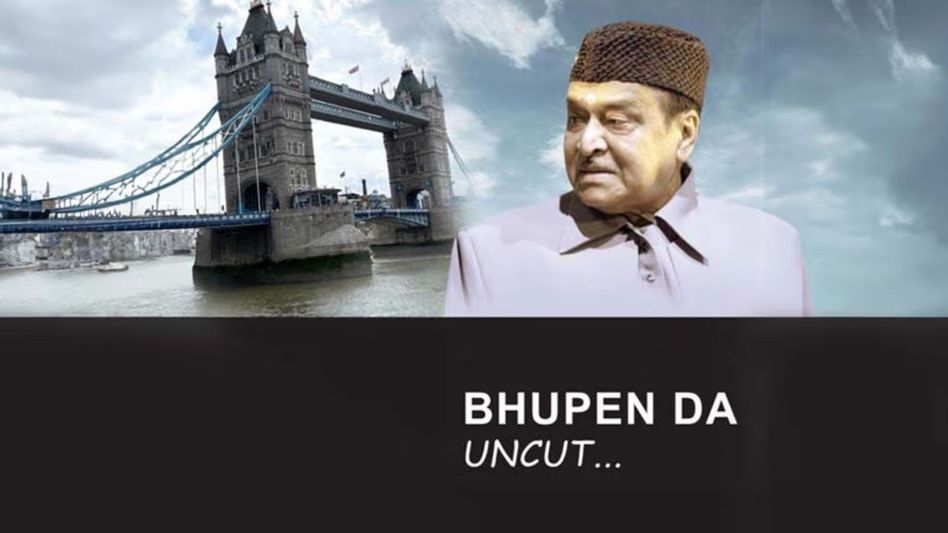
Titled ‘Bhupen Da Uncut’, the film has been directed by Bobbeeta Sharma, who describes it as an “unfiltered portrait” that allows viewers to engage directly with Hazarika’s thoughts and creative process. The nearly hour-long documentary avoids narration, dramatisation or reconstruction, relying entirely on original footage recorded in 1999.
The material dates back to Hazarika’s visit to the United Kingdom for a cultural programme organised by an Assamese doctors’ alumni group. During the trip, Sharma and her husband, Chinmoy Sharma, spent time with the musician at their London residence, where a series of unscripted interactions were filmed on a Hi-8 camera.
The footage shows Hazarika reflecting on his childhood, his association with cultural figures such as Jyotiprasad Agarwala and Bishnu Prasad Rava, and his academic years in New York. He also speaks about his relationship with his wife, Priyamvada Patel.
Several moments in the film highlight Hazarika’s artistic range. He is seen performing ‘Manuhe Manuhor Baabe’ along the Thames and near Tower Bridge, while another segment captures him reciting poems from handwritten notes—some of which, according to the makers, have not been published. In a lighter sequence, he prepares his own version of a prawn curry.
The recordings remained largely forgotten until 2024, when they were rediscovered by a family member while clearing out a home in the UK. Sharma said the tapes were still in good condition and were subsequently digitised, with minimal intervention to preserve their original quality.
“We didn’t do any editing to enhance the video quality or insert background music. We wanted to retain the vintage element,” she said, noting the archival value of the material.
Sharma, who has been associated with Assam’s cultural scene since the late 1970s, began her career as a child actor in Anirbaan, directed by Bhabendranath Saikia. She later created the television series ‘Bidexot Apun Manuh’, which aired on DDK Guwahati.
The documentary has been screened at the Press Club of India and the Asian Academy of Film & Television in Noida. It was also showcased last year at the International Film Festival of India, drawing attention for its archival significance and stripped-down storytelling approach.