
Who is Dr Susan Lim? How Joi Barua’s music found its way to NASA’s COSI mission
India Today NE spoke to Dr Susan Lim about her journey, the making of Cosmic Rhapsody, her collaboration with Joi Barua, and how a project that travelled from the legendary Abbey Road Studios and performances with the Royal Philharmonic Orchestra, London Voices and the City of London Choir eventually found a connection with NASA’s COSI mission.
Advertisement
 Photo: Insta/joibarua
Priyanka Saharia
- Sep 20, 2026,
- Updated Sep 20, 2026, 1:39 PM IST
The story of Assamese singer-composer Joi Barua’s journey towards NASA’s COSI mission began at an INK Conference in Singapore, where he first met Dr Susan Lim.
A song about a dying star, an Assamese musician and a surgeon-turned-storyteller may seem like unlikely parts of the same story. But their meeting eventually led to Cosmic Rhapsody, an international performing arts project that brought together music, science, animation and storytelling — and later found an unexpected connection with NASA’s space science mission.
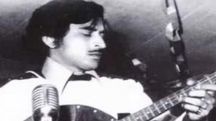
Lim first met Barua when she was an invited speaker at the INK Conference and he was showcasing ‘Rabha’, a song about legendary Assamese cultural icon Bishnu Prasad Rabha. The song was based on a story by Rabha’s close associate Gajiram Rabha.
Barua’s performance caught Lim’s attention. Over lunch, she shared lyrics she had written for what became ‘The ALAN Song’, the first piece in the LIM Trilogy, and asked Barua to set them to music.
Speaking to India Today NE, Barua said he sensed that something special was beginning, although he did not know where the journey would lead.
“I sensed something special was brewing, like a sixth sense tingling. But no, I was not aware of the journey. I was more in the moment of exuberance of finding myself in her exciting story and being challenged to understand her research and turn that into music. I was in the moment of it,” he said.
“The journey slowly dawned later.”
Among the songs Barua later worked on were ‘Star Among the Cosmic Clouds’ and ‘Confetti Storm’. The latter evolved into ‘Confetti Star-Ion’, which Barua co-composed with French composer and arranger Manu Martin.
But who is Dr Susan Lim, and what led a surgeon and scientist into the world of music, animation and storytelling?
Lim spent more than three decades working in medicine and science, including transplantation, stem-cell research and robotic surgery. Her work later expanded into questions around artificial intelligence, human companionship and technology, which she began exploring through music, animation and storytelling.
That journey led to Cosmic Rhapsody, created by Lim and Dr Christina Teenz Tan. The project brings together musicians, composers, singers, animators and storytellers from different parts of the world to explore themes of humanity, technology, the environment and the cosmos.
India Today NE spoke to Dr Susan Lim about her journey, the making of Cosmic Rhapsody, her collaboration with Joi Barua, and how a project that travelled from the legendary Abbey Road Studios and performances with the Royal Philharmonic Orchestra, London Voices and the City of London Choir eventually found a connection with NASA’s COSI mission.
1. For audiences discovering you and your work for the first time, could you tell us about your journey as a surgeon, scientist and entrepreneur, and how that journey eventually brought you to music and storytelling?
Answer. My path has always been driven by exploration and pushing boundaries. I spent over three decades in academia and general surgery, focusing on frontier technologies, from training under transplant pioneer Sir Roy Calne at Addenbrooke’s Hospital, University of Cambridge, and completing a PhD in transplant immunology, to performing Asia’s first successful cadaveric liver transplant.
Later, during the SARS crisis, I took my team to Santa Barbara to train on early surgical robotic systems like Zeus and AESOP at Computer Motion Industries, and then to Intuitive Surgical in Sunnyvale, California. I subsequently pioneered robotic general surgery in Singapore with the da Vinci platform.
Throughout my career, whether working in cellular research, transplantation or surgical robotics, I found myself constantly contemplating the intersection between human life, synthetic entities and technology.
Storytelling and music became the natural, expansive canvas where those questions could truly breathe. Today, as the creator, storyteller and lyricist for the LIM Trilogy, I channel that same curiosity, shifting from precision at the operating table to creative world-building through music, visual storytelling and performance.
2. You have worked in transplantation, stem-cell research, robotic surgery, automation and artificial intelligence. How did the idea emerge to bring science and technology together with music, animation and storytelling through Cosmic Rhapsody?
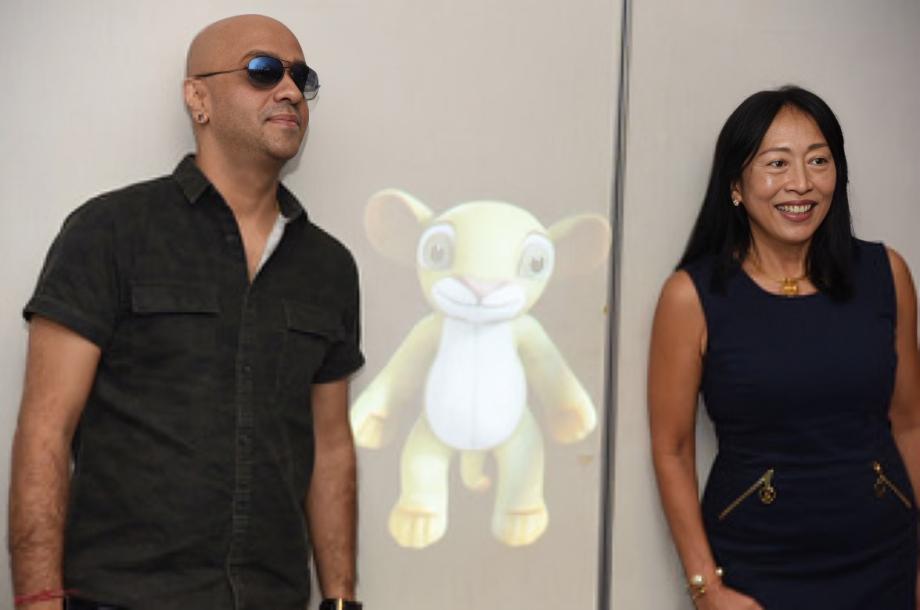
Answer. The catalyst arrived when I was invited to deliver a keynote on robotics at an INK conference in India. I had been exploring the emotional connection between humans and non-biological entities, and rather than delivering a conventional lecture, I opened the presentation alongside a holographic projection of ALAN — an AI plush companion I had conceived.
From there, I spoke about the future of human companionship with artificial intelligence and synthetic entities. To close the presentation, Joi Barua joined me on stage to perform “The ALAN Song” live before a room of over a thousand delegates. The emotional reaction from the audience was immediate and electric.
That moment was an awakening for me. Audiences did not just want data or clinical updates about technological advancement; they wanted to feel the human, emotional and philosophical impact as well.
I realised that bringing science together with music, cinematic animation and narrative song allows us to approach human-AI dynamics, climate resilience and cosmic exploration in a medium that touches people directly.
3. What exactly is ALAN, and how did this international collective of musicians, composers, singers and creatives come together for Cosmic Rhapsody? What was the vision behind bringing people from different countries and creative backgrounds into one team?
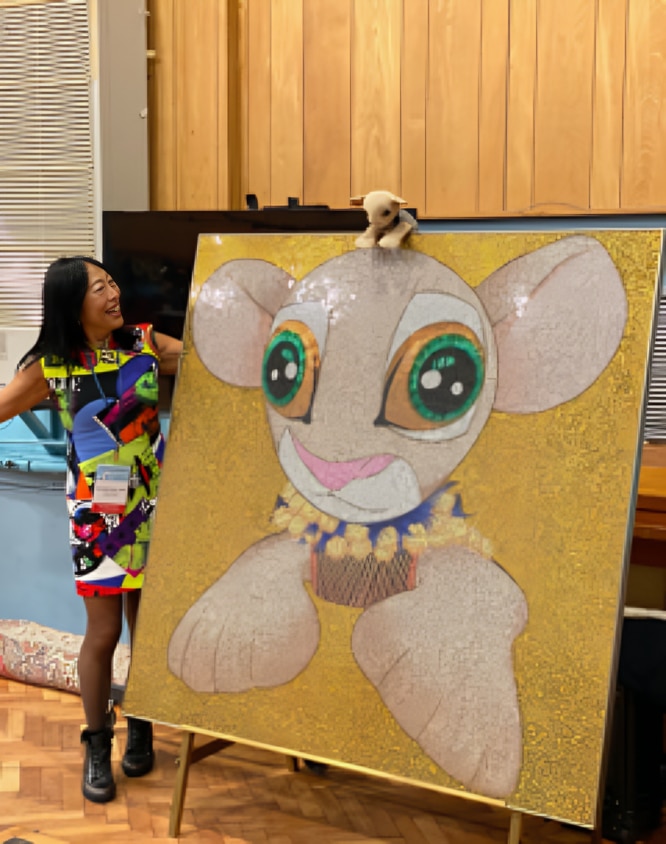
Answer. ALAN began as an inanimate companion, a plush toy embedded with a soul, a symbol of non-biological life and empathy — and it acquired artificial intelligence along the way.
In Cosmic Rhapsody, ALAN evolves into ‘ALANaut’, embarking on an interstellar mission with his human partner, Christina, to uncover pathways towards planetary renewal and environmental balance.
To bring a narrative of this scale to life, we needed voices that crossed borders. The collective grew organically as we brought together composers, musicians, vocalists, animators and sound engineers from across Singapore, India, France, the UK, the US and Australia.
The vision was not about deliberately assembling a checklist of nationalities, but about uniting distinct creative voices, genres and sensibilities around a single, universal narrative about our planet and the stars.
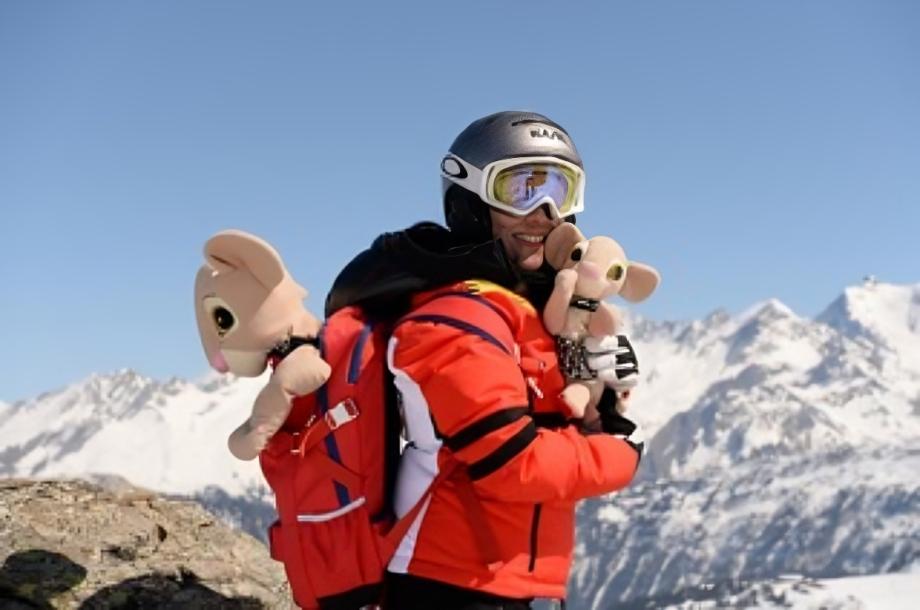
4. The short film follows you as you reflect on the journey behind the song, from its recording at the legendary Abbey Road Studios to its live performance by the Royal Philharmonic Orchestra, London Voices and the City of London Choir. What did that journey mean to you personally?
Answer. Being a part of this journey gave me an overwhelming sense of pride and gratitude for what this team has built. From the first lyrics penned on a page to massive orchestral and choral tapestries is quite simply mind-blowing for someone who has come in from another field altogether.
Seeing world-class musicians — the acclaimed pianist Jean-Yves Thibaudet, the Royal Philharmonic Orchestra, London Voices, our soloists and vocal powerhouse Tom Ball — together with our creative collective, pour their hearts and artistry into this story created deep, lasting bonds of friendship and trust.
Over the years, we have developed a creative camaraderie, which translates into us coming together cohesively, unanimously and joyfully to share this musical journey with our audiences.
5. When you first heard your work being brought to life by an orchestra and such a large ensemble of musicians and singers, was there a particular moment during the Abbey Road recording or the live performance that stayed with you?
Answer. Even after numerous recording sessions at Abbey Road Studios over the years, the feeling never diminishes. Walking through those doors feels as awe-inspiring as the very first time. You are acutely aware of the history living in those walls.
We have had the privilege of recording in Studio Three, steeped in the legacy of Pink Floyd’s The Dark Side of the Moon, and Studio Two, home to The Beatles.
Recording in the legendary Studio One, standing in that vast acoustic space surrounded by a 70-piece orchestra bringing your melodies to life, is an indescribable sensation.
There is a specific moment during playback when the brass swells, the choir lifts the lyrics and the cosmic scale of the music envelops the control room. It becomes hard to conceal one’s emotions.
6. Joi Barua is one of the composers involved in the project. How did your collaboration with Joi begin, and what did you see in his musical approach that made him the right person to interpret your lyrics and cosmic themes?
Answer. I first met Joi at an INK Conference in Singapore, where I was an invited speaker and he was performing as a singer. His performance, energy on stage and artistic vocals immediately struck me.
Over lunch, on an impulse driven by creative instinct, I shared the lyrics I had just written for what would become “The ALAN Song”, our very first piece in the LIM Trilogy, and asked if he would set it to music.
What he brought back was pure magic.
Within our composing team, each composer brings a distinct sensibility and genre strength. Whenever I have a lyrical concept that requires weight, profound scale or an unconventional melodic architecture, I turn to Joi.
He has an innate ability to craft melodies that veer off the beaten path, matching the grandeur and emotional depth of these cosmic narratives.
7. Joi has composed melodies for songs such as ‘Star Among the Cosmic Clouds’ and ‘Confetti Storm’, and has also co-composed ‘Confetti Star-Ion’. What did he bring to the project that was uniquely his own?
Answer. What sets Joi apart as a collaborator is his desire to dig deep beneath the surface of the words. He never treats lyrics as mere syllables to hang notes on; he wants to dissect the emotional subtext, the philosophical dilemma and the story behind every verse before he conceives of a melody.
That thoughtfulness translates into his music. His melodies possess a signature earthiness blended with raw elevation — a soulful, resonant quality that gives tracks like “Star Among the Cosmic Clouds” and “Confetti Storm” their sweeping, cinematic gravity.
8. Joi comes from Assam, and there are other Indian and international artists involved as well. Did you consciously want Cosmic Rhapsody to bring together different cultural and musical traditions while telling a story about humanity and the cosmos?
Answer. It was not a deliberate exercise in geographic casting. I view every collaborator first and foremost as an exceptional artist who brings a distinctive style, vocal texture or musical language to the project.
That being said, as our story is fundamentally about humanity’s shared place in the cosmos, the diversity of the collective is deeply fitting.
Another key member of the LIM Collective is Samudra Kajal Saikia, our director of animation. I met Samudra at a subsequent INK conference in India, introduced by Joi Barua.
Initially shy and reserved, he opened up and shared his book of poems. I learned that Samudra is an art historian, poet and animator. I was struck by his artistry and invited him to come on board as the animation artist for the LIM Trilogy.
Samudra brought vibrant, original animation to our project, but most importantly, he brought ALAN to life, working with co-creator Christina Teenz Tan to give him the features, characteristics and movements that matched the narrative.

9. The project has now found a connection with NASA’s COSI mission and the science of exploding stars. When did you realise that the scientific ideas at the heart of your music were intersecting with an actual space-science mission, and what did that moment mean for you?
Answer. The intersection occurred when our team visited the Space Sciences Laboratory at UC Berkeley in December 2025, during our North American premiere performances of LIM Fantasy of Companionship for Piano and Orchestra.
While meeting with their leadership and scientists, we shared our music, animation and the narrative framework of Cosmic Rhapsody.
As we walked through the themes of stellar nucleosynthesis and the lifecycle of stars that drive our story, both our teams immediately recognised the analogies between our narrative and the science behind NASA’s upcoming Compton Spectrometer and Imager (COSI) mission, led by Principal Investigator John Tomsick.
Realising that an artistic journey born out of music and storytelling aligned with an active astrophysics mission studying the radioactive decay of elements from supernovae was a remarkable validation of “Science meets the performing arts.”
10. Cosmic Rhapsody brings together medicine, science, space, music, animation and human creativity. After everything the project has gone through — from the original writing and collaboration to Abbey Road, the orchestra and now its connection with NASA — what do you hope people ultimately take away from it?
Answer. At its core, Cosmic Rhapsody is a fictional mission of humans and AI in space, exploring where stars are born.
We hope the narrative ignites public curiosity and inspires the next generation of dreamers, scientists and space explorers.
It gently circles back to Carl Sagan’s sentiment that we are fundamentally made of stardust. The very elements that sustain our lives were forged in the hearts of dying stars and liberated across the galaxy, creating an extraordinary cosmic cycle.
Bringing that to life through song reminds us of our beginnings.
11. “Your journey began with an idea expressed through lyrics and music, and it has now reached a space-science context. Did you ever imagine, when you were writing these songs, that they would one day be connected to the study of stars and the universe?”
Answer. When the first lines were written, I could not have anticipated a formal bridge to an astrophysics mission — though I had dreams.
My ambition has always been to turn dreams into reality where possible. Whether pioneering robotic surgical techniques decades ago, investigating stem-cell biology or composing music about the oceans and the cosmos, my life has been defined by venturing into new spaces.
And how beautiful it is that in these spaces, science and art inevitably find each other.
POST A COMMENT