Wild elephants destroy paddy fields in Assam's Rani, farmers fear losses ahead of harvest
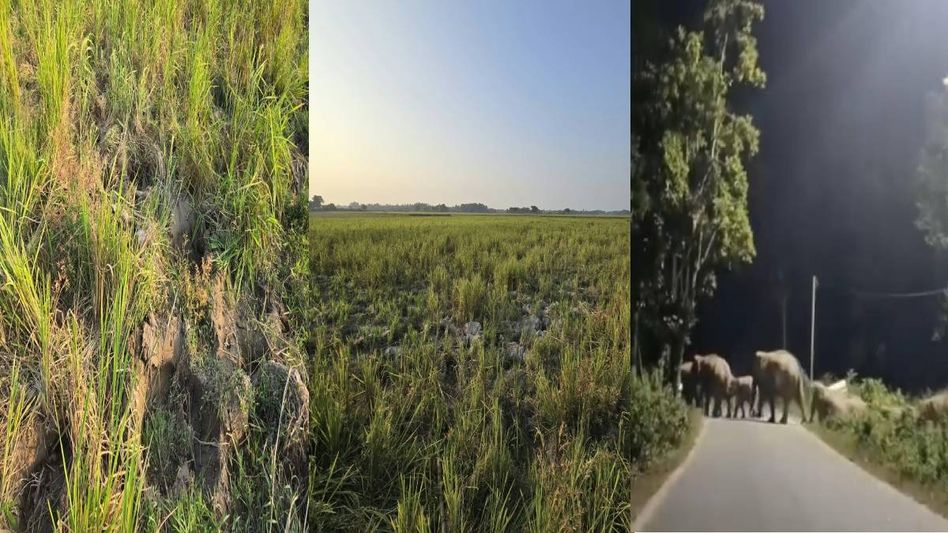
Wild elephant herds have repeatedly raided paddy fields across villages in Assam's Rani Forest Range. The losses and fatalities have intensified demands for coordinated Assam-Meghalaya intervention.

- Oct 31, 2026,
- Updated Oct 31, 2026, 2:35 PM IST

Repeated raids by wild elephant herds have damaged large stretches of paddy fields across villages under Assam's Rani Forest Range, leaving farmers facing heavy financial losses just weeks before the harvest season.
The escalating human-elephant conflict has not only threatened agricultural livelihoods but also raised concerns over the safety of residents, with farmers demanding coordinated intervention by the Assam and Meghalaya governments to address the growing problem.
Farmers said several families had lost months of hard work after elephants entered their fields and destroyed standing crops. In some cases, the animals reportedly damaged paddy fields soon after transplantation, leaving cultivators with little chance of recovering their investments.
The situation has become more alarming following the death of a woman, Alani Rabha, at Thengapara, near Rani, after she was reportedly trampled by a wild elephant at her residence. She was being taken to hospital but succumbed to her injuries on the way.
Residents said the frequent movement of elephant herds across the Rani Forest Range, which falls under the East Kamrup Forest Division, has turned several villages into conflict-prone areas.
The affected villages include Patgaon, Jawe, Sajjanpara, Rajapanichanda, Bakarapara, Andherijuli, Bahupara, Manikpur, Pathaladhia, Purana Sukurbaria, Majpara, Belguri, Udaypur, Nalapara, Pukhuripar, Checha, Tangonpara, Thengapara, Jaypur, Garopara, Prashrukhua, Bikrampur and Khapegaon.
Ashok Rabha of Belguri and Dinesh Nath of Purana Sukurbaria said the situation had become increasingly difficult for farming families, many of whom depend entirely on paddy cultivation for their livelihood.
Atul Nath, a farmer from Nalapara village, said repeated elephant raids had forced his family to abandon paddy cultivation. Several other families in the area had also stopped farming because of recurring crop losses.
" We depend on agriculture for our livelihood. Without paddy cultivation, our families are facing serious financial difficulties," Nath said.
Farmers said that while several non-governmental organisations had been working to address human-elephant conflict, sustained intervention by the Meghalaya government was equally important.
They alleged that the destruction of forest habitats and incidents of poaching in Meghalaya had contributed to the movement of elephants towards Assam. Some farmers also claimed that elephants were being fired upon in parts of Meghalaya, forcing the herds to move towards neighbouring areas in search of food and safer habitats.
According to the farmers, the animals often take shelter in smaller forest patches closer to human settlements after being disturbed in their traditional habitats, increasing the likelihood of encounters with people.
Several farmers have installed solar-powered fencing around their agricultural land using their own resources in an attempt to prevent elephant raids. They claimed that the fencing had helped restrict the movement of elephants into their fields.
Meanwhile, the Forest Department has initiated the installation of solar fencing along an approximately 17-kilometre stretch between Purana Sukurbaria and Bagdov following an initiative by local MLA Himanshu Sekhar Baishya. The MLA said work on three kilometres of the proposed fencing had been completed.
Rani Forest Range Officer Roji Barman said the department had submitted applications to the government seeking compensation for 77 families affected by wild elephant attacks and related damage.
The extent of the conflict is also reflected in the fatalities recorded under the Rani Forest Range during 2025-26. According to the information available, Madan Kalita was killed near a community meeting hall at Chakardo Mikirpara, while Milan Boro of Noapara Rajapanichanda died near Rani Tea Estate. A woman identified as Alahi Rabha also died following an elephant attack at her residence in Thengapara.
With crop destruction and human casualties continuing to raise concerns, residents have called for a joint strategy involving the Assam and Meghalaya governments and forest authorities.
They have stressed the need to protect elephant habitats, prevent poaching, strengthen measures to safeguard agricultural land and ensure timely compensation for affected families. Farmers said without sustained intervention, recurring elephant raids could further push farming households into financial distress while increasing the risk of human casualties.