One in three students worldwide faces bullying every month: UNESCO warns of AI-driven abuse
UNESCO has warned that one in three students worldwide experiences bullying every month. Its report highlights rising cyberbullying and new forms of AI-enabled abuse.

- Nov 09, 2026,
- Updated Nov 09, 2026, 4:44 PM IST

- Cyberbullying rose from 12 to 15 per cent across 44 countries
- Girls and marginalised learners face distinct, often more severe online violence
- Boys face more physical bullying, while girls endure psychological harassment
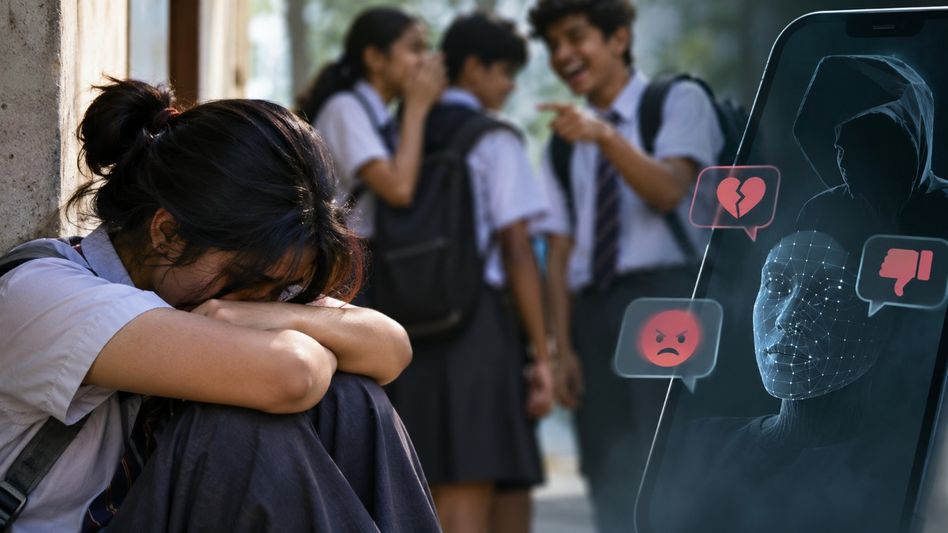
One in three students worldwide experiences bullying every month, while one in 10 faces cyberbullying, according to a new UNESCO report that warns artificial intelligence (AI) is creating new forms of technology-facilitated violence in schools.
The United Nations Educational, Scientific and Cultural Organization (UNESCO), in its policy brief titled Connected and Safe, has flagged the growing use of AI-powered tools for harassment, including nudification applications, voice cloning, automated abuse and AI companion applications that can be used for grooming.
The report highlights how technology-facilitated violence is increasingly becoming a concern for education systems, with consequences extending beyond classrooms to affect students' safety, mental health, participation and learning.
UNESCO Director-General Khaled El-Enany said the scale of bullying remained a serious concern, with millions of children exposed to violence that could have lasting effects on their education and well-being.
"Online and technology-facilitated violence (TFV) is no longer a peripheral concern for education systems. It is part of the reality of school life for many learners," the policy brief stated.
The report also pointed to a rise in cyberbullying across several regions. Data from 44 countries in Europe, Central Asia and North America showed that the prevalence of cyberbullying increased from 12 per cent to 15 per cent between 2018 and 2022, affecting both boys and girls.
UNESCO noted that certain groups of students were more vulnerable to online abuse and bullying. Girls, children with disabilities, learners from diverse sexual orientations and gender identities, and those from socio-economically disadvantaged or geographically marginalised communities often face distinct and more severe forms of violence.
The nature of bullying also differs between boys and girls. While both experience bullying at comparable rates, boys are more likely to face physical bullying, whereas girls are more exposed to psychological bullying, particularly cyberbullying and appearance-based harassment.
Sexual bullying, including inappropriate jokes, comments and gestures, affects boys and girls at similar rates. However, girls are more likely to experience physical sexual violence, including assault, harassment and rape, the report said.
The policy brief also highlighted gender differences in corporal punishment, with boys more likely to face physical punishment than girls. It added that violent disciplinary practices were often shaped by societal expectations about gender-appropriate behaviour.
Calling for a coordinated response, UNESCO said ensuring students' safety in digital environments could not be left to schools alone. Governments, technology companies, digital platforms and regulators must share responsibility for addressing the growing threat.
The organisation urged countries to strengthen digital safety measures, invest in teacher training, improve reporting and response mechanisms, and expand access to mental health and psychosocial support for students.
It also called for closer coordination between education, child protection, healthcare and technology sectors to address technology-facilitated violence.
UNESCO said it had initiated the process of developing a new global recommendation on young people and digital environments in the age of AI. The proposed framework aims to ensure that emerging technologies safeguard children's rights and well-being, promote critical thinking and enable young people to actively shape their futures.