Gram Chikitsalay Season 2 Review | When saving lives isn't the hardest part
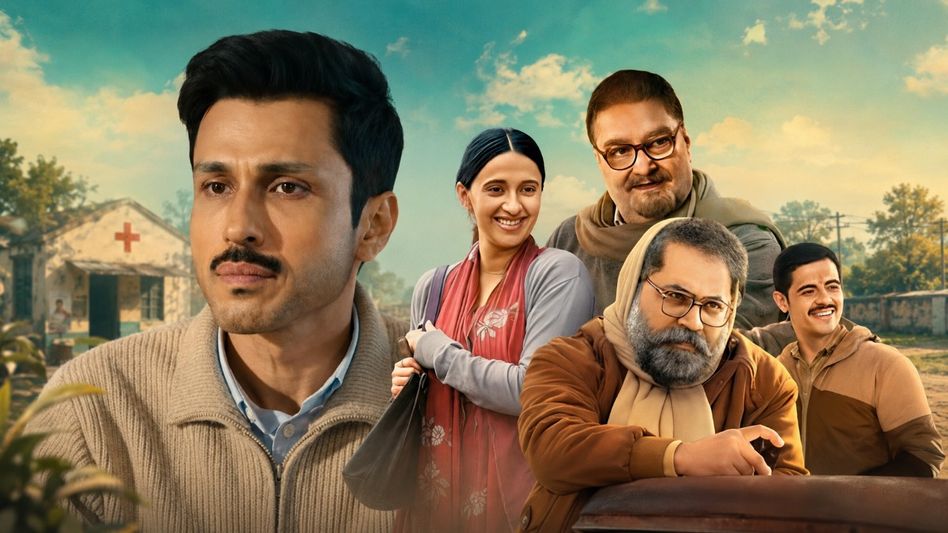
Gram Chikitsalay Season 2 follows Dr Prabhat Sinha as he tries to hold together Bhatkandi's Primary Health Centre amid shortages, inspections and local pressures. The series uses gentle humour and lived-in conflicts to examine trust, bureaucracy and public healthcare without losing its warmth.

- Jun 25, 2026,
- Updated Jun 25, 2026, 2:30 PM IST

- Dr Prabhat faces shortages, inspections and politics after winning villagers' trust
- The season blends understated humour with pointed observations on public healthcare
- Amol Parashar anchors the drama through pauses, glances and quiet desperation
The makers took a year to release Gram Chikitsalay Season 2. Many viewers finished all five episodes in under four hours and immediately started asking for Season 3. That should tell you everything about where this show stands.
At a time when OTT platforms are flooded with murder mysteries, gangster dramas and political thrillers, Gram Chikitsalay remains refreshingly ordinary, and that's precisely its biggest strength. It doesn't rely on shocking twists or cliffhangers. Instead, it places its faith in honest storytelling, relatable characters and a world that feels comfortingly familiar. The first season was about earning trust. This one is about preserving it. The writing feels more confident, and the emotional stakes noticeably higher.
Season 2 picks up from where the first left off. Dr Prabhat Sinha (Amol Parashar) has finally earned the trust of the villagers of Bhatkandi. But trust, as he soon realises, is only half the battle. Medicine shortages, bureaucratic roadblocks, local politics, inspections and the continued influence of an unqualified practitioner ensure that every step forward comes with two steps back. The story no longer asks whether villagers will trust modern healthcare. Instead, it asks whether the system itself is capable of rewarding honesty.
Watching Gram Chikitsalay often feels like sitting in a grandmother's courtyard on a quiet evening, listening to a story that refuses to be hurried. There are no unnecessary twists or dramatic revelations every few minutes. The storytelling gives its characters room to breathe, making even the smallest moments meaningful. The humour follows the same approach. It never chases laughs. Instead, they emerge naturally from awkward conversations, uncomfortable silences and the wonderfully eccentric people of Bhatkandi. More often than not, Gram Chikitsalay is funnier than many shows marketed as comedies because the jokes feel lived rather than written.
What stands out most this season is how naturally it blends humour with social commentary. Without becoming preachy, the series touches upon issues that continue to shape public healthcare across India. Recognition and awards seem to depend as much on pleasing those higher up the hierarchy as on improving services on the ground. Quacks continue to enjoy the villagers' trust because they are available when qualified doctors aren't. The series also quietly sheds light on women's health, showing how certain illnesses continue to be suffered in silence because discussing them remains a social taboo. One of the most poignant storylines revolves around a woman branded a dayan (witch). Rather than challenging the label, she chooses to live with it because doing otherwise could put both her and her son at greater risk. It is a heartbreaking reminder that fear, stigma and social ostracisation continue to shape lives even today. One subplot also explores how those in positions of authority can influence not just careers but personal lives, blurring the line between official power and private choices.
Whether it is corruption hidden behind paperwork, patients being misled for money, people choosing puja-paath over proper treatment, or authority spilling over into people's personal lives, these are conversations that exist far beyond Bhatkandi.
One of the season's strongest qualities is how it creates tension without relying on villains or twists. At one point, Dr Prabhat finds himself trapped inside the Primary Health Centre as an angry crowd gathers outside, while his own father fears the situation could spiral into mob violence. Yet, inside those same walls, a patient places complete faith in him at the very moment his confidence is being tested. It beautifully captures the contradiction at the heart of the series. On one side is a doctor struggling every day to earn people's trust. On the other is someone willing to entrust him with something priceless. The sequence is among the season's finest and is best experienced without knowing exactly how it unfolds.
Amol Parashar is undoubtedly the face of the show. Mention Dr Prabhat from Gram Chikitsalay, and the recognition is almost instant. The role doesn't demand dramatic speeches or heroic moments. It requires someone who can communicate disappointment, hope, helplessness and determination with very little dialogue, and Amol does that beautifully. His acting lies in the pauses, the glances and the silences. When the inspection team arrives to assess Bhatkandi PHC for model status, Prabhat knows the centre isn't ready, not because he didn't try, but because circumstances worked against him. As he requests the examiner to return the next morning, the fear in his eyes and the quiet desperation beneath his composed exterior become impossible to miss. Amol makes it look effortless, and that is precisely why Dr Prabhat never feels like a fictional hero.
The supporting cast deserves equal credit. Akansha Ranjan Kapoor's Dr Gargi finally gets the space she deserved after largely remaining on the sidelines in Season 1. Akash Makhija once again impresses as the perpetually lazy yet lovable Govind. Having recently played the chilling antagonist in Raakh, it is fascinating to watch him switch gears so effortlessly.
Then there is Vinay Pathak. As the village quack, Chetak Kumar, he is eccentric, unpredictable and often hilarious. But one phone conversation with his daughter changes everything. There are no emotional speeches or dramatic breakdowns, just pauses, faltering words and a father struggling to say what he truly feels. For a brief moment, Chetak stops being the village quack and simply becomes a father carrying quiet heartbreak. It is one of the season's most moving scenes.
The warmth of the series also comes from its smaller characters. Among them is Dhelu, affectionately called "Chhota Sweeper" (played by Kartikey Raj), whose innocence and quiet presence leave an impact far beyond his screen time. He isn't written merely for comic relief or cuteness. Like many of Bhatkandi's residents, he becomes another reason the village begins to feel less like a setting and more like home.
If there is one complaint, it is that Anandeshwar Dwivedi's Phutani Bhaiya deserved far more screen time. The compounder occupies a fascinating place in Bhatkandi's world, part fixer, part guide, part opportunist and part caretaker. His humour comes not from conventional jokes but from dry observations and rhetorical remarks. The best of these: "Patient bhi bhagwan hai, doctor bhi bhagwan hai, aur hum hi tucch prani hai?" It isn't merely funny. It sums up his entire place in the healthcare hierarchy.
Another strength of Gram Chikitsalay is that it refuses to reduce people to labels. The idealistic doctor isn't always right. The quack isn't entirely wrong. The lazy ward boy has moments of sincerity, and even those who seem stubborn are often acting out of fear rather than malice.
For a series with just five episodes, each running under 40 minutes, there isn't a single scene that feels unnecessary. If anything, a few deserved more time. If the season has one weakness, it is that some conflicts feel familiar. Bureaucracy, medicine shortages and fluctuating trust remain central to the narrative. Then again, perhaps that is precisely the point. Systems don't change overnight, and neither do people.
The cinematography captures Bhatkandi without romanticising rural life. The production design makes the ageing Primary Health Centre feel authentic, the background score never overwhelms the emotions, and the editing keeps the narrative moving at a comfortable pace.
By the end of the fifth episode, Bhatkandi becomes difficult to leave.
Perhaps there are two kinds of people who watched Gram Chikitsalay. The first compared every frame to Panchayat. The second simply watched it for what it was, a story about a young doctor trying to make a difference in a village where faith often outweighs medicine, bureaucracy can be more exhausting than illness, and hope survives in the unlikeliest of places. Those who belonged to the second group probably loved the first season. Season 2 gives them every reason to stay.