Conservationists seek wildlife-friendly measures on Dhola–Sadiya bridge
Conservationists have called for transforming the Dr Bhupen Hazarika Setu into a model of wildlife-friendly infrastructure, citing growing ecological concerns in the region.

- Apr 26, 2026,
- Updated Apr 26, 2026, 2:56 PM IST

- The 9.15-km bridge links Assam and Arunachal across the Lohit river
- Semi-evergreen forests, wetlands and grasslands along the corridor support varied wildlife
- A dead Indian Roller recently found there sharpened concerns over collisions
Conservationists have called for transforming the Dr Bhupen Hazarika Setu into a model of wildlife-friendly infrastructure, citing growing ecological concerns in the region.
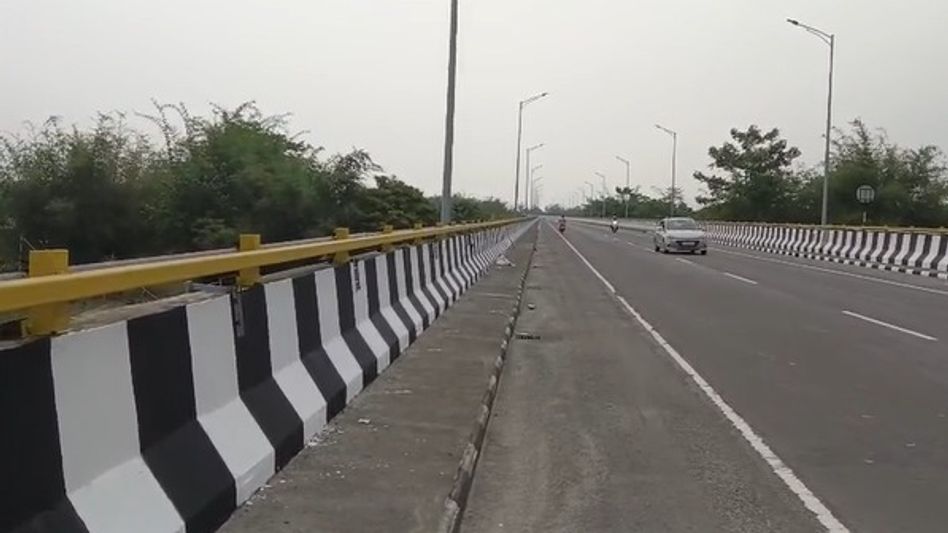
Spanning 9.15 km across the Lohit river in Tinsukia district, the bridge, India’s longest, connects Assam with Arunachal Pradesh and passes through ecologically sensitive zones marked by semi-evergreen forests, wetlands and rich biodiversity.
Experts say the corridor supports a variety of flora, including native trees, shrubs and grasslands, as well as fauna such as elephants, deer, birds and aquatic species. However, recent incidents, including the discovery of a dead Indian Roller on the bridge, have raised concerns over habitat fragmentation and wildlife-vehicle collisions.
Wildlife conservationists have urged authorities to reimagine the bridge as an eco-sensitive structure. “We cannot allow this engineering landmark to become a barrier. Dedicated wildlife crossings are essential to enable safe animal movement,” a conservationist said.
They also stressed the need for planting native vegetation along the approach roads, developing green corridors and introducing monitoring systems to minimise ecological disruption.
Pointing to global examples, conservationists noted that countries such as the Netherlands have constructed hundreds of ecoducts, vegetated overpasses that allow safe wildlife movement, while Canada’s Banff National Park has successfully implemented overpasses and underpasses to reduce animal-vehicle collisions.
Similar initiatives in Singapore and the United States have demonstrated how infrastructure can coexist with biodiversity through careful planning and design.
Conservationists said adopting such measures in Assam could help protect the fragile ecosystem of the Lohit valley, reduce wildlife fatalities and position the bridge as a model for sustainable infrastructure in biodiversity-rich regions.