Researchers uncover 19 Vespid wasp species in Arunachal Pradesh hotspot
Scientists have catalogued 19 species of vespid wasps in Tawang district, Arunachal Pradesh, marking a key step in mapping insect diversity across India's Eastern Himalayas.

- Apr 17, 2026,
- Updated Apr 17, 2026, 11:44 AM IST

Scientists have catalogued 19 species of vespid wasps in Tawang district, Arunachal Pradesh, marking a key step in mapping insect diversity across India's Eastern Himalayas.
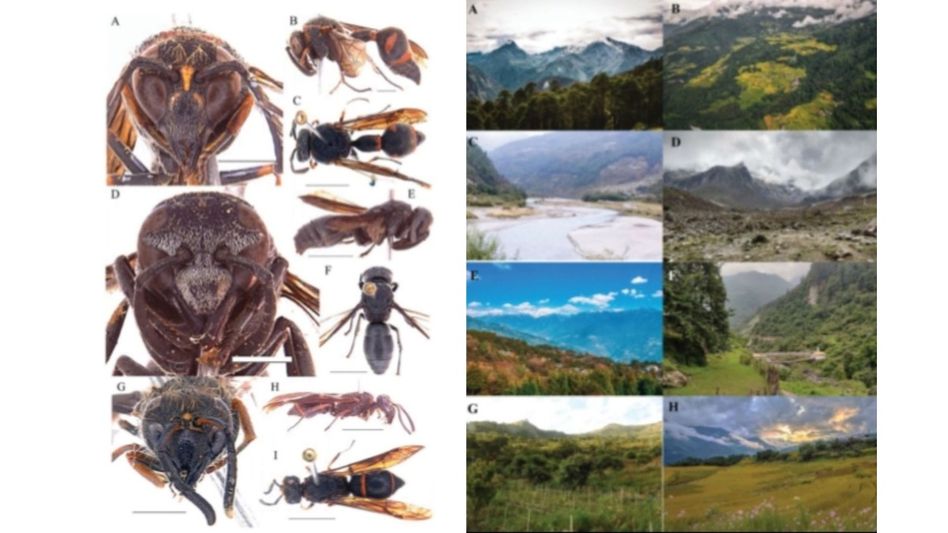
The discovery, detailed in a new study, includes the first confirmed sighting in India of Antepipona bhutanensis, a solitary potter wasp previously recorded only in Bhutan. This rare species thrives in warmer, lower-altitude zones and was spotted during targeted surveys.
Fieldwork spanned 2019, 2021, and 2022 across Jang, Lumla, and Panchen subdivisions. Teams used sweep nets, pan traps, and direct observations in varied settings—from subtropical forests and alpine meadows to riverbanks and altered landscapes. The effort skipped 2020 amid COVID-19 curbs.
Lead author Dibyajyoti Ghosh of the Zoological Survey of India (ZSI), Kolkata, collaborated with Puthuvayi Girish Kumar, Atanu Naskar, Kumarapuram Apadodharanan Subramanian, and Dhriti Banerjee, all ZSI affiliates.
Their paper, "Notes on the distribution of vespid wasps (Hymenoptera: Vespidae) in Tawang, Eastern Himalayas, India," appeared online on April 10, 2026, in Oriental Insects, a Taylor & Francis journal.
The research delivers Tawang's first comprehensive checklist, covering 10 genera in three subfamilies: Eumeninae, Polistinae, and Vespinae. It features diagnostic traits, photographs, habitat details, plant links, and fresh distribution data.
New records for Arunachal Pradesh encompass Polistes (Polistella) assamensis and Polistes (Polistella) santoshae. Common finds included Polistes (Polistella) rubellus, while researchers noted the giant hornet Vespa mandarinia—the world's largest—hunting honeybees.
These wasps play vital roles as pollinators, predators, and decomposers, the authors emphasise. "The Eastern Himalayas is a global biodiversity hotspot, yet vespid knowledge here remains sparse," they write in the abstract. "This study offers the first consolidated account from Tawang."
Such documentation aids conservation in this fragile region, highlighting threats from habitat loss and climate shifts.