Two new firefly species discovered in Meghalaya’s Khasi Hills after century-long research gap
Scientists have discovered two previously unknown species of fireflies in Meghalaya’s East Khasi Hills, marking the first formal documentation of such insects from the state and ending a century-long gap in the study of the genus Diaphanes in India.

- Apr 30, 2026,
- Updated Apr 30, 2026, 7:50 AM IST

Scientists have discovered two previously unknown species of fireflies in Meghalaya’s East Khasi Hills, marking the first formal documentation of such insects from the state and ending a century-long gap in the study of the genus Diaphanes in India.
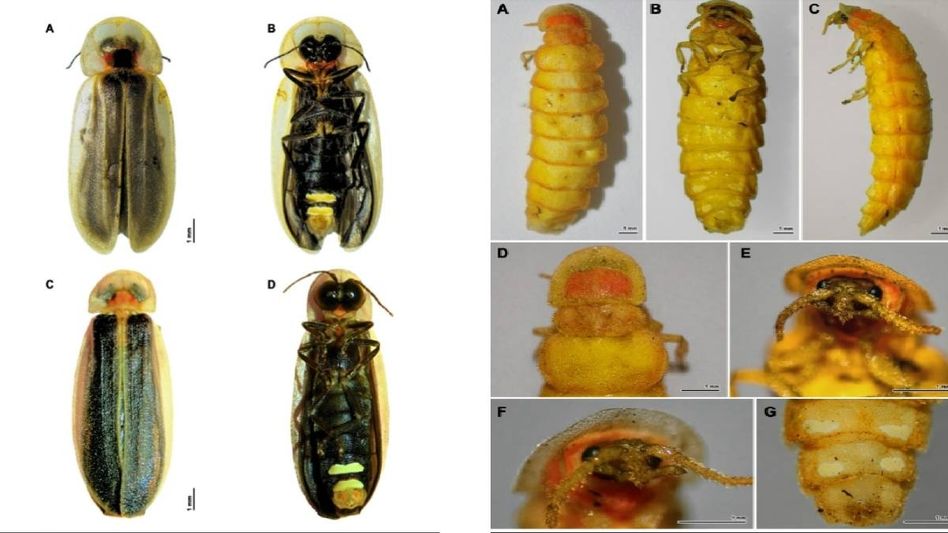
The newly identified species have been named Diaphanes meghalayanus and Diaphanes mawlynnong. The research was led by Emma Magdalene Nonglang along with Chandana Dammika Wijekoon, Memorial Ryndong, Dhiraj Kumar Das, Samrat Sengupta and Jane Wanry Shangpliang.
The discoveries were made in undisturbed forest habitats across the Khasi Hills, including semi-evergreen forests, bamboo patches and dense canopies near rocky streams.
According to the researchers, the names of the species reflect both geography and local cultural identity. D. meghalayanus has been named after Meghalaya to indicate its broader distribution in the region, while D. mawlynnong derives its name from Mawlynnong village, where the species was first recorded, acknowledging the local Khasi community. Fireflies are locally known as “Niangbading.”
The study found that both species thrive in dark, humid environments with minimal human interference. D. meghalayanus was recorded in semi-evergreen forests and betel nut plantations during February, preferring temperatures between 18 and 20 degrees Celsius and humidity levels ranging from 77 to 80 per cent. The species emits faint green pulsating light while flying approximately 10 to 15 metres above the ground.
Researchers noted that D. mawlynnong appears to be more habitat-specific, inhabiting dense forests with thick bamboo growth and rocky streams. Its wingless female was discovered beneath a boulder and was observed emitting slower and longer light pulses, providing rare insight into the species’ life cycle.
Scientists involved in the study highlighted that the absence of artificial light is critical for the survival of fireflies. They observed that sightings were significantly clearer in remote forested areas compared to human-dominated landscapes affected by light pollution.
With the addition of the two newly identified species, the number of known Diaphanes species recorded in India has increased to 15.